Serving Brooklyn, Queens and Long Island(929) 429-2429Open six days a weekFree estimateGuaranteed work
On Point Garage Doors
Open 24 hours Sun-Thu, Fri until 5 pm Free estimate Springs, openers, cables We come to you
Emergency?Call nowBook free estimate
New York, NY - open six days a week

Garage door bearings

Free estimateSame-day serviceCommon parts on board
  • Free estimate
  • Same-day service
  • Common parts on board
Emergency garage door repair★★★★★ 5.0 on Google · 42 reviews

Book your free estimate

Takes 30 seconds. We call you back to set a time.

Or just call (929) 429-2429 and talk it through.

Home › Garage Door Bearings

On a torsion spring system, the spring bar above the door turns every time the door moves. It turns in bearings: one in a bracket at each end, and often one in the center bracket between the springs. When those bearings wear, the bar grinds, wobbles or binds, the springs and cables are strained, and the door gets noisy and uneven. Bearings are small parts, but they sit right in the heart of the spring system. Free estimate at (929) 429-2429.

By Sean Cohen, owner, On Point Garage Doors · Updated

Real jobs. Real photos.

These photos are from our own jobs, with our logo on them.

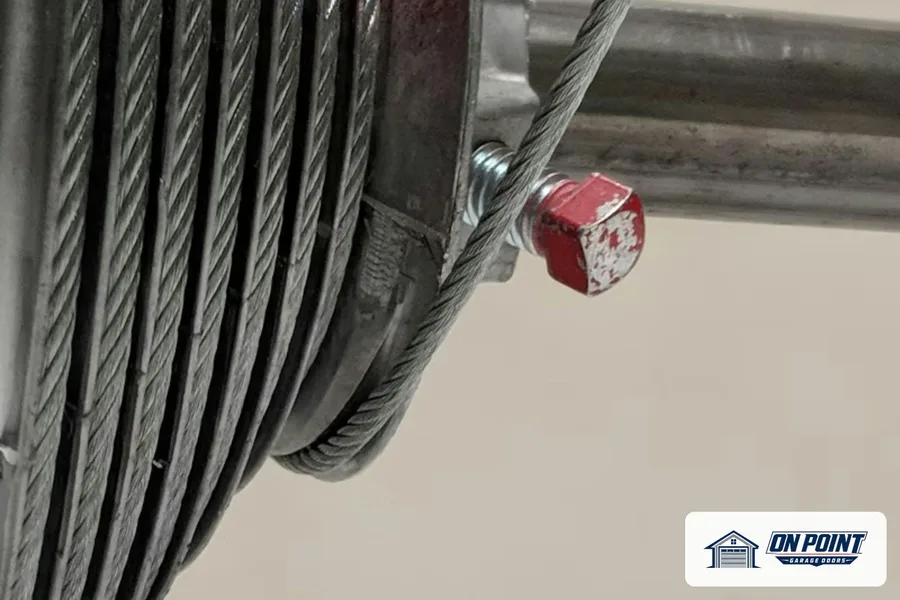
Drum and end bearing area, from one of our jobs
Drum and end bearing area
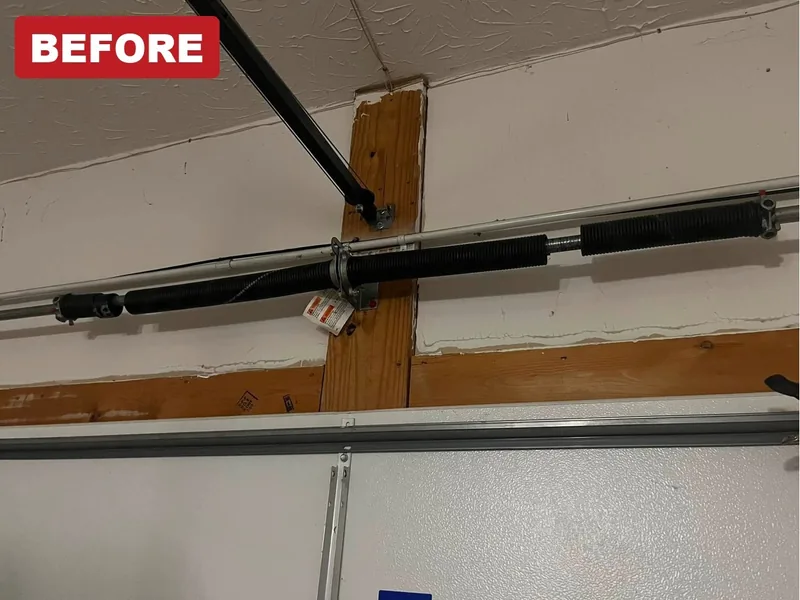
Broken garage door spring with a gap in the coil, before On Point Garage Doors replaced it
Torsion spring cone
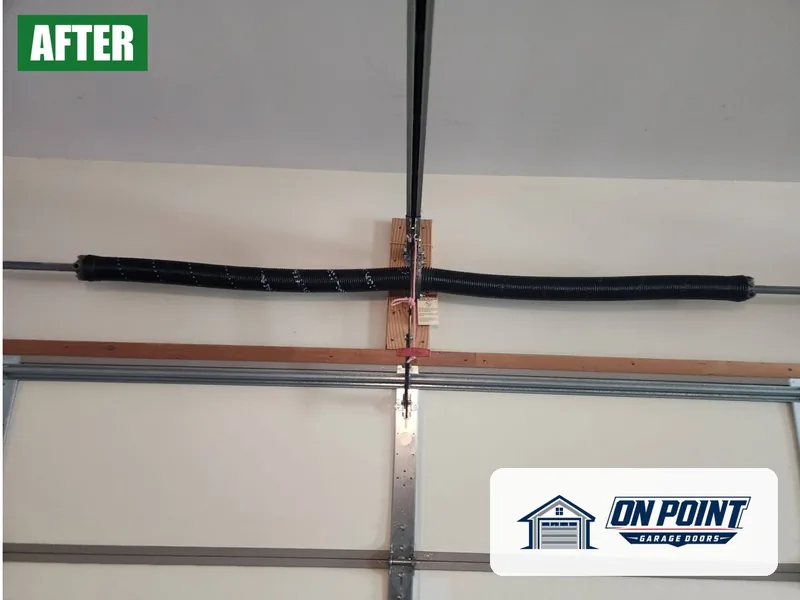
New garage door spring installed by On Point Garage Doors
Springs and cables

Where the bearings are

  1. End bearingsIn the brackets at each end of the spring bar, beside the cable drums.
  2. Center bearingIn the center bracket above the door, between the springs on many doors.
  3. Bearing platesThe brackets that hold them, bolted to the wall or header.

Signs a bearing is failing

Why worn bearings matter

A wobbling bar puts uneven load on the springs, the drums and the cables. Cables can wind crooked and jump their drums, springs wear unevenly, and the end brackets can work free. A seized bearing makes the bar drag, so the door feels heavy and the opener strains.

Why it is a spring job

The bearings sit on the spring bar, which is under the full tension of the springs. Replacing an end or center bearing means releasing that tension safely, removing the drums or springs, and winding the springs again afterward. It is done only by a trained technician with the right tools.

Bearings and new springs

When springs are replaced, the bearings are checked at the same time. A worn bearing on a new spring system shortens the new springs' life and makes the door noisy. Replacing bearings with springs is often the sensible choice on older doors.

Rust near the water

Bearings near the bay and in damp garages rust and seize. Sealed bearings resist moisture better. On homes by the water, the bearings are checked every year along with the springs and cables.

The center bracket

On doors with two springs, the center bracket is bolted to the header and holds the inner ends of both springs. It carries a great deal of force. If the header behind it is soft or the bolts are loose, the bracket can pull out. The header and the bracket are checked with the bearing.

Noise from above the door

Many owners describe a grinding or a squeal that seems to come from the ceiling above the door. That is often a bearing. Fixing it, together with sealed rollers and a balanced door, makes the door far quieter, which matters for rooms over the garage.

What a visit includes

The technician watches the bar as the door moves, checks the end and center bearings, the drums, cables, springs and brackets, and explains what is worn with a free estimate. After the repair, the springs are wound and balanced, and the opener and safety reverse are tested.

Preventing bearing wear

A yearly tune-up checks the bearings, keeps the door balanced and catches rust early. A balanced door with sealed rollers puts far less strain on the bearings and the whole spring system.

Extension spring doors

Doors with extension springs along the tracks have no spring bar and no end bearings. Their pulleys play a similar role, and worn pulleys squeal, wobble and wear the cables. They are checked and replaced in the same way, with safety cables through the springs.

Bearings and the opener

A bar that drags in a seized bearing makes the opener work harder on every trip. If your opener has started to slow down or strain and the springs test fine, the bearings are the next place to look.

Wall-mounted openers and bearings

Wall-mounted openers turn the spring bar directly, so the end bearing beside the opener must be in good shape. When one is installed, the bearings are checked and replaced if worn.

Bearings on doors with two springs

Doors with two springs usually have a center bearing in the bracket between them as well as the two end bearings. All three are checked together, since they have worn for the same number of years. A worn center bearing often shows up as a squeak from the middle of the bar.

New bearing plates

When the end bearing plates themselves are rusted, bent or cracked, they are replaced along with the bearings and bolted into solid framing, so the spring bar sits level and true again.

Commercial spring shafts

Commercial doors carry heavier springs on longer shafts, often with more bearings along the way. Worn bearings there make the whole shaft whip and the operator labor, and they are replaced during spring service.

Questions we get asked

What do garage door bearings do?

They let the torsion spring bar turn smoothly at each end and often in the center.

How do I know a garage door bearing is bad?

Grinding from above the door, a wobbling spring bar, uneven cables or rust around the bearing.

Can I replace a garage door bearing myself?

No. The bearings sit on a bar under full spring tension.

Should bearings be replaced with new springs?

Often yes, especially on older doors.

Is the estimate free?

Yes. You see what is worn before any work starts.

Booking takes a minute

Across Brooklyn, Queens and Long Island, tell us what the door is doing and we set a visit that fits your day.

Free estimate, call (929) 429-2429.

Not sure what is wrong? We will come and look

Tell us what the door is doing and we will give you an honest arrival time. The estimate is free.

Easier to explain by phone? Call (929) 429-2429.

Two minutes to a free estimate

Tell us what the door is doing. The estimate is free either way.

Or just call (929) 429-2429 and talk it through.

The other six things that go wrong