Takes 30 seconds. We call you back to set a time.
The lift cables on a garage door should always be tight. They run from the bottom corners of the door up to the drums at the top, and the springs keep them under tension through the whole trip. When you notice a cable hanging loose, curled on the floor or bowing out from the track, something has gone wrong. A slack cable can jump off its drum and leave the door hanging by one side. This page explains why cables go slack, why you should stop using the door, and what we check when we come out. Free estimate at (929) 429-2429.
By Sean Cohen, owner, On Point Garage Doors · Updated
These photos are from our own jobs, with our logo on them.


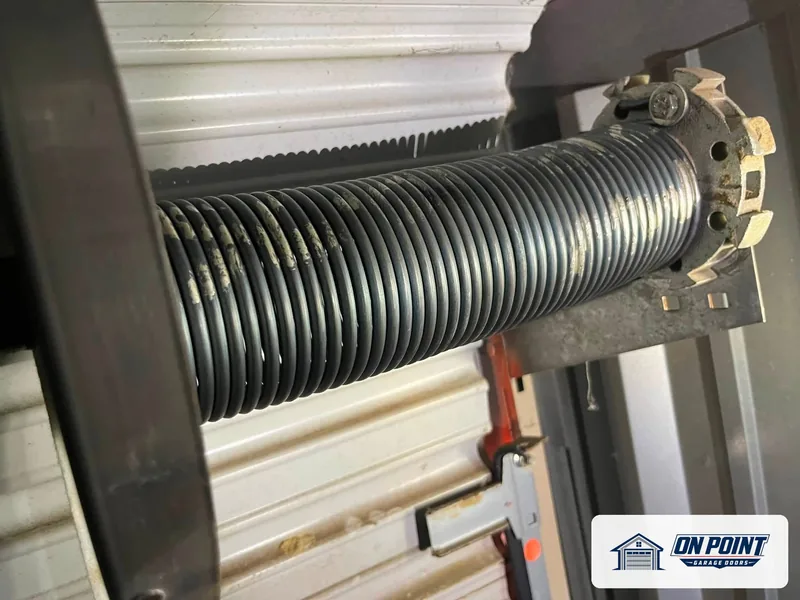
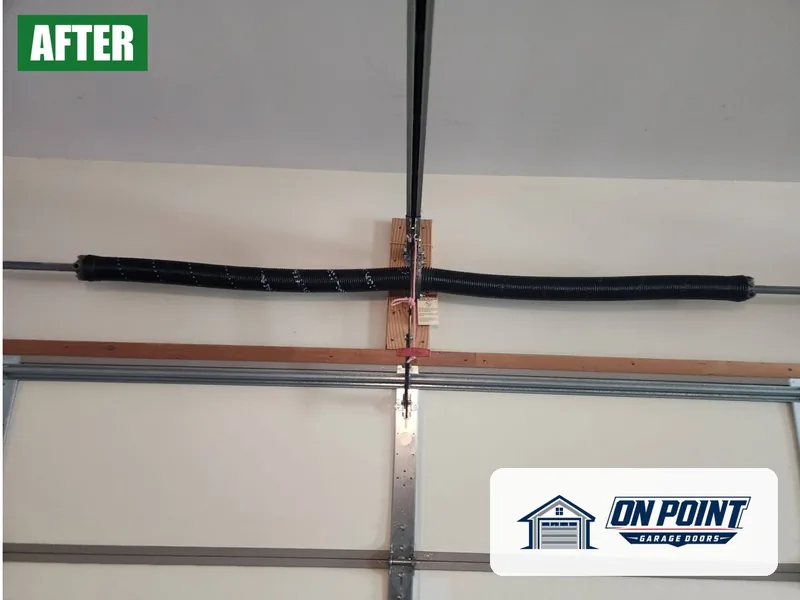
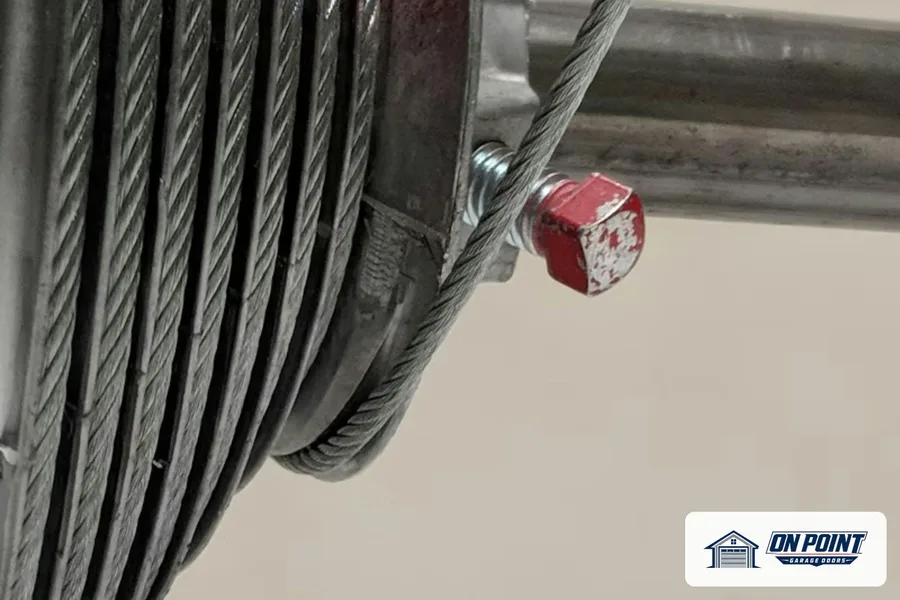
On a door with springs above the opening, each cable runs from a bracket at the bottom corner of the door, up beside the track, and wraps around a grooved drum at the end of the spring shaft. With the door closed, the cable should be tight and sit neatly in the drum grooves. On a door with springs along the side tracks, cables run through pulleys and should also stay taut.
The most common cause. If the door comes down on a bin, a bike or a lump of ice, the bottom stops while the drums keep turning. The cable unwinds with nothing pulling on it and goes slack. When the object is removed, the door may drop and the slack cable can slip off the drum.
If a roller binds on one side, that side of the door hangs up while the other side keeps moving. The cable on the stuck side goes slack. When the roller breaks free, the door jerks and the cable can jump. A door that runs crooked or bangs on one side is often the first sign.
When a spring breaks, the drums lose the force that keeps the cables wound tight. On a two-spring door, one cable may stay tight while the other goes loose. On a one-spring door, both can go slack. Our page on broken spring repair covers what happens next.
Drums are fastened to the shaft. If one slips, its cable loses tension and the door hangs lower on that side. Cables also stretch and fray over the years, especially near the bottom brackets where water and road salt collect. A worn cable may sit loose even when everything else is right.
It is tempting to put the cable back on the drum. Do not. The cables are tied into the spring system, and the drums sit right next to springs under heavy tension. Working on them without the right tools and training is how people get hurt. Leave the door where it is, keep people and cars away, and call for a repair. Our page on spring safety explains the risk.
The technician looks at both cables, both drums, the shaft, the bearings, the springs and the bottom brackets. If the door hit something, we check the bottom section and the rollers for damage. If a roller bound up, we check the track. The goal is to find out why the cable went slack, not just to put it back.
If one cable is frayed or kinked, the other is usually not far behind, since they have done the same work for the same time. Replacing both at once keeps the door level and saves a second visit. Our page on cable and roller repair covers this job.
We find slack cables most often on doors that close onto uneven floors, on garages where bins and bikes stand close to the door, and on older doors whose rollers have worn. Garages near the water see more cable rust at the bottom brackets, which weakens the cable where it bends. In winter, ice at the floor catches the bottom of the door and leaves a cable loose on cold mornings.
On doors with extension springs along the tracks, the cable runs over a pulley at the end of each spring. A worn pulley, a broken safety cable or a stretched spring can all leave a cable loose. Those doors have their own hazards, and the same rule applies: leave the door alone and call.
The technician secures the door, finds the reason for the slack cable, and explains the repair. You get a free estimate before any work starts.
Usually the door hit something on the way down, one side bound in the track, or a spring broke.
No. The cable can come off the drum and the door can tilt, jam or drop on one side.
Do not try. The drums sit next to springs under heavy tension. Call a technician.
Usually yes. They wear at the same rate and replacing both keeps the door level.
Yes. We find the cause before any work starts.
Across Brooklyn, Queens and Long Island, tell us what the door is doing and we set a visit that fits your day.
Free estimate, call (929) 429-2429.
Tell us what the door is doing and we will give you an honest arrival time. The estimate is free.
Easier to explain by phone? Call (929) 429-2429.
Tell us what the door is doing. The estimate is free either way.