Serving Brooklyn, Queens and Long Island(929) 429-2429Open six days a weekFree estimateGuaranteed work
On Point Garage Doors
Open 24 hours Sun-Thu, Fri until 5 pm Free estimate Springs, openers, cables We come to you
Emergency?Call nowBook free estimate
New York, NY - open six days a week

Garage door sensor wire damage

Free estimateSame-day serviceCommon parts on board
  • Free estimate
  • Same-day service
  • Common parts on board
Emergency garage door repair★★★★★ 5.0 on Google · 42 reviews

Book your free estimate

Takes 30 seconds. We call you back to set a time.

Or just call (929) 429-2429 and talk it through.

Home › Garage Door Sensor Wire Damage

The safety sensors at the bottom of a garage door get blamed for a lot, but often the eyes themselves are fine and the trouble is the thin wire that joins them to the opener. That wire runs from each eye up the wall or along the ceiling to the motor unit, and on its way it passes shelves, nails, floor edges, storage and, in many garages, mice. A staple driven through it, a bite from a rodent or a cut during a renovation can stop the door from closing or make it close only some of the time. This page explains how that wiring runs, the ways it gets damaged, the signs that point to the wire rather than the eyes, and what a lasting repair looks like. Free estimate at (929) 429-2429.

By Sean Cohen, owner, On Point Garage Doors · Updated

Real jobs. Real photos.

These photos are from our own jobs, with our logo on them.

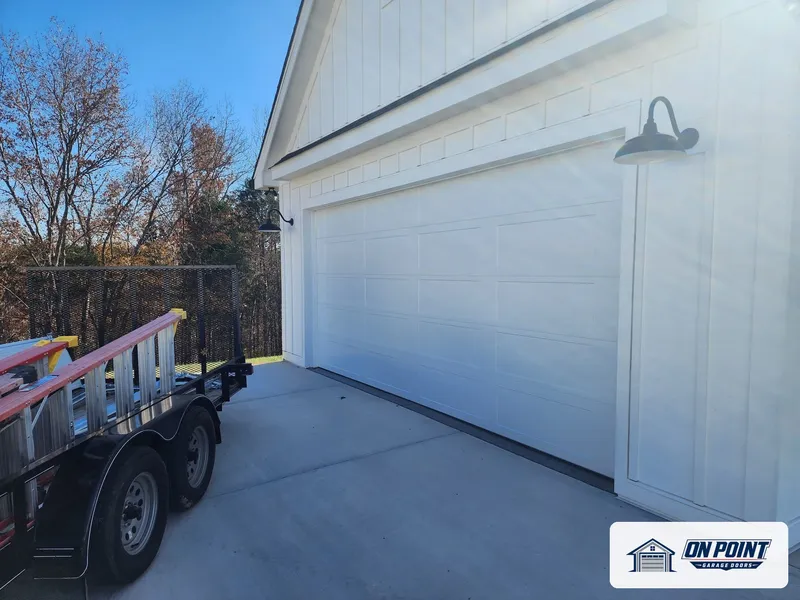
New white garage door on the side of a house, from one of our jobs
New white garage door on the side of a house
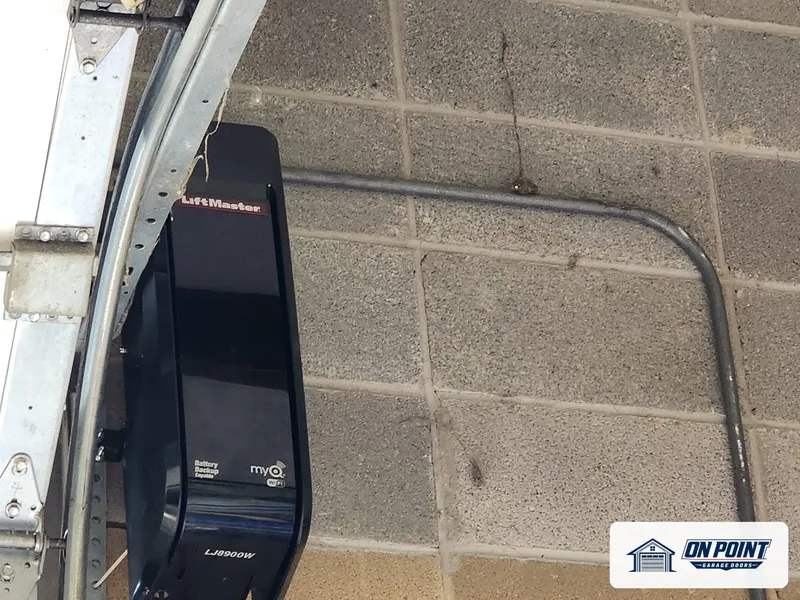
LiftMaster wall-mount opener with wiring on a block wall, from one of our jobs
LiftMaster wall-mount opener with wiring on a block wall
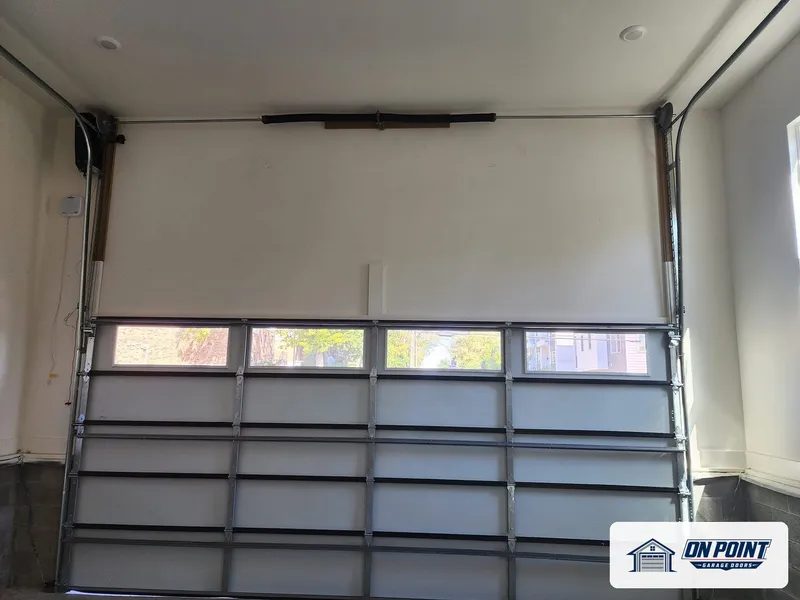
Glass row and track of a new door from inside, from one of our jobs
Glass row and track of a new door from inside

How the sensor wiring runs

Each photo eye has a short lead of thin low-voltage wire with two conductors inside. On most openers both eyes are wired back to the same pair of terminals on the motor unit, either with separate runs or joined along the way. The wire is light, often no thicker than doorbell wire, and it carries both power to the eyes and the signal that tells the opener the beam is clear. Because it is so light, it is easy to damage and easy to overlook.

Why a damaged wire stops the door

The opener only closes the door when it sees a steady, clear signal from the eyes. If the two conductors touch where a staple or a bite has bared them, the circuit shorts and both eyes can go dark. If a conductor breaks, the eye on that run loses power. Either way, the opener treats it as a blocked beam and refuses to close the door, or starts down and reverses. That is the design doing its job: a door should never close when the safety system cannot be trusted.

Staples driven through the wire

Sensor wire is often fastened to the wall with staples. A staple driven too hard, or one that lands across the wire instead of beside it, can pierce the insulation and join the two conductors. Sometimes the short is there from the day the wire is hung. Sometimes it starts later, when the wall moves with the seasons or a vibrating door works the staple a little deeper. Insulated clips made for low-voltage wire avoid the problem.

Chewed by mice and rats

Rodents gnaw on wire, and the sensor run near the floor is easy for them to reach. A chewed wire may show tooth marks, bare copper or a short length missing. Droppings along the wall or nesting material behind storage are good clues. A new wire will be chewed again if the animals are still getting in, so gaps under the door and around the frame matter too. Our page on mice and pests covers the seals that keep them out.

Crushed, pinched and snagged

Cut during work in the garage

Renovations are hard on sensor wire. New drywall goes up over it, a painter pulls it off the wall, an electrician moves an outlet, or a floor crew grinds and coats the slab right up to the eyes. A new floor can also change the height of the eyes relative to the door. After any of these jobs, a door that will not close is worth checking at the wire before blaming the opener. Our page on the door after a new garage floor goes into the height question.

Water and corrosion at the floor

The lowest part of the run, where the wire meets each eye, sits close to puddles, melting snow off a car and road salt. Bare copper at a splice or a nick turns green and stops carrying a clean signal. Splices wrapped in tape fail sooner than sealed connectors. A corroded section often works on a dry day and fails on a wet one, which makes the problem look random when it is not.

Signs it is the wire, not the eyes

Holding the wall button is not a repair

On many openers, holding the wall button down will run the door closed even when the sensors report a fault. That exists so a door can be shut in an emergency with someone watching it all the way down. It is not a way to live with a damaged wire. Remote closes, timer closes and app closes will all still fail, and the door is closing with no working safety system. If the wire is damaged, keep the door down, keep people clear of it and call.

What a lasting repair looks like

A short stretch of bitten or pierced wire can be cut out and joined with sealed connectors. When the run has several bad spots, or old tape splices along its length, it is better to run new wire from each eye to the opener. The new run is held with insulated clips rather than staples, kept up off the floor where it can be, and routed away from the track, the rollers and the shelving. Near the floor, where cars and rodents reach it, the wire can be run inside a protective cover.

What we check on the visit

We look at the lights on both eyes, check the lenses and the line between them, and then follow the wire from each eye back to the terminals on the opener. Staples, splices, bites and pinch points are found by eye and confirmed with a meter. Once the run is sound, the eyes are lined up, the door is closed with the beam blocked to prove it reverses, and the reversing force is checked. You get the findings and a written estimate before any work starts.

Questions we get asked

Can a damaged wire make my garage door sensors fail?

Yes. A staple, a bite or a cut can short the wire or break it, and the opener then acts as if the beam is blocked and will not close the door.

Why are both sensor lights out?

Both eyes going dark at once usually means the run has a short or has lost power, often from a staple or a bite, rather than two failed eyes.

Do I need new sensors if the wire was chewed?

Not always. If the eyes test fine, a new run of wire can be enough. If the leads on the eyes were chewed too, the pair is often replaced.

Why does my door close only on dry days?

Corrosion at a splice or a nick near the floor can fail when it gets wet. Following the wire to the bad spot settles it.

Is the estimate free?

Yes. We trace the sensor wiring, test the eyes and the opener, and tell you what needs doing in writing before any work.

Booking takes a minute

Across Brooklyn, Queens and Long Island, tell us what the door is doing and we set a visit that fits your day.

Free estimate, call (929) 429-2429.

Sensor wire chewed or cut? Leave the door down and call

Tell us what the door is doing and we will give you an honest arrival time. The estimate is free.

Easier to explain by phone? Call (929) 429-2429.

Two minutes to a free estimate

Tell us what the door is doing. The estimate is free either way.

Or just call (929) 429-2429 and talk it through.

The other six things that go wrong