Takes 30 seconds. We call you back to set a time.
A garage door should glide up and down with a steady hum. When it starts to shake, shudder or rattle as it moves, something in the system is worn, loose or out of balance. Shaking is more than an annoying noise: it puts stress on the opener, the hinges and the tracks, and it is often an early warning that a part is close to failing. Free estimate at (929) 429-2429.
By Sean Cohen, owner, On Point Garage Doors · Updated
These photos are from our own jobs, with our logo on them.


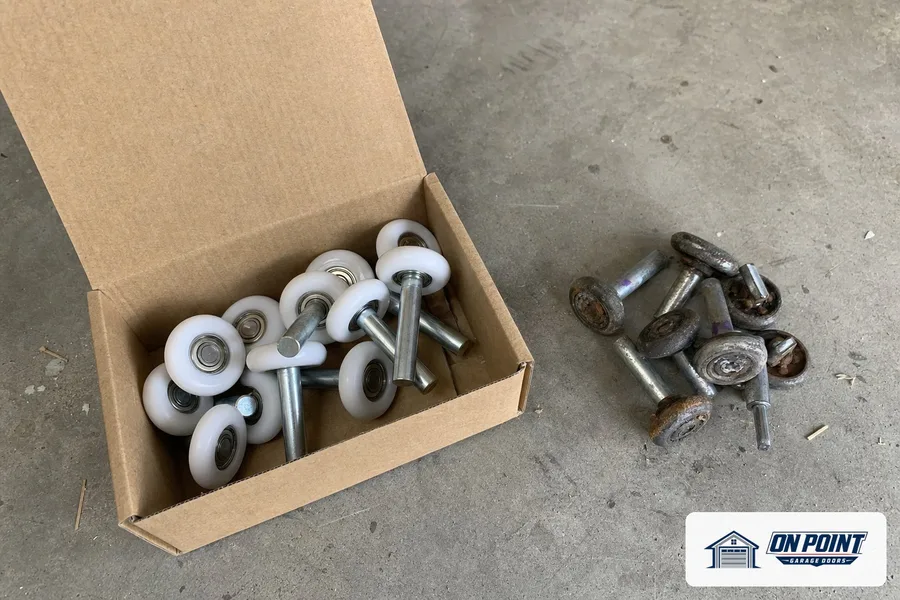
Old steel rollers lose their bearings and start to wobble. Basic nylon rollers crack or wear flat. Either way, the door stops rolling smoothly and starts bumping. You may hear grinding or clicking along with the shake.
New sealed rollers usually make the biggest difference in how a door feels and sounds. They are quieter, run smoother and last much longer than the plain rollers many doors come with.
A sectional door is a set of panels joined by hinges. When hinge holes wear oval or the hinges crack, the sections move against each other as the door bends around the curve of the track. That shows up as a shake right at the bend, often with a knock.
Cracked hinges should be replaced before they let a section pull apart.
Tracks are bolted to the wall and the ceiling. Over time the brackets work loose, and a car or a bin can knock a track out of line. Even a small bend makes the rollers jump as they pass it. The door may shake at the same spot every time.
We straighten or replace bent track sections and set both tracks so they are parallel and plumb.
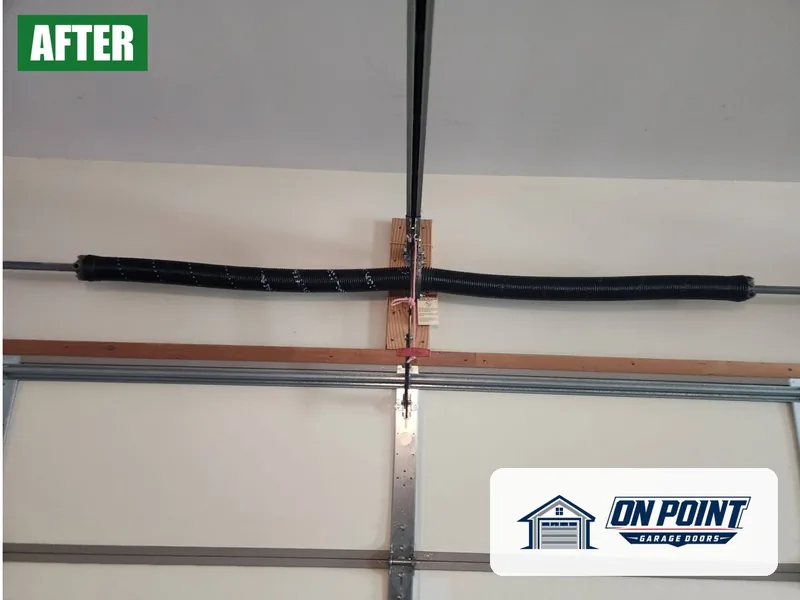
When a spring weakens, the door gets heavy, and one side may lift before the other. The opener pulls hard and the door shudders on the way up. If the door also looks crooked or one cable looks slack, the springs and cables need attention soon.
Balance is checked by disconnecting the opener and moving the door. A balanced door stays where it is stopped; a heavy door drops.
A chain that is too slack slaps the rail and makes the door move in jerks. A worn trolley or a loose rail mount lets the whole opener move. Force and speed settings that are too high make the door start and stop hard.
We adjust the drive, secure the rail and set the opener for the door's real weight.
Every shake is a small hammer blow on the hinges, the brackets and the opener. Doors that shake for months often end with a cracked section, a roller out of the track or an opener that gives up. Fixing the cause early is usually a smaller job.
The technician watches the door move, checks every roller, hinge and track bracket, tests the springs and balance with the opener disconnected, and checks the opener's drive and settings. You get a clear explanation and a free estimate before any work starts.
In many row houses and older homes, the garage is tight and the tracks are mounted to old framing. Loose lag bolts in tired wood are a common reason for shaking there. Solid mounting and the right brackets make the door steady again.
If the door began shaking right after a car, a bin or a bike hit it, look for a bent section, a dented track or a bracket pulled away from the wall. Even a small dent in the track makes every roller jump as it passes.
Running a door with a bent track can push rollers out of the track completely, so it is better to have it straightened before it gets worse.
Cold weather makes worn rollers, dry hinges and tired springs show their age. Many owners first notice a shaky door on the first freezing morning. The same worn parts that shake in the cold are usually the ones close to failing, so winter is a good time for a tune-up.
Usually worn rollers, loose or cracked hinges, a bent track, weak springs or an opener that needs adjustment.
It can be. Shaking stresses the hinges, brackets and opener and can lead to a door coming off track. Have it checked.
Often yes. Worn rollers are the most common cause, and sealed rollers make a door smoother and quieter.
Yes. A heavy or unbalanced door shudders as the opener drags it.
Yes. The technician finds the cause and explains the fix before any work starts.
Across Brooklyn, Queens and Long Island, tell us what the door is doing and we set a visit that fits your day.
Free estimate, call (929) 429-2429.
Tell us what the door is doing and we will give you an honest arrival time. The estimate is free.
Easier to explain by phone? Call (929) 429-2429.
Tell us what the door is doing. The estimate is free either way.