Serving Brooklyn, Queens and Long Island(929) 429-2429Open six days a weekFree estimateGuaranteed work
On Point Garage Doors
Open 24 hours Sun-Thu, Fri until 5 pm Free estimate Springs, openers, cables We come to you
Emergency?Call nowBook free estimate
New York, NY - open six days a week

Garage door opener burning smell

Free estimateSame-day serviceCommon parts on board
  • Free estimate
  • Same-day service
  • Common parts on board
Emergency garage door repair★★★★★ 5.0 on Google · 42 reviews

Book your free estimate

Takes 30 seconds. We call you back to set a time.

Or just call (929) 429-2429 and talk it through.

Home › Opener Burning Smell

A garage door opener that smells hot or burnt is asking you to stop using it. Sometimes the cause is small, like a plastic bulb cover resting against a hot bulb. Sometimes a motor, a circuit board or a wire is cooking inside the housing. From the floor you cannot tell which, and one more trip of the door can turn a small part into a dead opener or something worse. This page explains what the different smells can point to, what to leave alone, and how a technician finds the source. Free estimate at (929) 429-2429.

By Sean Cohen, owner, On Point Garage Doors · Updated

Real jobs. Real photos.

These photos are from our own jobs, with our logo on them.

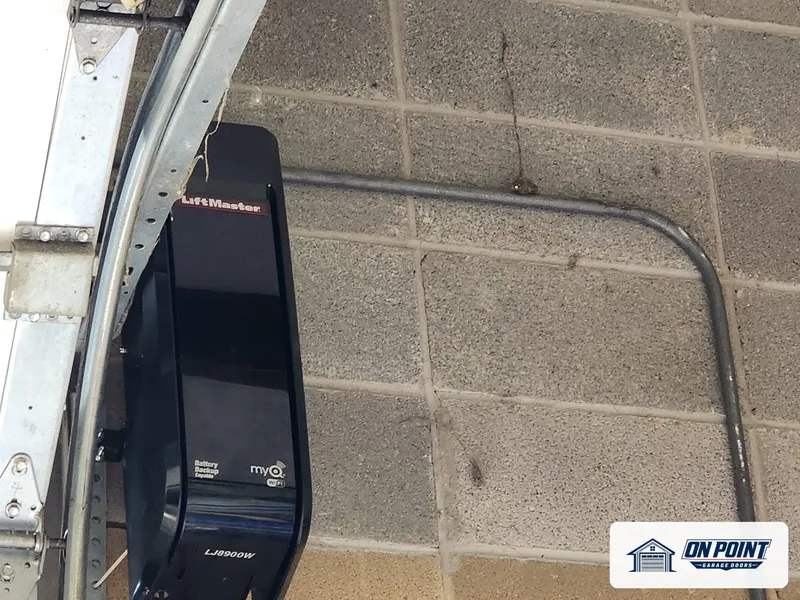
Wall-mounted LiftMaster opener, from one of our jobs
Wall-mounted LiftMaster opener
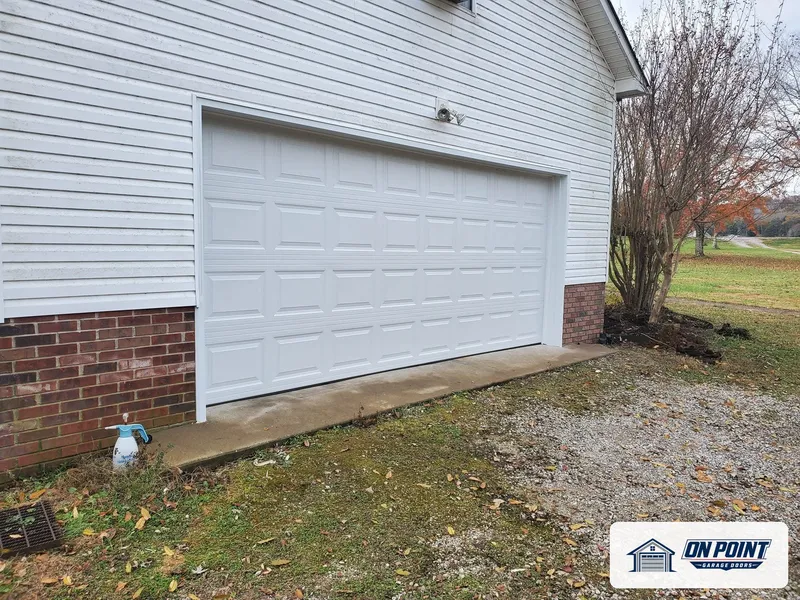
A white raised-panel door on a siding and brick house, from one of our jobs
A white raised-panel door on a siding and brick house
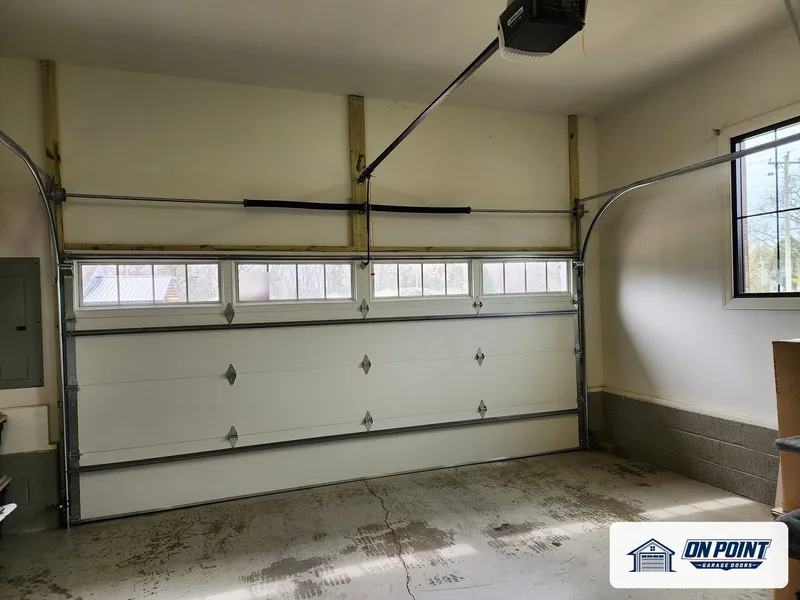
New door and opener seen from inside, from one of our jobs
New door and opener seen from inside

Smoke or flame comes first

If you see flame, or smoke that keeps coming, get everyone out, leave the door as it is and call the fire department. Do not stand under the opener to look at it and do not open the housing. An opener hangs near wood framing and often near stored cardboard, paint and fuel, so it is not a place to wait and see. A repair visit is for afterward, once the building is safe.

If there is only a smell, stop running the door. Where the plug is within easy reach and shows no melting or scorching, take the power away from the opener. If it is not, switch off the circuit at the electrical panel.

What the kind of smell can tell us

Smells are clues, not proof, but they narrow the search. Tell the technician what you noticed and when, because the odor has often faded by the time someone arrives.

A door that has become too heavy

The motor in a home opener is small. It is built to guide a door that the springs already balance. When a spring breaks or slowly loses tension, that same motor is asked to lift real weight. It draws more current, runs hotter and may start to smell well before it quits.

That is why the visit starts at the door and not at the motor. If the opener is replaced and the door is still out of balance, the new machine inherits the same problem.

A door that is stuck or locked

Ice along the bottom seal, a slide lock left engaged, a roller jammed in a bent track or a box wedged in the opening can all hold the door while the motor keeps trying. An opener that is set up correctly should give up, but older units and worn settings can let it strain long enough to cook. If the door did not move and you then noticed the smell, say so. It changes what gets tested.

Too many trips in a row

Residential motors are not meant to run over and over without a rest. Moving day, a garage sale or a child playing with the remote can send the door up and down until a thermal protector shuts the motor off. The opener goes quiet, smells warm and may work again after it cools. Once, that can be harmless. If it trips during normal use, something is making the motor work too hard.

The logic board and a power surge

Storms and returning power can damage the board, the small transformer or the power supply. These failures often come with one brief sharp odor and then silence, or with an opener that clicks and does nothing. A scorched spot may be visible on the board once the cover is off. On a newer unit the board can often be replaced alone. On an old one, parts may no longer be made.

Bulbs, sockets and covers

Not every burnt smell comes from the drive. A bulb stronger than the socket is rated for can scorch the socket and soften the lens. A loose bulb can arc. A plastic cover pushed against an old incandescent bulb gives off a strong odor every time the light comes on. These are the kinder answers, and a technician will check them before condemning a motor.

Plugs, outlets and extension cords

An opener belongs on a proper ceiling outlet. A cord running across the joists to a wall socket, a power strip resting on the rail or an outlet with worn contacts can heat up under load. Browning around a plug is a reason to leave it unplugged. The opener side is our work. A damaged outlet or house wire is a job for an electrician, and we will tell you when that is what we found.

Capacitors and humming motors

Openers with an alternating current motor use a capacitor to help the motor start. When it weakens, the motor hums without turning, and a motor that hums without turning heats fast. A failed capacitor can bulge or leak and leave its own odor. Holding the button down to coax the door along is what turns that small part into a burnt motor.

Fixing the opener or changing it

A socket, a capacitor, a belt or a board on a fairly recent opener can be a sensible repair. Melted wiring inside the housing, burnt windings or a cracked gearbox on an older machine usually point to a new opener, especially if it lacks working safety eyes. We show you the failed part and explain both roads where both exist. Our opener motor page goes deeper into that choice.

What the technician tests

With the power off, the door is checked for broken springs, frayed cables, stuck rollers and balance. Then the housing, board, capacitor, wiring and socket are inspected for heat damage, and the opener is run only if that is safe. You get a written estimate for what failed, and work starts after you approve it.

Getting the car out in the meantime

Please do not keep running a smelly opener because the car is inside. Do not pull the door loose from the opener if a spring may be broken either, since a heavy door can fall. Tell us that the car is trapped when you call. Freeing it safely becomes the first job of the visit.

Questions we get asked

Is a burning smell from a garage door opener dangerous?

It can be. Overheated motors, boards and connections are a fire risk. Stop using the opener and have it looked at, and call the fire department if there is smoke or flame.

Why does my opener smell but still work?

A part can overheat long before it fails. An out-of-balance door, a weak capacitor, a hot socket or a worn drive can all smell while the door still moves.

Can a burnt opener motor be repaired?

Sometimes, on a newer unit. On an older opener a burnt motor usually means a new opener is the sounder choice, after the door's balance has been corrected.

My new opener smells warm. Is that normal?

A faint warm odor during the first few trips can be normal. A strong, repeated or sharp smell is not, and the install and the door's balance should be checked.

Is the estimate free?

Yes. The technician finds the source of the smell and gives you a written estimate before any work starts.

Booking takes a minute

Across Brooklyn, Queens and Long Island, tell us what the door is doing and we set a visit that fits your day.

Free estimate, call (929) 429-2429.

Opener smells burnt? Leave it off and tell us what happened

Tell us what the door is doing and we will give you an honest arrival time. The estimate is free.

Easier to explain by phone? Call (929) 429-2429.

Two minutes to a free estimate

Tell us what the door is doing. The estimate is free either way.

Or just call (929) 429-2429 and talk it through.

The other six things that go wrong