Serving Brooklyn, Queens and Long Island(929) 429-2429Open six days a weekFree estimateGuaranteed work
On Point Garage Doors
Open 24 hours Sun-Thu, Fri until 5 pm Free estimate Springs, openers, cables We come to you
Emergency?Call nowBook free estimate
New York, NY - open six days a week

Garage door opener belt replacement

Free estimateSame-day serviceCommon parts on board
  • Free estimate
  • Same-day service
  • Common parts on board
Emergency garage door repair★★★★★ 5.0 on Google · 42 reviews

Book your free estimate

Takes 30 seconds. We call you back to set a time.

Or just call (929) 429-2429 and talk it through.

Home › Opener Belt Replacement

Belt-drive openers are the quiet ones, which is why so many homes with a bedroom over the garage have one. The belt is a long reinforced strip with teeth on one side, and it does the same job a chain does on a chain-drive unit. It lasts a long time, but it is not forever. When it stretches, frays or snaps, the opener starts to slap, slip or hum without moving the door. We replace belts on belt-drive openers across Brooklyn, Queens and Long Island, and we check the rest of the opener and the door at the same visit so the new belt is not hiding an older problem. Free estimate at (929) 429-2429.

By Sean Cohen, owner, On Point Garage Doors · Updated

Real jobs. Real photos.

These photos are from our own jobs, with our logo on them.

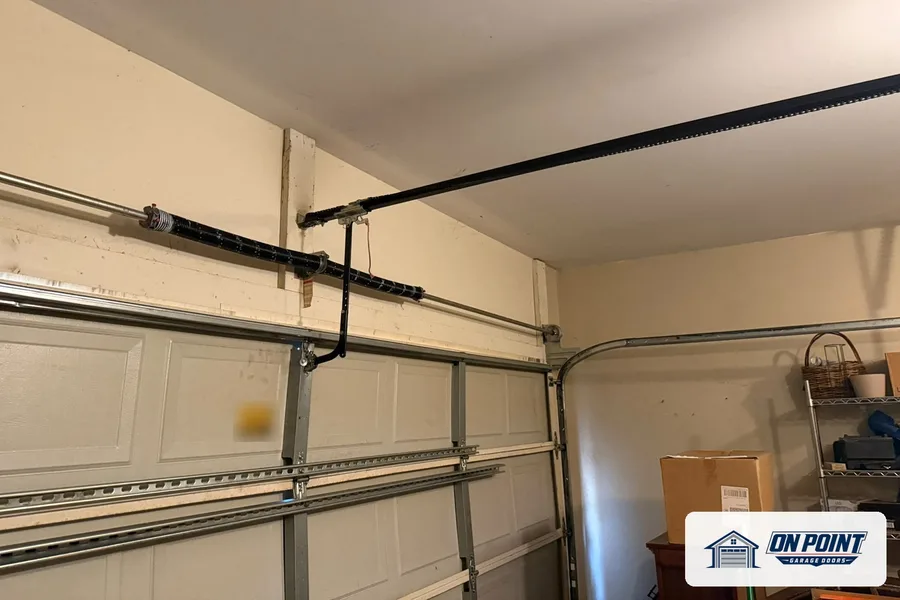
Opener rail running out to the door, from one of our jobs
Opener rail running out to the door
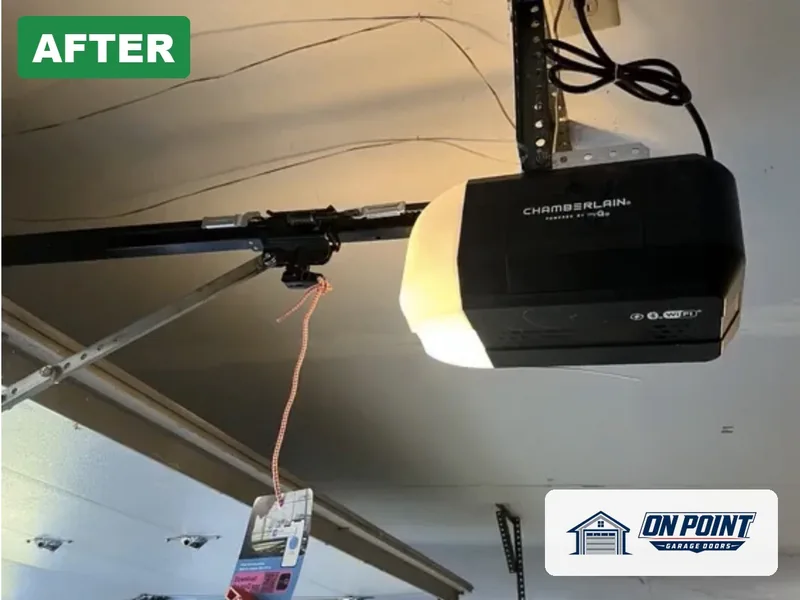
A belt-drive opener on the ceiling, from one of our jobs
A belt-drive opener on the ceiling
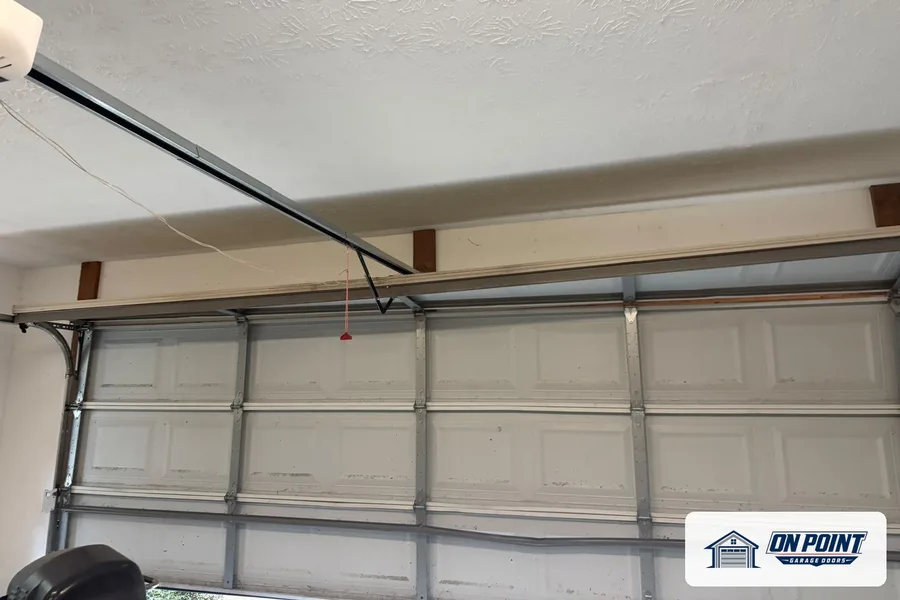
Inside track on a sectional door, from one of our jobs
Inside track on a sectional door

How the belt moves the door

The motor turns a toothed sprocket at the head of the opener. The belt wraps around that sprocket, runs out along the rail to a pulley near the door, and comes back to the trolley, the carriage that slides along the rail and holds the arm. When the motor turns, the teeth grip the belt, the trolley slides, and the arm pulls the door up or pushes it down. Every part of that loop has to be in good shape. A worn sprocket chews a good belt, and a worn belt skips on a good sprocket.

Signs the belt is wearing out

Stretching and slack

A belt stretches a little over the years, mostly in the first stretch of its life and again near the end. A small amount of slack is normal and is taken up at the tensioner on the trolley. Too much slack lets the belt lift off the sprocket teeth under load, which is where the skipping and slapping come from. When we can no longer take up the slack without the belt rubbing or the trolley binding, the belt is done.

Fraying and torn teeth

Frayed edges usually mean the belt has been running off center for a long time. A bent rail, a loose pulley or an opener that was hung at a slight angle pushes the belt against one edge. Torn or flattened teeth often come from a door that is hard to lift. If the springs are weak, the opener fights the door every trip and the belt takes the strain. Replacing the belt without finding that cause means the new one wears the same way.

When the belt snaps

A snapped belt is usually obvious: the motor runs, the light comes on, and nothing moves, or the trolley drifts loose on the rail. If the door is down, it stays down, and if it is up, it may drift lower on its own if the springs are tired. Leave the door where it is and call. A door with weak springs can drop once the opener is no longer holding it, and a snapped belt is often the first sign that the springs need attention too.

Is it the belt or the gear inside

A motor that hums or runs with no movement does not always mean a bad belt. Inside many openers is a plastic drive gear that strips with age, and it gives the same symptom. We open the cover and look at the gear, the sprocket and the belt together before we order anything. If the belt is fine and the gear is gone, we say so, and we do not sell a belt you do not need.

Belts are matched to the opener

Belts are not one size fits all. Each brand uses its own tooth shape and width, and the length depends on the rail, which depends on the height of the door. A door with an extension kit needs a longer belt. Some openers use a belt that is joined to the trolley in a particular way. We match the belt to the exact opener and rail so the teeth seat properly on the sprocket from the first trip.

Doors in damp and hot garages

Garages near the water and garages that bake in summer are hard on belts. Damp air and salt can work on the steel cords inside the belt and on the sprocket, and heat dries out the outer layer. On older belts in those garages we often find cracks across the back of the belt even when the teeth still look fine. We check the whole length of the belt, not just the part near the motor.

What the replacement includes

  1. Check the door firstWe disconnect the opener and test the balance so we know the door is not the real problem.
  2. Look inside the openerGear, sprocket, pulley and trolley get checked before the old belt comes off.
  3. Fit the new beltThe belt goes on, the tension is set and the trolley is reconnected.
  4. Set travel and forceOpen and close limits are reset and the force is set for this door.
  5. Test the safety reverseWe run the door, test the sensors and make sure it reverses on contact.

A new belt or a new opener

A belt is worth replacing on an opener that is otherwise healthy: a good motor, a good board, sensors that work and remotes you are happy with. On a very old opener with a worn gear, a tired board and remotes that are hard to find, a new belt may only buy a short reprieve. We tell you what we see inside the cover and let you decide. Many people keep the opener and are glad they did.

Keeping the new belt quiet

Most of what keeps a belt healthy is keeping the door easy to lift. Balanced springs, free rollers and straight tracks mean the opener does light work, and the belt lasts. A yearly check of the door and the opener catches slack and rubbing early. If the opener starts to tick or slap again, call before it gets worse; it is usually a small adjustment at that stage.

Questions we get asked

How do I know if my opener has a belt or a chain?

Look at the rail on the ceiling. A chain drive has a metal chain that looks like a bike chain; a belt drive has a flat or ribbed rubber-looking strip. Belt drives are also much quieter.

My opener runs but the door does not move. Is it the belt?

It can be the belt, but it is often the drive gear inside the opener or a disconnected trolley. We check all three before replacing anything.

Can a belt-drive opener be changed to a chain?

Usually not on the same rail and motor, because the sprocket and trolley are made for one or the other. If you want a chain drive, it means a different opener.

Why did my belt wear out on one edge?

The belt was running off center, often from a bent rail, a loose pulley or an opener hung at an angle. We correct that when we fit the new belt.

Is the estimate free?

Yes. We tell you whether the belt, the gear or the door is the problem before any work is done.

Booking takes a minute

Across Brooklyn, Queens and Long Island, tell us what the door is doing and we set a visit that fits your day.

Free estimate, call (929) 429-2429.

Belt worn or broken? We will look at the opener

Tell us what the door is doing and we will give you an honest arrival time. The estimate is free.

Easier to explain by phone? Call (929) 429-2429.

Two minutes to a free estimate

Tell us what the door is doing. The estimate is free either way.

Or just call (929) 429-2429 and talk it through.

The other six things that go wrong