Serving Brooklyn, Queens and Long Island(929) 429-2429Open six days a weekFree estimateGuaranteed work
On Point Garage Doors
Open 24 hours Sun-Thu, Fri until 5 pm Free estimate Springs, openers, cables We come to you
Emergency?Call nowBook free estimate
New York, NY - open six days a week

Garage door noises explained

Free estimateSame-day serviceCommon parts on board
  • Free estimate
  • Same-day service
  • Common parts on board
Emergency garage door repair★★★★★ 5.0 on Google · 42 reviews

Book your free estimate

Takes 30 seconds. We call you back to set a time.

Or just call (929) 429-2429 and talk it through.

Home › Garage Door Noises Explained

A garage door makes a lot of noise, and most owners learn to ignore it. But when the sound changes, it is usually telling you something specific. A squeal, a grind, a pop and a bang each point to different parts, and a few of them mean you should stop using the door until it has been checked. Here is what the common sounds usually mean. Free estimate at (929) 429-2429.

By Sean Cohen, owner, On Point Garage Doors · Updated

Real jobs. Real photos.

These photos are from our own jobs, with our logo on them.

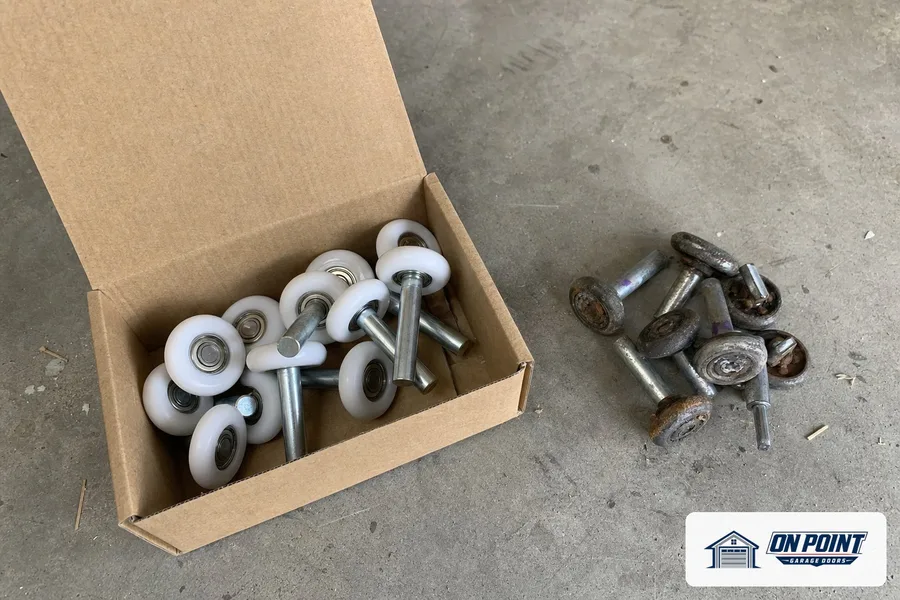
New and worn rollers, from one of our jobs
New and worn rollers
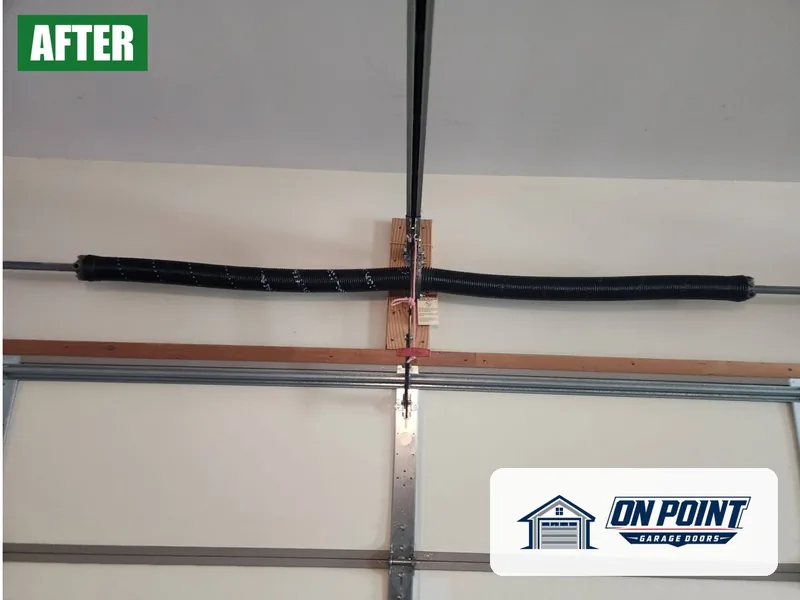
New garage door spring installed by On Point Garage Doors
Springs and cables
Opener on the ceiling, from one of our jobs
Opener on the ceiling

The sounds and what they mean

  1. A single loud bangAlmost always a spring breaking. Stop using the door.
  2. GrindingWorn rollers, bearings, a bent track or worn opener gears.
  3. Squealing or squeakingDry or worn hinges, rollers, springs or bearings, or the door rubbing its seals.
  4. Popping or snapping as it movesA section flexing, a cable jumping on its drum, or springs needing attention.
  5. RattlingLoose hardware, loose track bolts or a loose opener rail.

Sounds that mean stop

Humming from the opener

A hum with no movement usually means the opener is trying to start but cannot: a failed capacitor, a stripped gear, a disconnected trolley or a door too heavy because of a broken spring. Stop pressing the button and call.

Clicking

A click from the opener with nothing else is often the relay switching on without the motor following: a board, capacitor or power problem. Clicking from the door as it moves can be a roller hitting a damaged spot in the track.

Grinding explained

Grinding along the sides points to rollers or tracks. Grinding from above the door points to the spring bar bearings. Grinding from the opener on the ceiling points to its gears or drive. Each needs a different fix.

Squealing explained

A squeal at the curve of the track usually comes from hinges and rollers flexing there. A squeal from above the door usually comes from springs or bearings. A squeal on cold mornings may be the seals rubbing. The right lubricant on the right parts helps; worn parts need replacing.

Rattling explained

Vibration slowly works bolts and screws loose: hinge screws, track bolts, the opener rail and its mount. A rattling door is checked and every fastener made secure. On thin doors, panels that buzz can be stiffened with struts.

Banging at the top or bottom

A door that bangs at the end of its travel usually has the opener's limits set wrong or springs out of balance. Setting the limits and balancing the door stops it, and protects the door and opener.

Noise and the room above

If there is a bedroom over the garage, any of these sounds carries. Sealed rollers, a balanced door and a belt-drive or wall-mounted opener make the biggest difference.

What a visit includes

The technician listens to the door with and without the opener, finds where each sound comes from, checks springs, cables, rollers, hinges, tracks, bearings and the opener, and explains what is worn with a free estimate.

Noises in winter

Cold makes worn parts louder. A door that starts grinding or squealing on the first cold mornings is showing you which parts are tired before they fail.

Noises from the opener versus the door

Disconnect the opener with the emergency handle only if the door is closed and the springs are sound, and a technician can move the door by hand. If the noise goes away, it was the opener; if it stays, it is the door. This test is part of every visit.

Commercial door noises

Roll-up and sectional doors on shops and warehouses make the same kinds of noises, usually louder. A grinding operator, a slapping chain hoist or a bottom bar that bangs the floor all point to worn parts or settings that need attention.

New noises after work was done

If a door starts making a new sound soon after a repair or a new door, call. New springs settle, tracks can shift slightly and limits may need a small adjustment.

Popping springs

A popping or creaking from the springs as the door moves can mean the coils are dry or binding, or that a spring is close to the end of its life. It is worth having the springs checked before that pop turns into a bang.

Noise from the bottom seal

A slapping or scraping at the bottom as the door closes can be a torn bottom seal dragging on the floor, or a door that slams because its springs are weak. A new seal or balanced springs quiets it.

When a quiet door gets loud

The most useful clue is change. If a door that was quiet for years suddenly grinds, bangs or squeals, a part has just started to fail. That is the best moment to have it looked at.

Questions we get asked

What does a loud bang from my garage door mean?

Almost always a broken spring. Stop using the door and call.

Why does my garage door grind?

Worn rollers, bearings, a bent track or worn opener gears.

Why does my garage door squeal?

Dry or worn hinges, rollers, springs or bearings, or the door rubbing its seals.

Why does my opener hum but not move the door?

A capacitor, a stripped gear, a disconnected trolley or a broken spring.

Is the estimate free?

Yes. You see what is worn and the fix before any work starts.

Booking takes a minute

Across Brooklyn, Queens and Long Island, tell us what the door is doing and we set a visit that fits your day.

Free estimate, call (929) 429-2429.

Not sure what is wrong? We will come and look

Tell us what the door is doing and we will give you an honest arrival time. The estimate is free.

Easier to explain by phone? Call (929) 429-2429.

Two minutes to a free estimate

Tell us what the door is doing. The estimate is free either way.

Or just call (929) 429-2429 and talk it through.

The other six things that go wrong