Takes 30 seconds. We call you back to set a time.
You hit the button, you hear a click from the opener, and nothing else happens. No hum, no movement, maybe the light comes on. That click is the opener trying to start: a relay inside the unit switching on. When the motor does not follow, something between that relay and the door has failed or is blocked. Free estimate at (929) 429-2429.
By Sean Cohen, owner, On Point Garage Doors · Updated
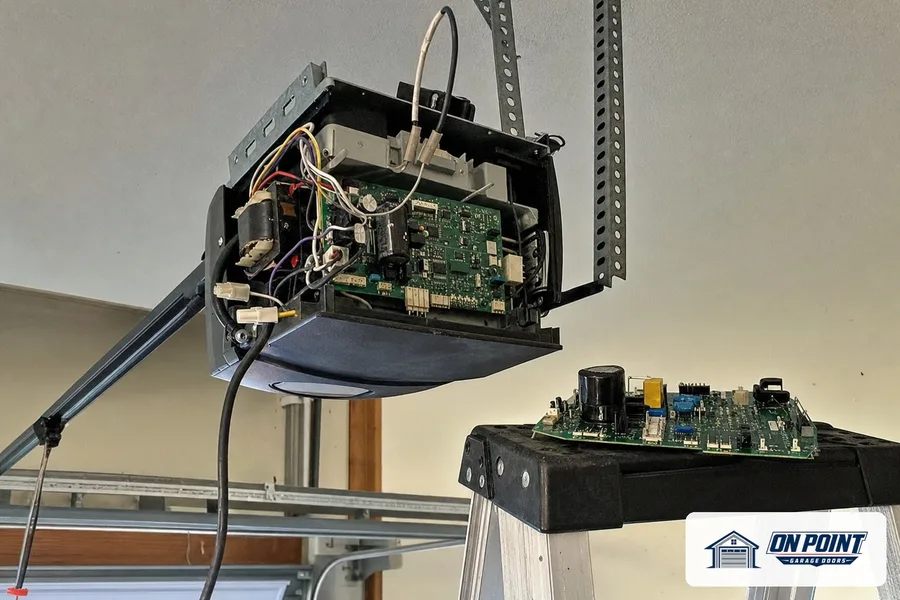
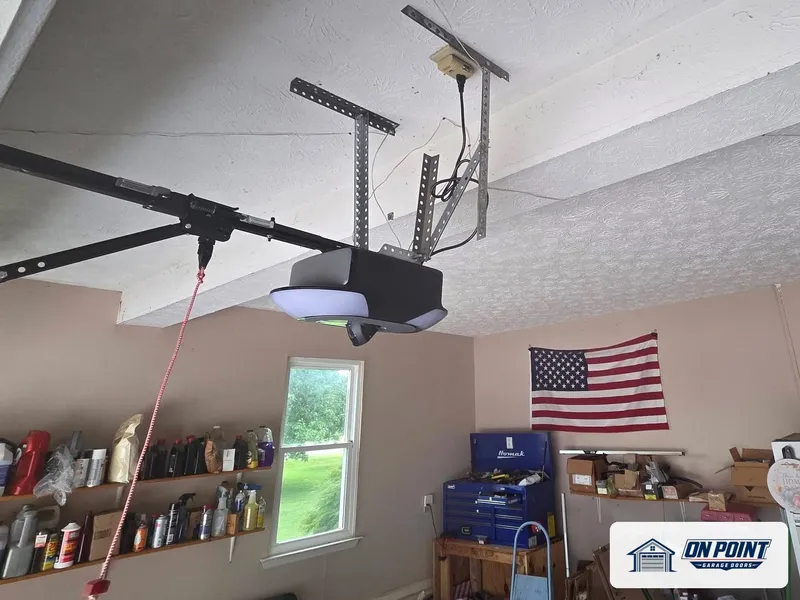
These photos are from our own jobs, with our logo on them.


Inside most openers, the board sends power to the motor through a relay. When you use the button, the relay clicks closed. If the motor then spins, the door moves. If you only hear the click, the motor is not getting what it needs to start, or it is starting against something it cannot move.
A click followed by a hum and no movement often means the motor is trying to start but cannot: a bad capacitor, a stuck motor or a door it cannot lift. A click with complete silence after it points more toward the board, the relay or the wiring. Telling us which you hear helps us bring the right parts.
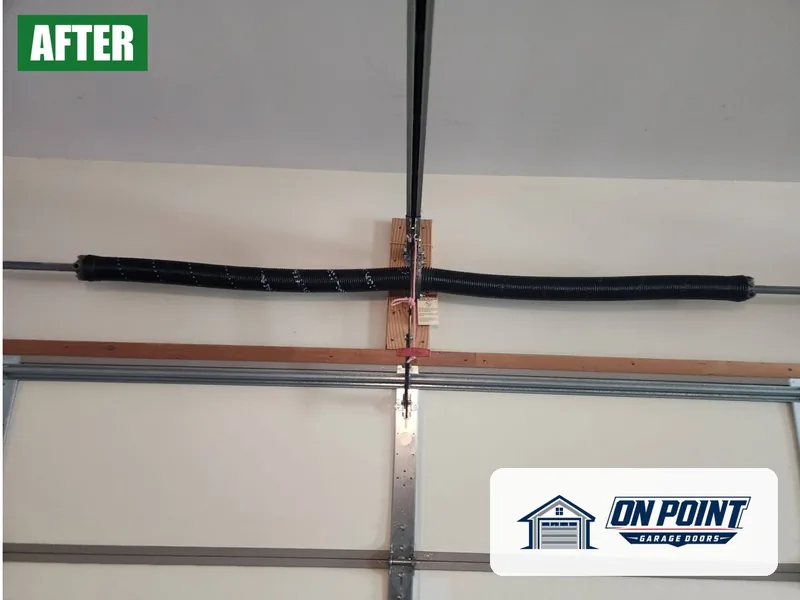
If a spring has broken, the door can be far too heavy for the opener, and the motor stalls the moment it tries. That can look exactly like an opener failure. Look from a safe distance for a gap in the spring above the door or a loose cable. If you see either, stop pressing the button and call.
Each time a stalled motor tries to start, it heats up. Pressing over and over can burn out a motor that only needed a capacitor, or strip a gear against a heavy door. Try it once or twice, then leave it and call.
A failed capacitor or a worn relay is a common, fixable part on many openers. A burned-out motor or a board that is no longer made often means a new opener makes more sense, especially if the unit is old, loud or has no modern safety features. You get a free estimate on both.
Clicking that started right after a storm or a power outage often points to a surge that damaged the board or the relay. The outlet and the circuit are checked too, along with the safety sensors, which can also be damaged by a surge.
The technician checks the door's springs and balance first, then the opener's power, board, relay, capacitor, motor and drive. Once the cause is found, it is repaired or a new opener is installed, the travel and force are set, and the safety reverse is tested.
You get a clear explanation and a free estimate before any work starts.
Tell us when you call. If the opener has failed but the springs are fine, the technician can get the door open safely and the car out, then fix the opener. If a spring is broken, that is fixed first so the door can be moved safely.
Openers last longest on balanced doors. A yearly tune-up keeps the springs and rollers in shape so the motor never has to fight the door. If your opener starts sounding different, slower, louder or straining, that is the time for a check.
Detached garages and garages with damp floors are hard on opener boards and wiring. Moisture corrodes connections, and a relay that clicks but does not pass power is a common result. A dry, solid mount and a protected outlet help the next opener last.
If the click comes from the wall control rather than the opener, or the wall button clicks but the remote works, the wall control or its wire is the likely problem. A new wall control is a simple fix and often adds a light switch and a lock button.
Usually a failed start capacitor, a worn relay or board, a stuck motor, or a door too heavy or jammed for the motor to move.
Yes. The motor stalls against the heavy door the moment it tries to start.
Often yes, when it is a capacitor or relay. If the motor or board is gone on an old unit, a new opener is usually better.
No. A stalled motor overheats each time it tries. Stop and call.
Yes. You see the cause and the options before any work starts.
Across Brooklyn, Queens and Long Island, tell us what the door is doing and we set a visit that fits your day.
Free estimate, call (929) 429-2429.
Tell us what the door is doing and we will give you an honest arrival time. The estimate is free.
Easier to explain by phone? Call (929) 429-2429.
Tell us what the door is doing. The estimate is free either way.