Booking today in New York(929) 429-2429Open six days a weekFree estimateGuaranteed work
On Point Garage Doors
Open 24 hours Sun-Thu, Fri 7-5 Free estimate Springs, openers, cables We come to you
Emergency?Call nowBook free estimate
New York, NY - open six days a week

Garage door opener hums but won't move? Here is why

Free estimateSame day whenever possibleCommon parts on board
  • Free estimate
  • Same day whenever possible
  • Common parts on board
Emergency garage door repair★★★★★ 5.0 on Google · 36 reviews

Book your free estimate

Takes 30 seconds. We call you back to set a time.

Or just call (929) 429-2429 and talk it through.

Home › Garage Door Opener Hums but Won't Move

An opener that hums but won't move is getting power but can't turn: usually a broken spring, a locked door, a failed capacitor or a stripped gear. The sound it makes, and how long it lasts, points to which one. Free estimate at (929) 429-2429.

Real jobs. Real photos.

These photos are from our own jobs, with our logo on them.

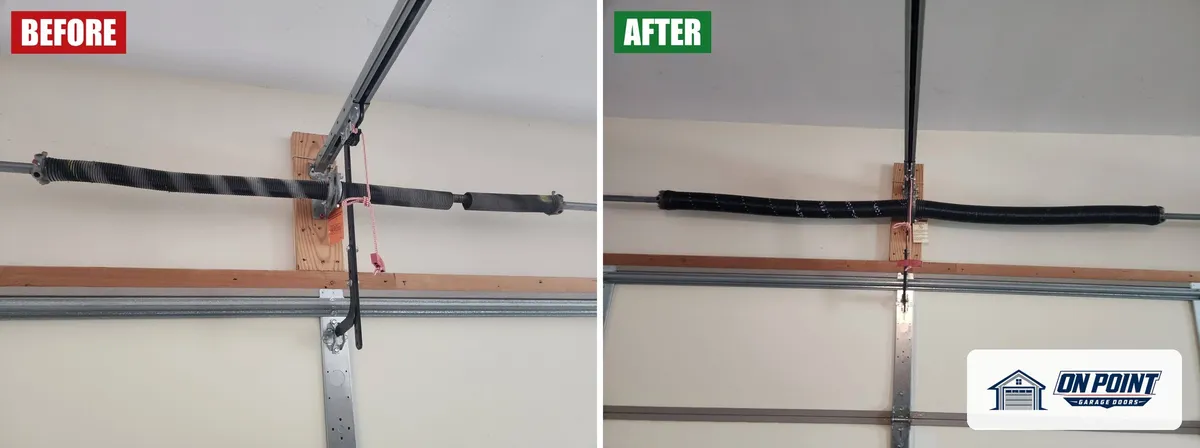
Broken torsion spring above a door, then the new spring after the repair, from one of our jobs
Broken spring, then fixed
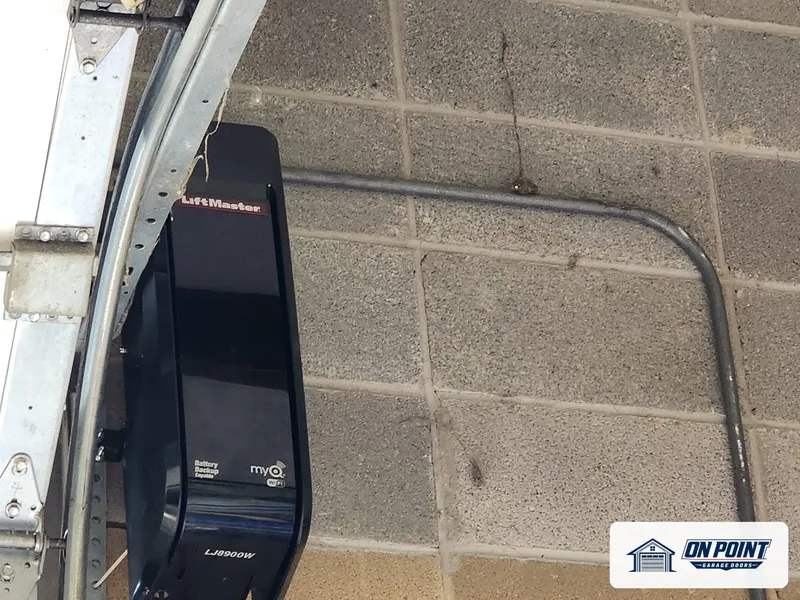
LiftMaster wall-mount opener installed beside the door track, from one of our jobs
Wall-mount opener installed
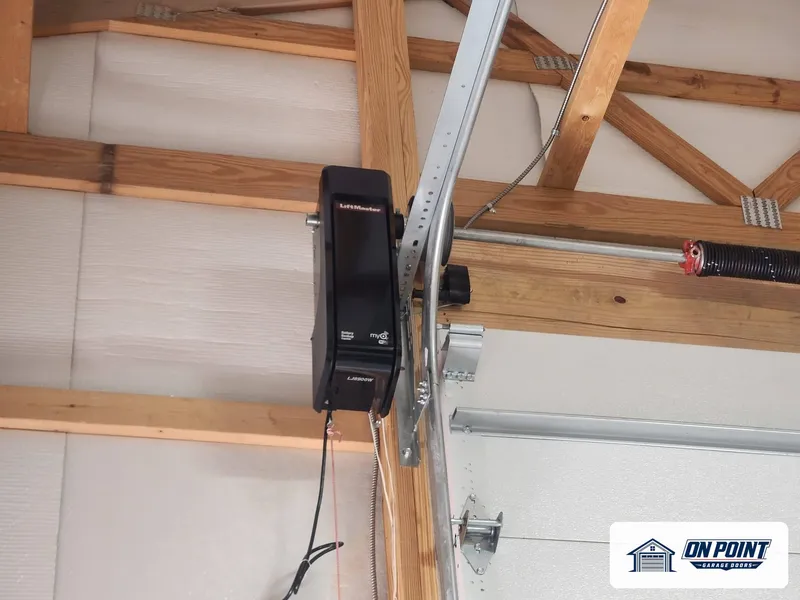
Wall-mount opener on the torsion bar, next to the spring, from one of our jobs
Opener and spring, side by side

A hum means the power is getting there

When you press the button and hear a hum, the opener got the signal and sent power to the motor. That rules out the remote, the wall button and the outlet. The problem is that the motor can't turn, or it turns and nothing passes that on to the door.

Most openers only try for a second or two. If the motor doesn't get moving, the opener cuts the power to protect itself, which is why the hum is so short. Some click or flash the light as well.

The opener is not the part that lifts the door. The springs carry its weight, and the opener only guides it up and down. So a hum is just as often a door problem as an opener problem, and the door gets checked first.

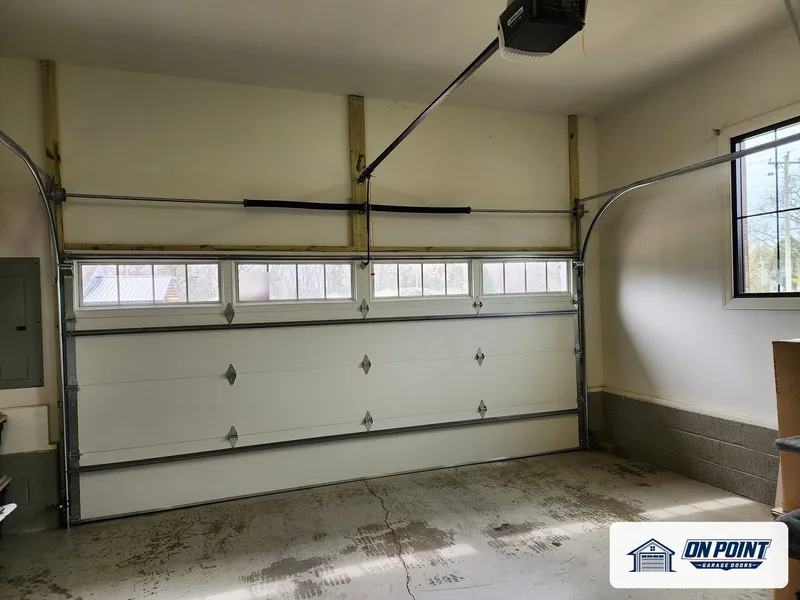
Garage door seen from inside, with the opener, rail and torsion spring above it, from one of our jobs

What you hear tells you a lot

  • A short hum, nothing moves at all, not even the chain or belt: the motor can't start. Often a broken spring, a locked or jammed door, or a failed capacitor.
  • The motor runs and sounds normal, but the chain or belt stays still: usually a worn or stripped gear inside the opener.
  • The chain or belt moves, but the door doesn't: the opener is not connected to the door, often after the emergency release was pulled.
  • It hums and lifts the door a few inches, then stops: the door is too heavy for the opener, which usually means a spring.
  • It hums only on cold mornings: stiff grease and a weak capacitor both get worse in the cold.
  • A loud bang from the garage before this started: that is very often a torsion spring breaking.

You don't need to test anything. Say which of these you hear when you call, and the right parts ride along.

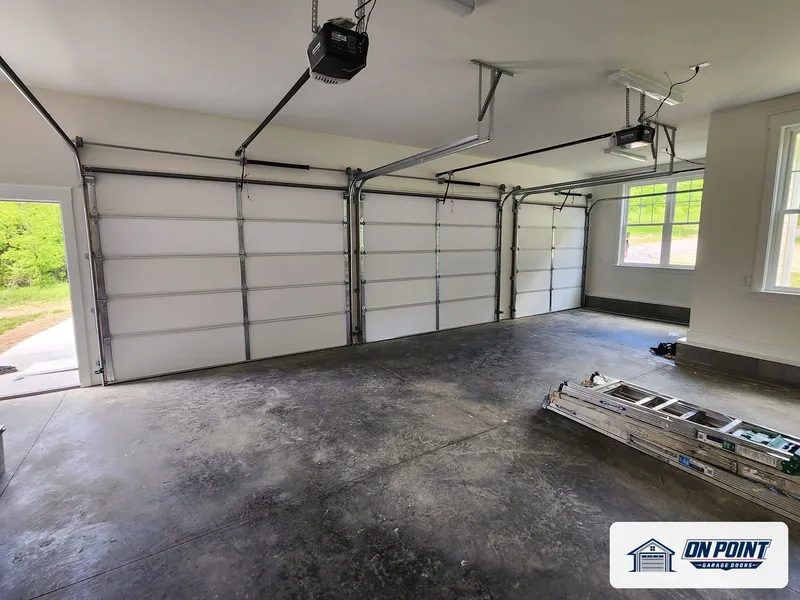
Three garage doors seen from inside, each with its own opener and rail
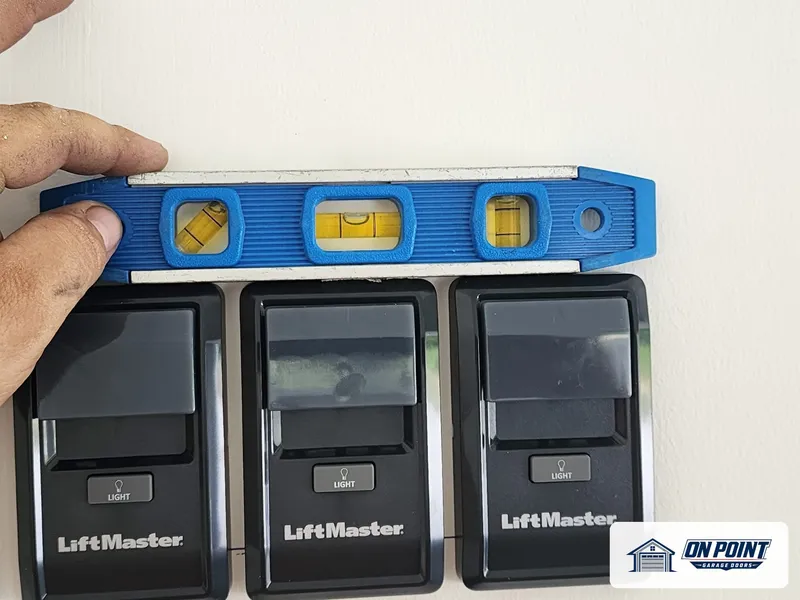
Three LiftMaster wall controls being leveled and mounted on a garage wall
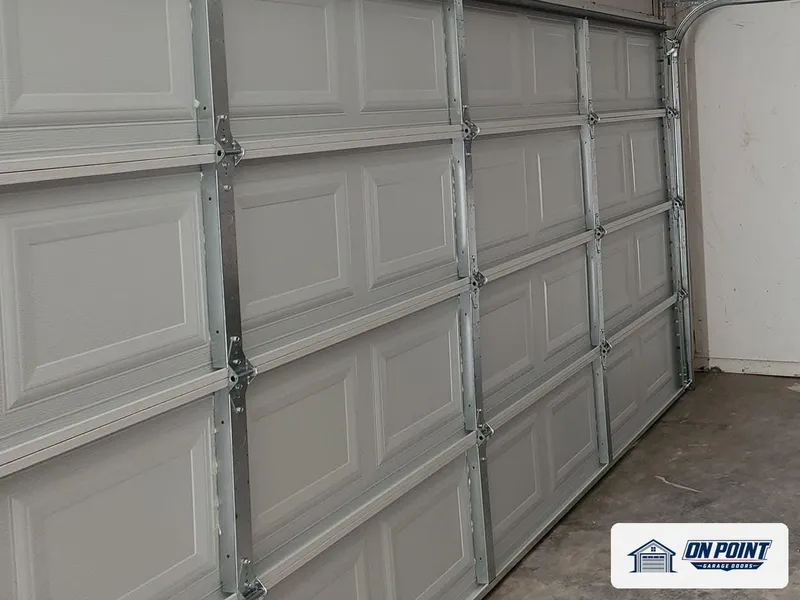
Inside of a sectional door: hinges, struts and the vertical track the rollers ride in

Why the opener hums but the door won't move

These are the usual causes.

  1. A spring is brokenWith a broken spring the door is far too heavy for the opener. It strains, hums and gives up. This is the most common cause on a door that worked fine the day before.
  2. The door is locked or stuckA slide lock left closed, a roller jammed in the track or a bent section of track holds the door in place, and the motor can't overcome it.
  3. The start capacitor has failedOn many chain-drive openers, a capacitor gives the motor its first push. When it weakens, the motor hums but can't get going, often worse in the cold.
  4. The drive gear is strippedMany openers turn the chain or belt through a plastic gear that wears with every cycle. Once it strips, the motor runs and nothing moves.
  5. The motor or the board is wearing outAn older opener can lose the strength to start, or its board can send the wrong signal. If the door moves freely and everything else checks out, this is the usual picture.
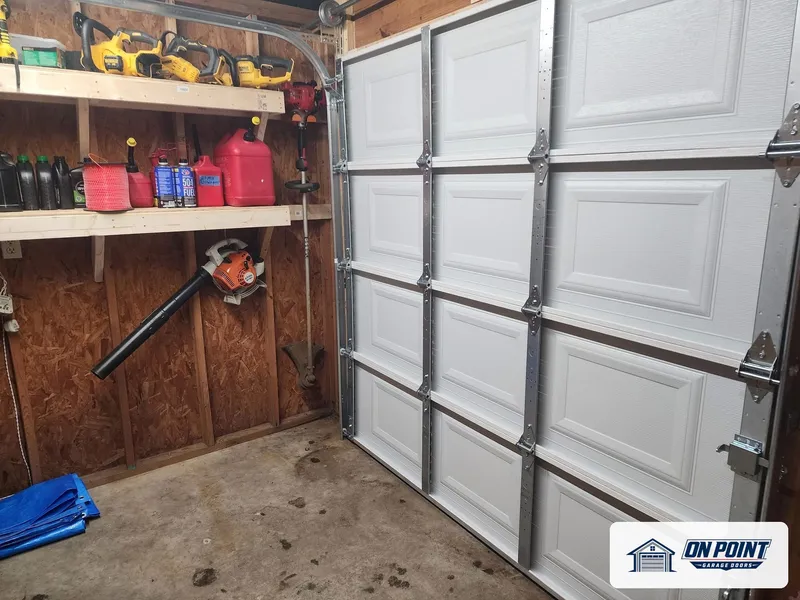
New white garage door seen from inside, with its hinges, struts and track, from one of our jobs

Stop pressing the button

It is tempting to keep trying. Every hum heats the motor, and an opener pushing against a heavy or stuck door can strip its gear or burn out a part that was fine. One or two tries tell you all you need to know.

Springs and cables are not a DIY job. They hold a few hundred pounds of door under tension, and they can seriously hurt you. If a spring may be broken, don't pull the red release cord and don't try to lift the door by hand: without the spring it can come down fast. Leave it closed and call. Keep children and pets clear, and don't drive under a door that is partly open.

What the technician checks

The door first, then the opener. With the opener disconnected, the technician checks the springs and both lift cables, whether the door is balanced, and whether it moves freely in its tracks. If the door is the real fault, it gets fixed before the opener is judged.

Then the opener: the motor, the start capacitor, the drive gear, the chain or belt, the trolley and the board. Before leaving, the technician runs the door up and down and confirms the safety reverse still works. You hear what failed and what it takes, with a free estimate before any work starts.

If it turns out to be the opener, see garage door opener repair. If it is a spring, see broken spring repair.

What people are told, and what's real

It must be the remote. Not if it hums. A hum means the signal got through. A dead remote or wall button usually makes no sound at all.

You need a new opener. Often not. A good opener humming against a broken spring works again once the spring is replaced, and a stripped gear or a weak capacitor is a repair, not a replacement.

Questions we get asked

Why does my garage door opener hum but not open the door?

The motor is getting power but can't turn. The usual causes are a broken spring that leaves the door too heavy, a door that is locked or stuck in its track, a failed start capacitor on the motor, or a stripped drive gear inside the opener.

Why does it hum for a second or two, then stop?

That short hum is the motor trying to start and failing. The opener cuts the power after a moment to protect itself. A door that will not move and a weak or failed capacitor both look like this, so the door gets checked before the opener.

Can a broken spring make the opener hum?

Yes, and it is one of the most common reasons. The springs carry the weight of the door, not the opener. With a broken spring the opener is asked to lift the whole door, so it strains, hums and stops. If you see a gap in a spring coil, leave the door closed and call.

The motor runs but the chain or belt doesn't move. What is that?

That usually points inside the opener. Many openers drive the chain or belt through a plastic gear that wears down over the years. When it strips, the motor spins and nothing moves. A technician opens the unit to confirm it.

Is it safe to keep pressing the button?

No. Each try heats the motor and can finish off a weak part. If a spring may be broken, do not pull the red release cord either, because the door can drop fast. Leave the door where it is and call.

Is the estimate really free?

Yes. You hear what is wrong and what it takes before any work starts.

Booking takes a minute

Around Brooklyn, Queens and Long Island, one call gets you a two-hour slot and a heads-up call before the technician sets off.

Free estimate, call (929) 429-2429.

Opener hums and the door won't budge? We'll come and look

Tell us what you hear when you press the button and we'll give you an honest arrival time. The estimate is free.

Easier to explain by phone? Call (929) 429-2429.

Two minutes to a free estimate on an opener that hums

Tell us what the door is doing. The estimate is free either way.

Or just call (929) 429-2429 and talk it through.

The other six things that go wrong