Takes 30 seconds. We call you back to set a time.
When an opener's motor fails, the first question is whether the motor is really the problem. Many motors that seem dead are fine and the fault is a gear, a capacitor, a board or a broken spring. When the motor itself has burned out, replacing the whole opener is usually better value than a motor alone, because the rest of the unit is the same age. Free estimate at (929) 429-2429.
By Sean Cohen, owner, On Point Garage Doors · Updated
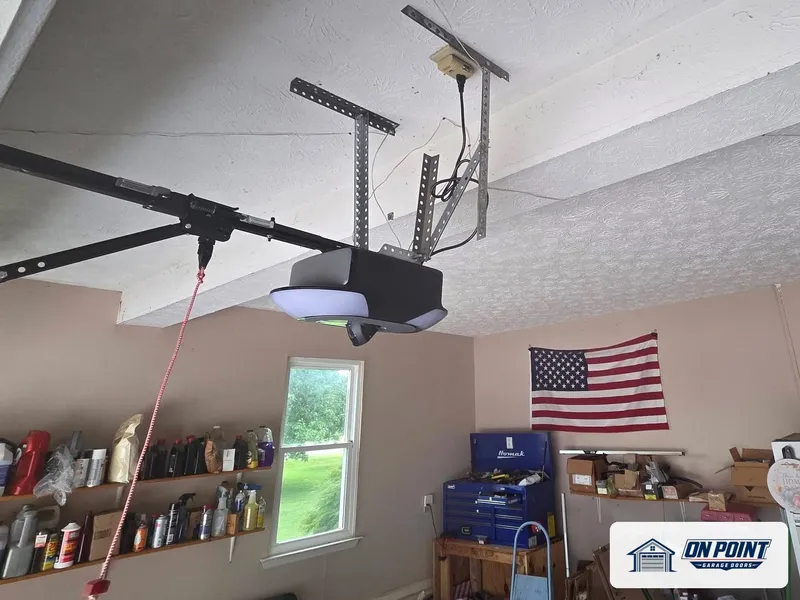
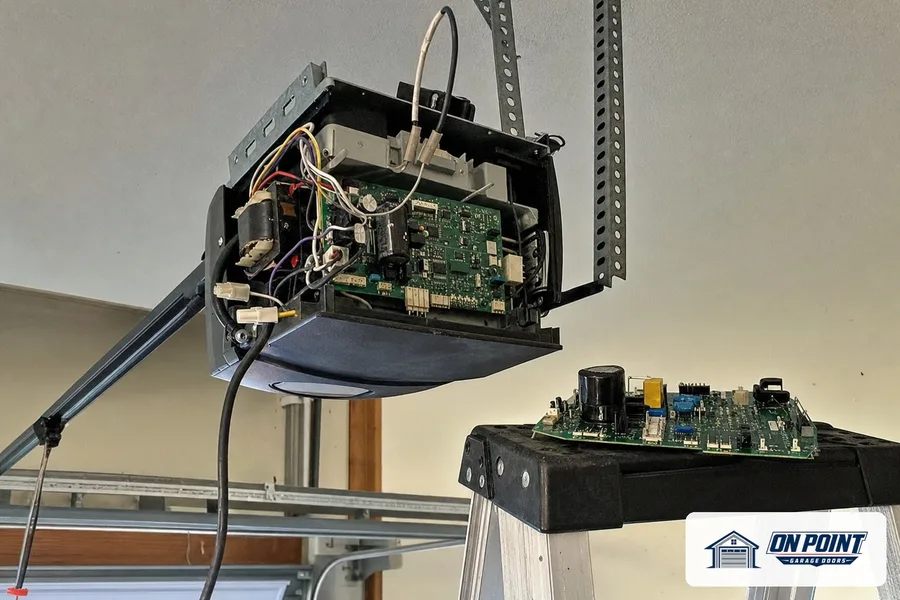
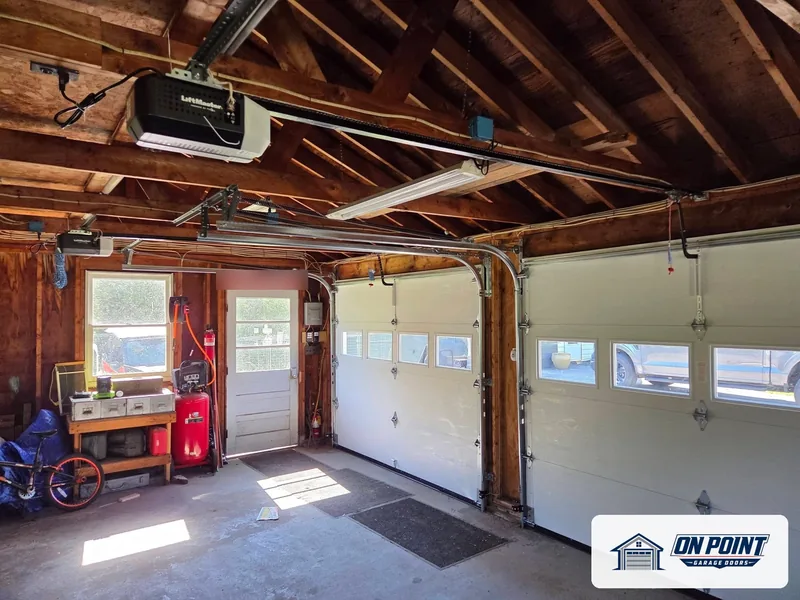
These photos are from our own jobs, with our logo on them.


Several of these have other causes too, which is why the door and the opener's other parts are checked first.
A motor replacement means opening the unit and fitting a part that may be hard to find for older models. The gears, board, sensors and remotes stay the same age as before.
A new opener comes with a new motor, gears, board and safety sensors together, plus modern features such as rolling-code remotes, battery backup and phone control. For openers that are many years old, that is usually the better choice.
On a newer opener that is otherwise in good shape, replacing a capacitor, gear or board is often quick and good value. The technician tells you plainly which applies to your unit.
The old opener and rail come down, the new unit and rail go up, the sensors are mounted and lined up, and the remotes, keypad and any app are set up. The force and travel limits are set, and the safety reverse is tested with an object and with the beam blocked.
Before any of it, the springs and the door's balance are checked, because a new opener on an unbalanced door wears out early.
Never open an opener's housing while it is plugged in, and never work on the springs or cables. If the opener burned out while lifting a door that suddenly felt heavy, a broken spring is likely, and the door should stay down until it is checked.
Openers wear with use. A garage that is the family's main entrance puts many more cycles on the motor and gears than one that opens a few times a week. Heavy doors and doors with weak springs wear openers out much faster.
When an opener is replaced, the cause of the wear is fixed too, so the new unit lasts.
A motor that is getting louder, grinding or straining is often telling you the gears are wearing or the door has become heavier. Catching it early can mean a gear or a spring rather than a whole new opener.
If the noise is bad enough to bother the rooms above, a quieter belt-drive or wall-mounted opener solves the noise and the wear at once.
Very old openers may have no safety sensors at all, or remotes with a fixed code that can be copied. Those openers are replaced rather than repaired, because the safety and security gap matters more than the motor.
A wide, heavy or insulated door needs an opener rated for it, and a door with a high-lift or low-headroom track needs a matching rail or a wall-mounted unit. The technician sizes the opener to your actual door rather than the most common model.
The old unit, its rail and its wiring come down and leave with the technician. The new opener gets fresh sensors and a new wall control, so nothing old is left in the safety circuit. The ceiling brackets are checked and replaced if they are bent or loose, because a solid mount keeps the new opener quiet.
Sometimes, on models where the part is available. On older openers, replacing the whole unit is usually better value.
If the opener hums or clicks without moving and the door is balanced and free, the motor, capacitor or gear may be at fault. The technician tests each.
Often because it was lifting a door with weak or broken springs, or because the door was binding. The cause is fixed before a new opener goes in.
Yes. Modern openers have rolling-code remotes, safety sensors, and often battery backup and phone alerts.
Yes. You hear whether a repair or a new opener makes more sense before any work starts.
Across Brooklyn, Queens and Long Island, tell us what the door is doing and we set a visit that fits your day.
Free estimate, call (929) 429-2429.
Tell us what the door is doing and we will give you an honest arrival time. The estimate is free.
Easier to explain by phone? Call (929) 429-2429.
Tell us what the door is doing. The estimate is free either way.