Takes 30 seconds. We call you back to set a time.
Chain-drive openers are strong and simple, and many garages still run on one. When the chain is set right, the door moves smoothly. When the chain sags, slaps the rail, jumps its sprocket or binds, the door jerks, the opener gets loud and parts wear quickly. Chain problems are usually easy to fix, and they are also a good moment to ask whether a quieter belt drive makes sense. Free estimate at (929) 429-2429.
By Sean Cohen, owner, On Point Garage Doors · Updated
These photos are from our own jobs, with our logo on them.


Too loose, and the chain sags, slaps and can jump the sprocket. Too tight, and it puts extra load on the opener's gear and sprocket on every trip, wearing them out early. The chain is set to the tension the opener's maker specifies.
A chain that keeps jumping may have a worn sprocket or a worn drive gear inside the opener. Replacing only the chain will not stop it. The sprocket and gear are checked whenever chain problems keep coming back.
A door with weak springs is heavy, and the opener pulls hard on the chain to lift it. That stretches the chain and wears the sprocket. If the chain keeps going slack or the door jerks, the springs are tested first.
A rail that flexes or an opener mount that moves lets the chain's tension change as the door runs. The rail and mounts are checked and secured so the chain stays where it is set.
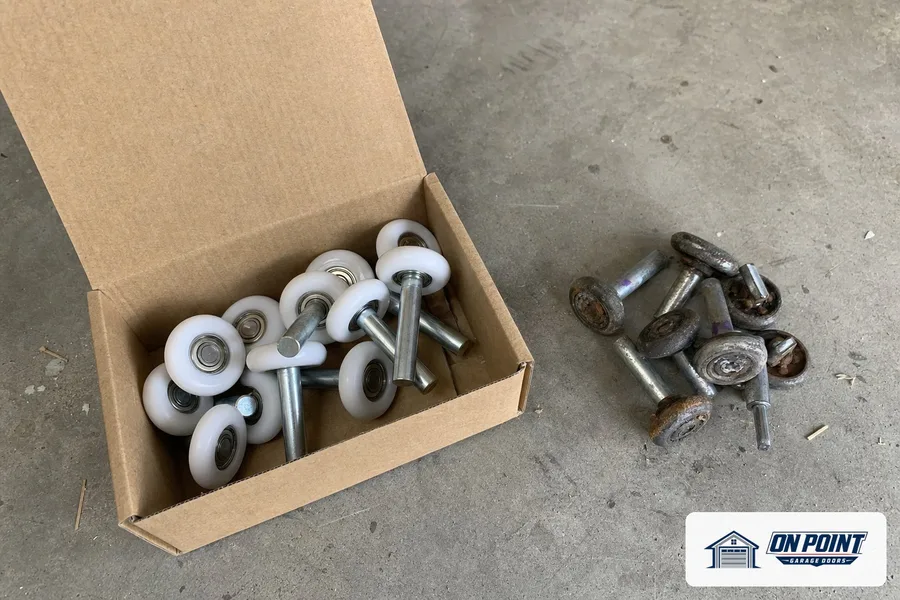
Even a perfectly set chain drive is louder than a belt drive. If the garage is under a bedroom, a belt drive or a wall-mounted opener is the real fix for noise. New sealed rollers on the door help any opener sound quieter.
A chain that is kinked, rusted or stretched beyond adjustment is replaced. The trolley and the sprocket are checked at the same time, and the travel limits are set again afterward.
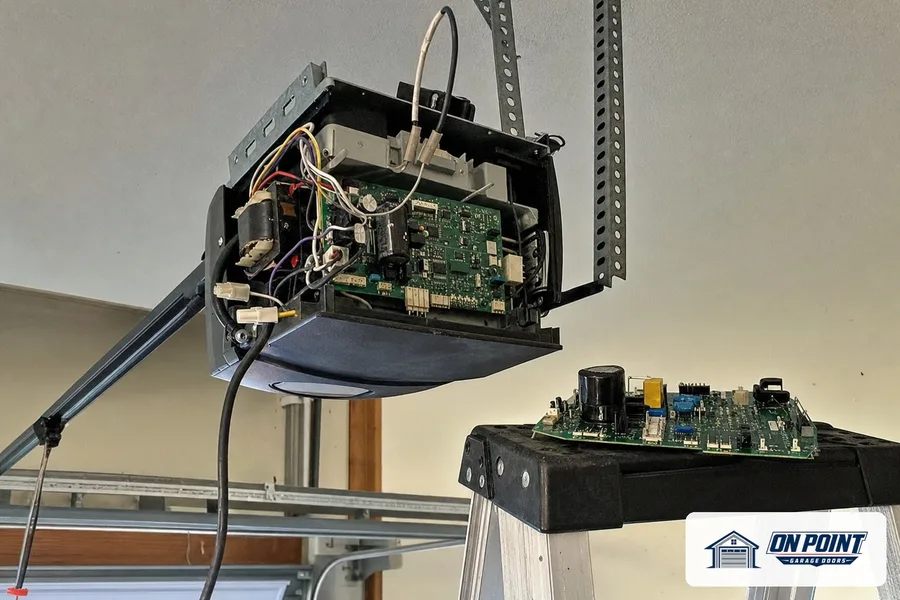
Many owners with an old chain drive choose to replace it with a belt drive. The new opener is much quieter, often adds phone control and battery backup, and comes with new safety sensors and a new wall control.
Any change to the chain or the drive can change how the opener senses the door. After chain work, the force and travel are set, and the safety reverse is tested with an object in the doorway.
The technician checks the chain, sprocket, gear, trolley, rail and mounts, tests the door's springs and balance, adjusts or replaces what is worn, and explains whether a repair or a belt-drive upgrade makes more sense, with a free estimate.
In damp or salty garages, an opener chain can rust, stiffen and bind. A rusted chain is noisy and wears the sprocket. It is replaced, and in salty garages a belt drive avoids the problem altogether.
Chain drives handle heavy wood and insulated doors well, which is one reason they are still used. On those doors, a correctly set chain and balanced springs keep the opener running smoothly for years.
If an old chain-drive opener keeps needing chain work and also has no safety sensors or uses fixed-code remotes, a new opener is the better use of money. You get a free estimate on both so you can compare.
In a detached garage at the back of the lot, noise rarely bothers anyone, and a well-adjusted chain drive is a strong, simple choice. Keeping it set right and the door balanced is what makes it last.
The trolley that rides along the rail and connects to the door arm wears too. A cracked or worn trolley lets the chain jump or the door slip, and it is replaced with the chain when needed.
When new springs make a door lighter, the opener's chain and force settings may need a small adjustment so the door runs smoothly. That is part of every spring job, along with a test of the reverse.
Chains stretch over time, and a heavy door with weak springs stretches them faster.
Usually the chain is too loose, or the sprocket or gear is worn.
To the opener maker's specification, not too loose and not too tight. A technician sets it.
Yes, much quieter, which matters for rooms above the garage.
Yes. You see the options before any work starts.
Across Brooklyn, Queens and Long Island, tell us what the door is doing and we set a visit that fits your day.
Free estimate, call (929) 429-2429.
Tell us what the door is doing and we will give you an honest arrival time. The estimate is free.
Easier to explain by phone? Call (929) 429-2429.
Tell us what the door is doing. The estimate is free either way.