Takes 30 seconds. We call you back to set a time.
On a freezing morning, water that ran under the garage door the day before can turn the rubber bottom seal and the concrete into one piece. The opener hums, the door lifts a little at one end or not at all, and the obvious move is to push the button again. That is the move that does the most damage. This page explains how a door freezes down, what forcing it can break, why some doors freeze every winter while the one next door never does, and what can be done about it for good. Free estimate at (929) 429-2429.
By Sean Cohen, owner, On Point Garage Doors · Updated
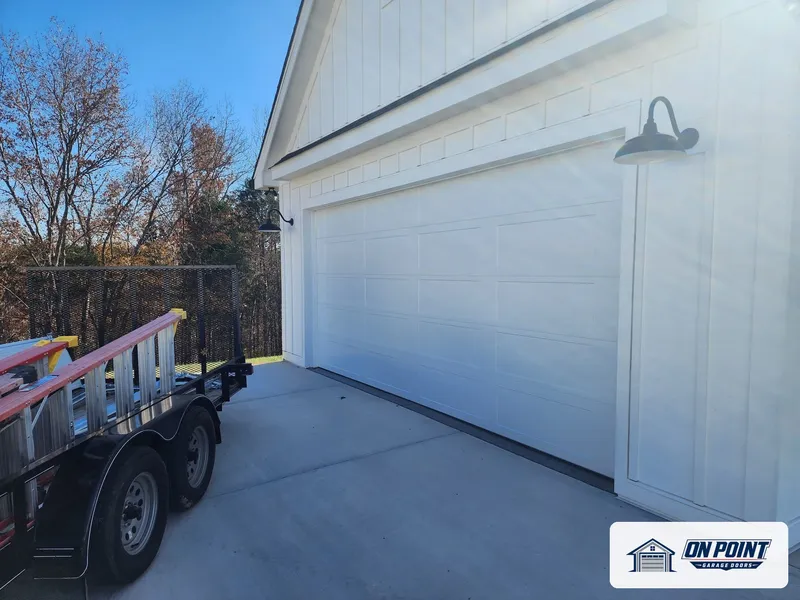
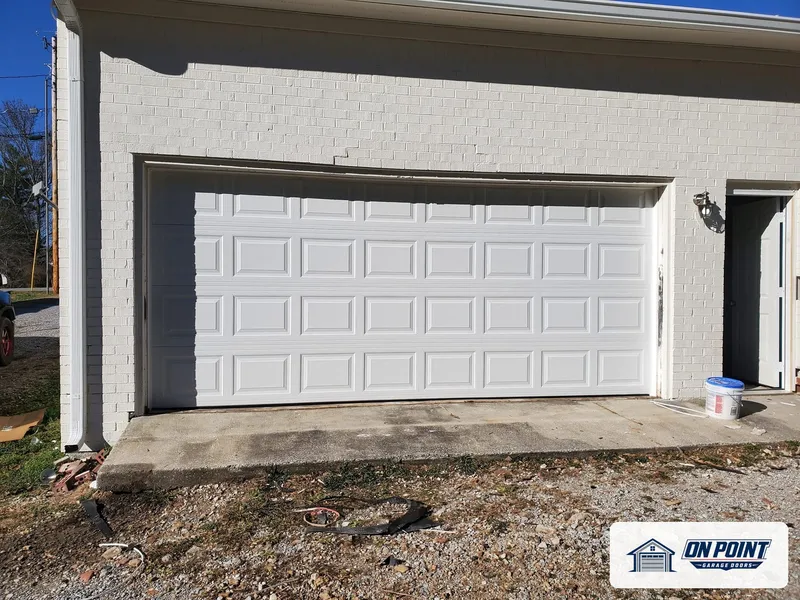
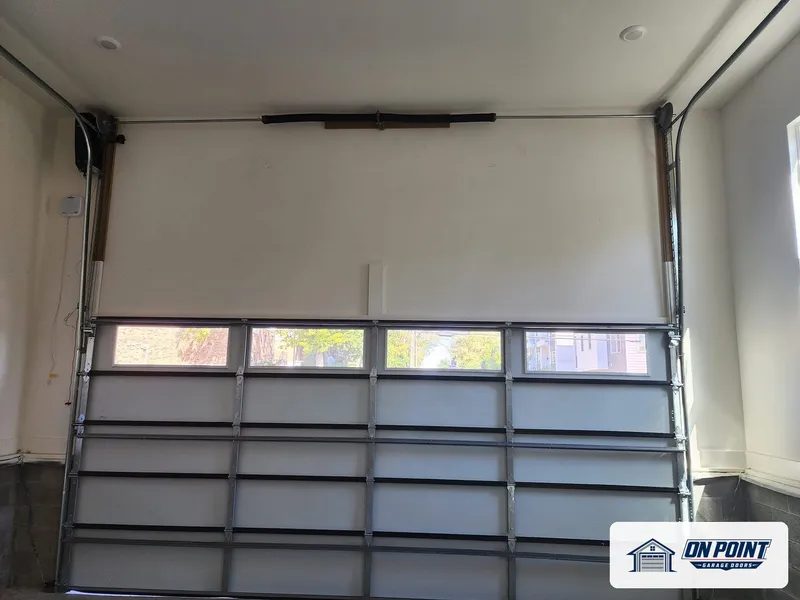
These photos are from our own jobs, with our logo on them.


The bottom seal is soft rubber or vinyl meant to press against the floor and close the gap. When rain, melted snow or water from a car collects along that line and the temperature drops overnight, the water freezes into the seal and onto the slab. The bond can be surprisingly strong, especially along a long two-car door, and it holds the door down while the opener and springs try to lift it.
A frozen bottom looks a lot like other winter failures, so it helps to notice these details.
These all feel like they should help, and all of them can turn a stuck seal into a real repair.
When the bottom is held by ice, the opener pulls at the top. The door bends, the top section can crease at the opener bracket, and the seal tears out of its retainer. The springs unwind as the top rises, but the bottom does not follow, so the lift cables go slack and can jump off their drums. The opener's drive gear can strip from straining against a load it cannot move. One stuck morning can end with several separate repairs.
Cold mornings are also when tired springs break, and a broken spring feels the same from the wall button: the opener strains and the door will not rise. A gap in a coil above the door, a loud bang overnight or a door that is very heavy to lift by hand all point to a spring, not ice. That door should stay down until a technician sees it, frozen or not.
A door freezes down when water sits under it, so the cause is usually where the water comes from. A driveway that slopes toward the garage, a gutter that dumps beside the door, a floor that dips at the opening or a car that drips snow melt inside all feed the same line of ice. A door that freezes every winter is telling you about the water, and the fix often starts outside the door.
An old seal that has gone hard, flat or split holds water in its folds and freezes faster. A seal that no longer fits its retainer can hang low and sit in puddles. Bottom seals come in several shapes, and the right one depends on the retainer on the door and the floor under it. Replacing a worn seal with the correct profile often makes a door far less likely to freeze down.
Concrete settles and heaves over the years. A low spot at the center of the opening collects water, and a high spot at one end keeps the rest of the seal from closing tight. Where the outside apron has sunk below the garage floor, water from the driveway runs straight under the door. Some of these are door problems and some are concrete problems, and we tell you which is which.
A threshold seal fastened to the floor gives the door a raised edge to close against and helps keep driveway water out. It is not right for every garage, since it can be a trip point and needs a fairly even floor. On sloped driveways, a drain across the apron is a job for a concrete contractor, but it can end the freezing problem at its source. We can talk through which approach suits the opening.
A manual door frozen to the slab is just as easy to damage by heaving on the handle. The side locks on manual doors can also freeze in their slots, so the door will not lift even when the seal is free. Bending a lock bar or a handle against ice only adds parts to the list. Leave it down and call if you cannot wait for it to thaw.
We free the door without tearing the seal where that is still possible, then check the seal and retainer, the bottom section, cables, drums, springs, top section and opener for damage from any earlier attempts. We look at where the water comes from and give you a written estimate for the seal, any damaged parts and options that keep the door from freezing down again.
Stop pressing the opener button and leave the door closed. Let it thaw, or call if you need it open. Forcing it can tear the seal and bend the door.
It is not a good idea. The water runs under the door and can refreeze harder, and the seal still has to come free without being torn.
Water collects under the seal, from a sloped driveway, a gutter, a low spot in the floor or snow melt off the car. A worn seal makes it worse.
It can. Torn seals, slack cables off their drums, a creased top section and a stripped opener gear are common results. We check them all.
Yes. We check the door and the seal and give you a written estimate before work begins.
Across Brooklyn, Queens and Long Island, tell us what the door is doing and we set a visit that fits your day.
Free estimate, call (929) 429-2429.
Tell us what the door is doing and we will give you an honest arrival time. The estimate is free.
Easier to explain by phone? Call (929) 429-2429.
Tell us what the door is doing. The estimate is free either way.