Booking today in New York(929) 429-2429Open six days a weekFree estimateGuaranteed work
On Point Garage Doors
Open 24 hours Sun-Thu, Fri 7-5 Free estimate Springs, openers, cables We come to you
Emergency?Call nowBook free estimate
New York, NY - open six days a week

Garage door won't open in cold weather? Here is why

Free estimateSame day whenever possibleCommon parts on board
  • Free estimate
  • Same day whenever possible
  • Common parts on board
Emergency garage door repair★★★★★ 5.0 on Google · 36 reviews

Book your free estimate

Takes 30 seconds. We call you back to set a time.

Or just call (929) 429-2429 and talk it through.

Home › Garage Door Won't Open in Cold Weather

A garage door that won't open in cold weather is usually fighting stiff grease, a spring that snapped in the cold, or a bottom seal frozen to the floor, and the opener stops because the door got too heavy for it. What the door does when you press the button points to which one. Free estimate at (929) 429-2429.

Real jobs. Real photos.

These photos are from our own jobs, with our logo on them.

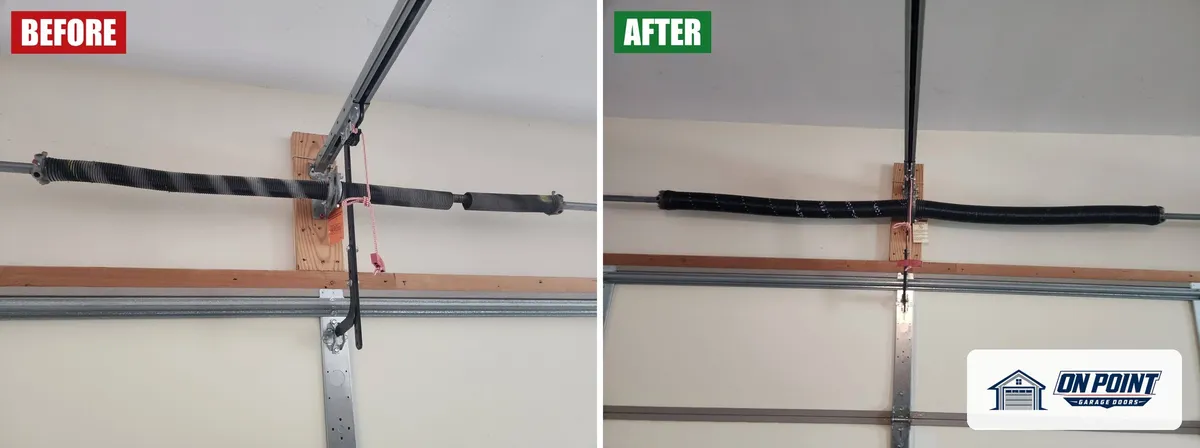
Broken torsion spring above a door, then the new spring after the repair, from one of our jobs
Broken spring, then fixed
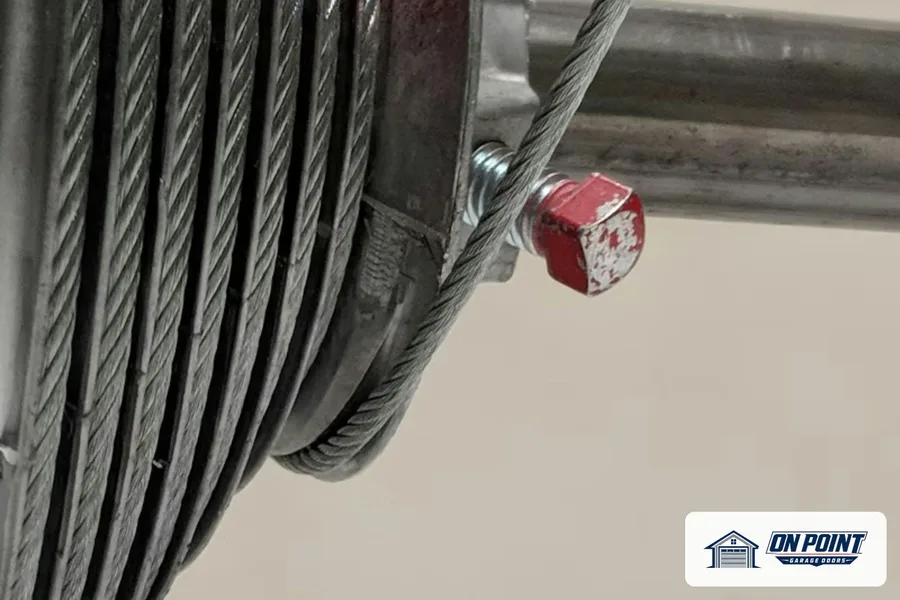
Lift cable wound on the cable drum at the end of the torsion bar, from one of our jobs
Cable drum and lift cable
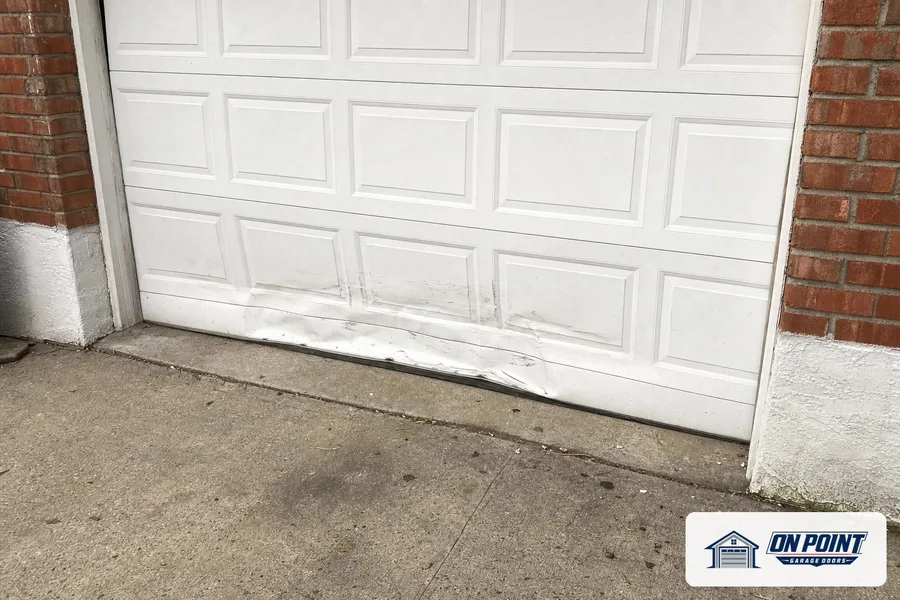
Bottom section of a white garage door where it meets the concrete, from one of our jobs
Where the door meets the floor

Cold makes the whole door harder to lift

Most garage doors work fine all fall, then refuse on the first hard freeze. In most cases nothing new broke overnight. The cold made several small things worse at the same time, and together they push the door past what the opener will lift.

Grease thickens. Steel shrinks a little and gets more brittle. Rubber hardens, and water under the door turns to ice. Batteries lose power. Two or three on the same morning are often enough to stop it.

The opener is not the part that lifts the door. The springs carry its weight, and the opener only guides it up and down. So when a door won't open in the cold, the door gets checked before the opener.

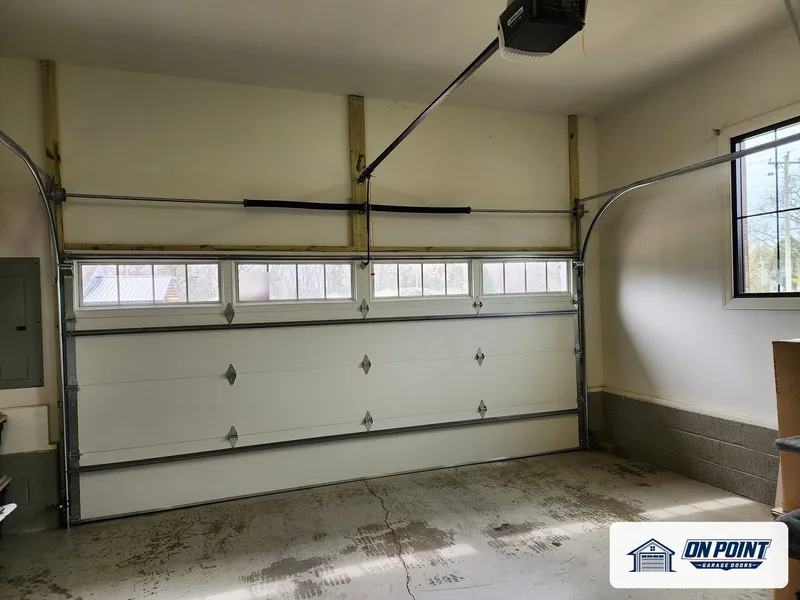
Garage door seen from inside, with the opener, rail and torsion spring above it, from one of our jobs

What you see on a cold morning

  • The opener hums or clicks and nothing moves: the door is too heavy or held down. Often a broken spring, or a seal frozen to the floor.
  • The door lifts a few inches, then stops or goes back down: the opener hit its force limit. A stiff door or a weak spring is the usual reason.
  • A loud bang from the garage overnight, then the door won't lift: that is very often a torsion spring breaking. Springs break more in the cold.
  • The motor runs slowly or strains, worst first thing in the morning: thick grease and a weak start capacitor inside the opener.
  • The wall button works but the remote or keypad doesn't: usually a battery the cold has drained.
  • The door opens but won't close again: often the safety sensors, with frost or condensation on the lenses.

You don't need to test anything. Say which of these you see when you call, and the right parts ride along.

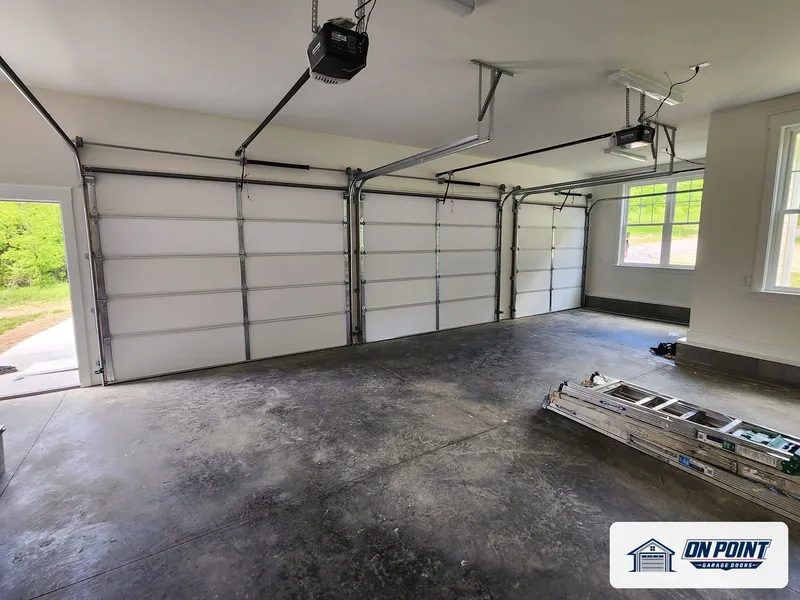
Three garage doors seen from inside, each with its own opener and rail
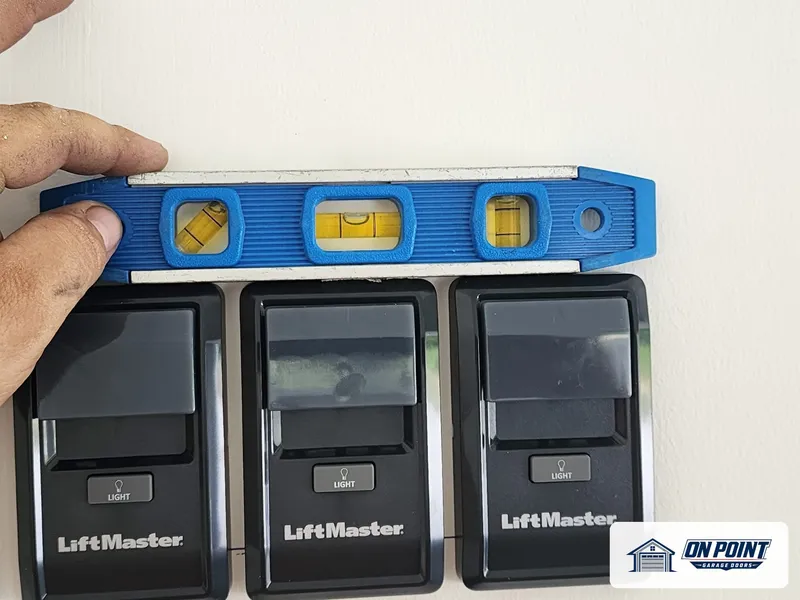
Three LiftMaster wall controls being leveled and mounted on a garage wall
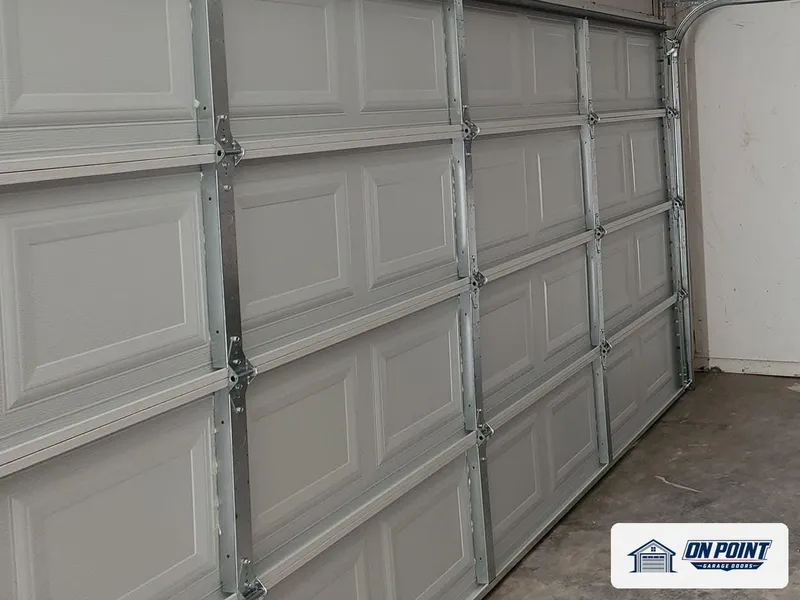
Inside of a sectional door: hinges, struts and the vertical track the rollers ride in

Why cold weather stops a garage door

These are the usual causes, roughly in the order we find them.

  1. A spring broke in the coldCold steel is more brittle, and a spring that was already worn often lets go on the first hard freeze. Without it the door weighs a few hundred pounds and the opener can't lift it. This is the most common reason on a door that worked the day before.
  2. The bottom seal is frozen to the floorRain or melted snow runs under the door and freezes overnight. The rubber seal sticks to the concrete, and the opener ends up pulling against ice. Forcing it can tear the seal or strain the opener.
  3. Grease and oil have gone stiffThe grease on the rollers, the hinges and the opener's own gears thickens in the cold. Everything moves slower and takes more force, which is often enough to trip the opener's safety limit.
  4. Metal parts have shrunkTracks, rollers and the torsion bar contract a little in the cold. Worn rollers, or a track that was already slightly out of line, can start to bind, so the door drags where it used to glide.
  5. The opener's force and travel settings no longer fitOpeners are set to stop if the door takes more effort than usual. A stiff winter door can cross that line, so the opener stops or reverses. An older opener with a weak capacitor also struggles to start in the cold.
  6. The safety sensors are foggedFrost, condensation or ice on the photo-eye lenses can block the beam. That mostly stops the door from closing, and the cold can also crack old sensor wiring.
  7. Remote and keypad batteries are weakBatteries lose power in the cold. If the wall button works and the remote doesn't, the problem is not the door at all.
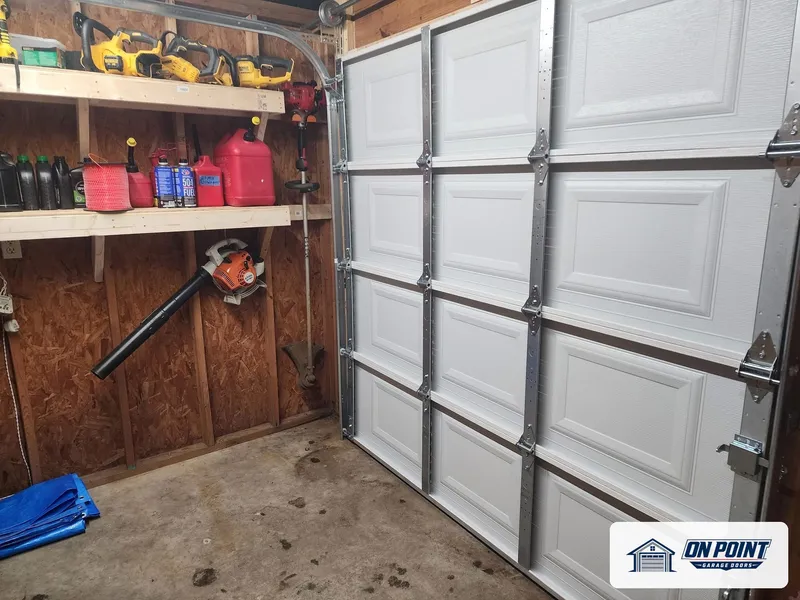
New white garage door seen from inside, with its hinges, struts and track, from one of our jobs

Don't force a frozen door

It is tempting to keep pressing the button, or to pull the door up by hand. Every try against a stuck or heavy door heats the opener and can strip its gear or tear the seal. One or two tries tell you all you need to know.

Springs and cables are not a DIY job. They hold a few hundred pounds of door under tension, and they can seriously hurt you. If a spring may be broken, don't pull the red release cord and don't try to lift the door by hand: without the spring it can come down fast. Don't chip or pry at ice under the door either. Leave it closed and call. Keep children and pets clear, and don't drive under a door that is partly open.

What the technician checks

The door first, then the opener. With the opener disconnected, the technician checks both springs for gaps and wear, the lift cables, the bottom seal and the floor under it, and whether the door is balanced and moves freely in its tracks. Most cold-weather problems show up here.

Then the opener: the motor, the start capacitor, the drive gear, and the force and travel settings for how the door moves in winter. The sensors and remotes get checked too. Before leaving, the technician runs the door up and down and confirms the safety reverse still works. You hear what failed and what it takes, with a free estimate before any work starts.

If it is a spring, see broken spring repair. If it is the opener, see garage door opener repair. If the bottom seal is torn or keeps freezing down, see weather seal replacement. If the opener only hums, here is what a humming opener means.

What people are told, and what's real

It's just the cold, it'll work once it warms up. Sometimes it does. But the cold usually exposes a part that was already worn. A spring that breaks in January was close to the end of its life, and waiting rarely fixes it.

You need a new opener for winter. Often not. A good opener straining against a broken spring or a frozen seal works again once the door is fixed, and a weak capacitor is a repair, not a replacement.

Questions we get asked

Why won't my garage door open when it's cold?

Cold makes the door harder to lift. Grease thickens, metal parts shrink and bind, the bottom seal can freeze to the floor, and worn springs often break in the first hard freeze. Once the door gets too heavy or too stiff, the opener stops to protect itself.

Do garage door springs break more in cold weather?

Yes. Cold steel is more brittle, and a spring near the end of its life often breaks on a cold night. A loud bang from the garage and a door that won't lift are the usual signs. Leave the door closed and call.

My door is frozen to the ground. What should I do?

Don't keep pressing the button and don't pry at it. The opener pulls against the ice and can tear the seal or strain the motor. Leave it closed and call. A technician frees it and checks the seal and the opener.

Why does my door go up a few inches and then stop in the cold?

The opener hit its force limit. A door that is stiff from the cold, or heavy from a weak spring, takes more effort than the opener is set for, so it stops or reverses. That is a safety feature. The door needs checking, not more force.

Why does my remote stop working in winter?

Cold drains batteries. If the wall button still runs the door and the remote or keypad doesn't, a weak battery is the usual cause, not the door.

Is the estimate really free?

Yes. You hear what is wrong and what it takes before any work starts.

Booking takes a minute

Around Brooklyn, Queens and Long Island, one call gets you a two-hour slot and a heads-up call before the technician sets off.

Free estimate, call (929) 429-2429.

Door won't open in the cold? We'll come and look

Tell us what the door does when you press the button and we'll give you an honest arrival time. The estimate is free.

Easier to explain by phone? Call (929) 429-2429.

Two minutes to a free estimate on a door stuck in the cold

Tell us what the door is doing. The estimate is free either way.

Or just call (929) 429-2429 and talk it through.

The other six things that go wrong