Takes 30 seconds. We call you back to set a time.
A grinding sound is the noise of metal or worn plastic rubbing where it should be rolling. It can come from the door, the tracks, the spring bar or the opener, and each source points to a different worn part. Grinding rarely fixes itself. It usually gets louder until a part fails, so it is worth finding the source while the repair is still small. Free estimate at (929) 429-2429.
By Sean Cohen, owner, On Point Garage Doors · Updated
These photos are from our own jobs, with our logo on them.


Stand inside the garage, away from the door, and watch it run. Grinding that moves with the door along the sides points to the rollers or tracks. Grinding from above the door, at the spring bar, points to the bearings. Grinding from the opener on the ceiling, even with the door disconnected, points to the opener itself. Telling us what you notice helps.
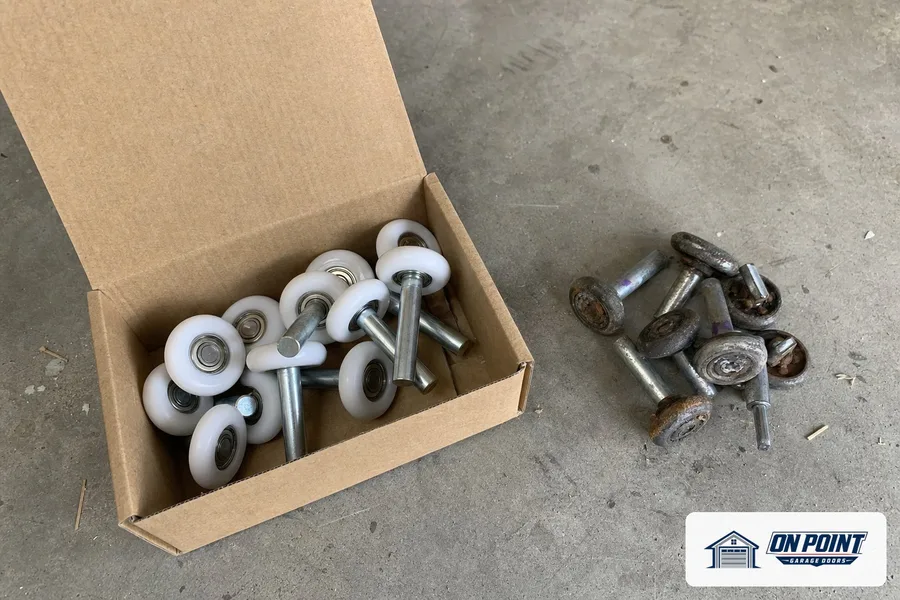
Rollers are the most common cause. Steel rollers with open bearings rust and seize; plastic wheels crack and wear flat. A seized roller slides instead of turning and grinds a groove into the track. Sealed nylon rollers are quiet, smooth and last much longer.
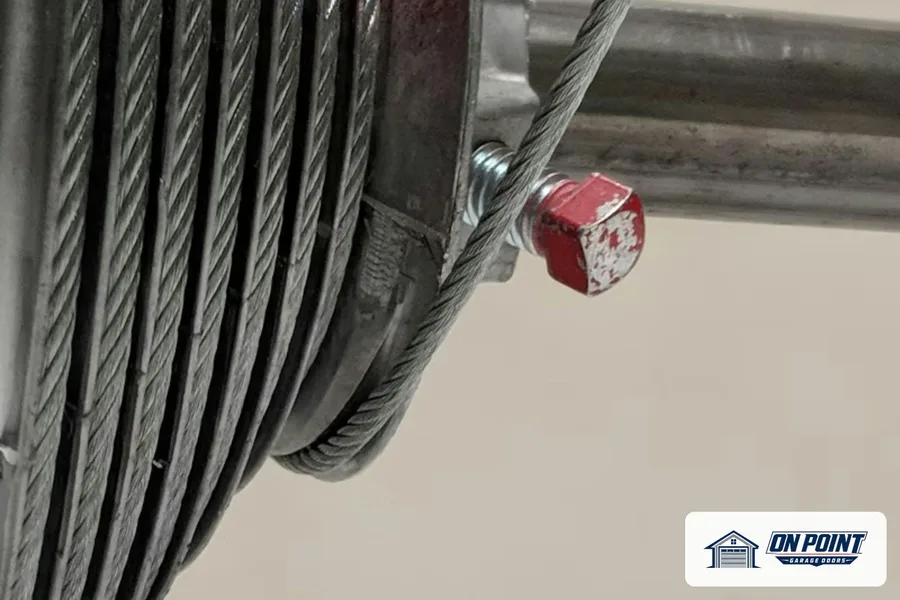
On torsion systems, the spring bar turns in bearings at each end and often in the middle. When those bearings wear, you hear a grinding or rumbling from above the door as it moves. A worn bearing also lets the bar wobble, which strains the springs and cable drums. Bearings are replaced by a trained technician, with the spring tension safely off.
A dent in the track from a car or a bin, or rust at the bottom where water sits, makes the rollers scrape. Bent sections are straightened or replaced, rusted bottom track is cut out and renewed, and the tracks are set parallel so the door rolls cleanly.
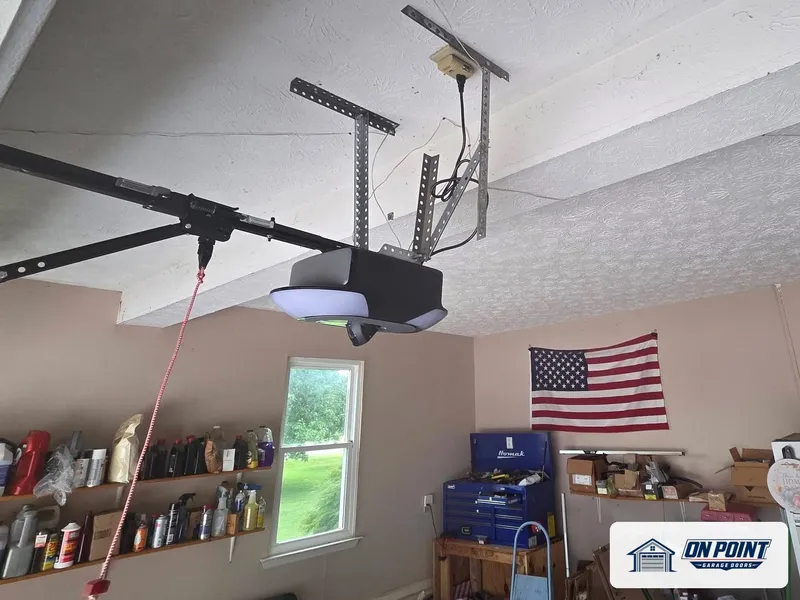
Inside many openers, a plastic gear wears down over the years, and the motor grinds or whirs without moving the door well. Screw-drive openers grind when the rod needs the right grease or the carriage is worn. Chain drives grind when the sprocket wears. Each is a repairable part on many openers; on old units, a new opener may make more sense.
If the door scrapes against the jambs or the stop molding along the sides, the tracks may be out of line or the opening may have shifted. The tracks are adjusted, and on older garages the frame is checked for rot or movement.
Grinding means friction, and friction makes the opener work harder, wears the tracks and can lead to a roller jumping the track or a bearing seizing. Catching it early usually means new rollers or bearings rather than a bigger repair.
The technician runs the door with and without the opener, finds the source of the grinding, and checks the rollers, hinges, tracks, bearings, springs, cables and opener. You get a clear explanation and a free estimate, and after the repair the door is balanced and the safety reverse is tested.
Cold makes worn rollers and dry bearings louder, and many doors start grinding on the first freezing mornings. A tune-up before winter, with worn rollers replaced, keeps the door quieter through the cold months.
A door that grinds only some days often has a roller that sticks when cold or damp, a track bracket that shifts under load, or a bearing that is just starting to fail. Those early signs are the best moment to fix it, while the job is still small. Tell us when the noise happens, in the morning, in the rain or only when opening, because the pattern points to the part.
If the grinding comes together with a door that feels heavy, a straining opener or a crooked door, the springs or cables may be failing, and the rollers are grinding because the door is no longer balanced. In that case the springs are fixed first and the rollers second, so the noise does not come back.
Grinding from a door under a bedroom is heard every morning. New sealed rollers, new bearings and a quiet belt-drive or wall-mounted opener together make the biggest difference to how the house sounds.
Usually worn rollers, failing spring bar bearings, a bent track, worn opener gears or a door rubbing the frame.
It can lead to a roller leaving the track or a bearing seizing. It is best fixed early.
Often yes. Worn rollers are the most common cause, and sealed rollers are much quieter.
Worn gears, a dry screw drive, a worn carriage or a worn sprocket inside the opener.
Yes. You see the cause and the fix before any work starts.
Across Brooklyn, Queens and Long Island, tell us what the door is doing and we set a visit that fits your day.
Free estimate, call (929) 429-2429.
Tell us what the door is doing and we will give you an honest arrival time. The estimate is free.
Easier to explain by phone? Call (929) 429-2429.
Tell us what the door is doing. The estimate is free either way.