Takes 30 seconds. We call you back to set a time.
A garage door is the largest moving part on the front of most houses, and in a storm it takes wind on its whole face. Gusts can bow it inward, pull it outward, rack it in the tracks and pop rollers out of place. A falling branch or flying debris can dent a section or bend a track in a second. Even when the door looks fine from the driveway, a storm can leave damage that shows only when the door is run. This page covers what to check, what not to do and how the damage is fixed. Free estimate at (929) 429-2429.
By Sean Cohen, owner, On Point Garage Doors · Updated
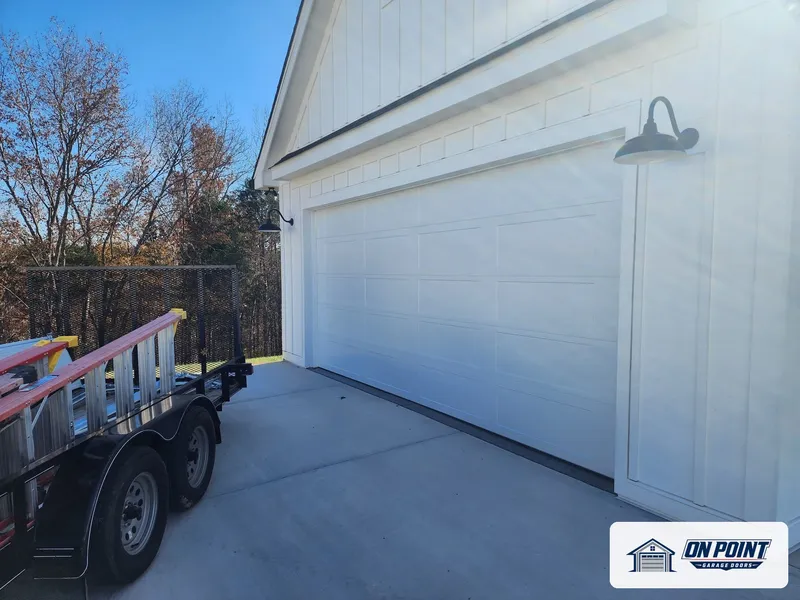
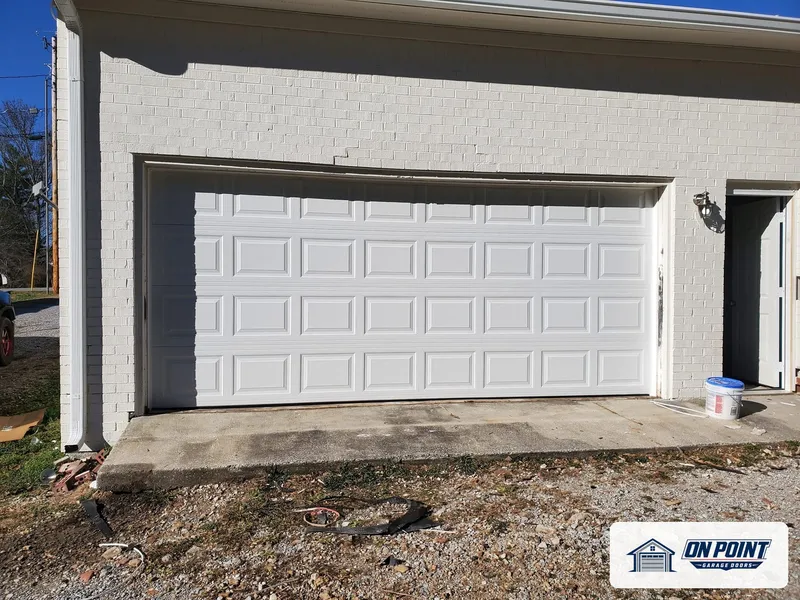
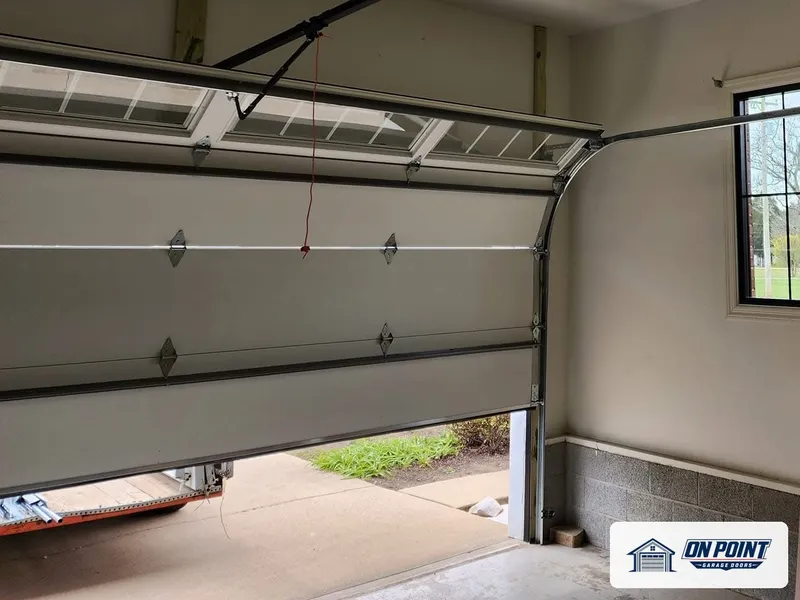
These photos are from our own jobs, with our logo on them.


Before anyone runs the door after a storm, a few checks keep people out of harm's way.
A strong gust pushes the door inward at its middle, where it has the least support. The sections bow, the struts can bend, and the rollers can be pulled out of the tracks at one or both sides. Once the gust passes, the door may spring back and look normal, but the hinges and struts carry the bend. A door that now rubs, binds or makes a new sound has usually been pushed further than it could take.
Suction on the outside of the door during a storm can also pull it outward. That load runs into the track brackets and the fasteners holding them to the jambs. Brackets that pull partly free, tracks that have shifted away from the door, or a door that sits out of line with the opening all point to a door that was pulled rather than pushed.
A falling limb or a piece of flying debris usually leaves a dent or crease where it struck, often in the top or middle sections. The force of the hit spreads through the hinges on that section and into the tracks beside it. A struck door can also be knocked partly out of its tracks. The visible dent is only part of the picture, so the whole door is checked before it is run.
Storm damage often hides behind a door that still closes. Cracked hinges, a strut bent along its length, a track bracket that has pulled from the jamb, a roller with a broken stem and a cable that has slipped on its drum can all sit unnoticed until the next trip puts load on them. Running the door before those are found can turn a small repair into a larger one.
When the wind or an impact pushes rollers out of the tracks, the door hangs partly on its cables and partly on whatever rollers are still in place. It can shift or drop without warning. Do not try to lift it, lower it or push the rollers back in. The door needs its weight secured before it is moved, and that is work for a technician.
A hard hit or strong wind can shift the jambs and the header the tracks are fastened to. Wood that was already soft from a leak may split around the track bolts. If the frame has moved, a straightened door will still bind. The frame is checked along with the door, and if it needs carpentry, we tell you.
Wind-driven rain gets past worn bottom seals and side stops and can pool on the garage floor. If water reached the opener, the outlet or the wall button, leave the power off until it is dry and checked. A door that sat in standing water may need its bottom section, cables and lower hardware looked at for rust in the weeks after. Our page on doors after a flood covers deeper water.
When the power goes out, the opener cannot move the door unless it has a battery backup. A door can only be moved by hand safely if the springs and cables are sound and the door is in its tracks, and after a storm that is not a given. If in doubt, leave it closed and call. When power returns, a surge can also leave an opener dead or its settings scrambled, which is a separate check from the door.
Door windows can crack from debris or from a door that flexed hard in the wind. A cracked pane can drop pieces when the door moves, so leave a door with broken glass closed if you can. Many window inserts can be replaced on their own once the maker and design are known.
Bent hinges, rollers, struts and track brackets are replaced and the tracks are set back in line. A dented or creased section can often be swapped for a matching one. A door with several damaged sections, a thin door that bowed badly, or one that was already worn may be better replaced, and a new door can be chosen with heavier struts and hardware for exposed spots. Both options are laid out side by side.
We secure the door first, then check the sections, hinges, struts, rollers, tracks, brackets, frame, cables, drums, springs, opener and safety sensors. You get a written estimate that describes what the storm damaged and what it takes to fix, before the work begins.
Not until it is checked if it looks crooked, makes new noises, rubs or was hit. Hidden damage to hinges, tracks and cables can fail on the next trip.
Maybe not. A door can spring back while its struts, hinges and rollers stay bent. A check before regular use is worth it.
Often not. A dented section can usually be replaced with a matching one if the design is still made. Several damaged sections may point to a new door.
Leave it alone, keep everyone clear and call. A door off its tracks can shift or drop when it is moved.
Yes. We check the door after the storm and give you a written estimate before work begins.
Across Brooklyn, Queens and Long Island, tell us what the door is doing and we set a visit that fits your day.
Free estimate, call (929) 429-2429.
Tell us what the door is doing and we will give you an honest arrival time. The estimate is free.
Easier to explain by phone? Call (929) 429-2429.
Tell us what the door is doing. The estimate is free either way.