Takes 30 seconds. We call you back to set a time.
Craftsman here means the house style, not the tool brand. The Craftsman bungalow grew out of the Arts and Crafts movement early in the last century: low roofs, deep eaves, exposed rafter ends, thick square porch columns and honest materials. A garage door made to suit that house keeps the same quiet, sturdy character. It usually has a row of windows across the top, often with a small ledge under them, and simple panels below. This page explains what gives a door that look and how to pick one that belongs on your house. Free estimate at (929) 429-2429.
By Sean Cohen, owner, On Point Garage Doors · Updated
These photos are from our own jobs, with our logo on them.


People searching for a Craftsman garage door sometimes mean the opener sold under that name, and sometimes mean the architecture. This page is about the architecture. If your Craftsman opener has stopped working, we have a separate page for that. Here the subject is the door that sits under a bungalow gable, a foursquare porch or a newer house built with Arts and Crafts details.
No single feature defines it, but a handful of them together read as Craftsman from the curb.
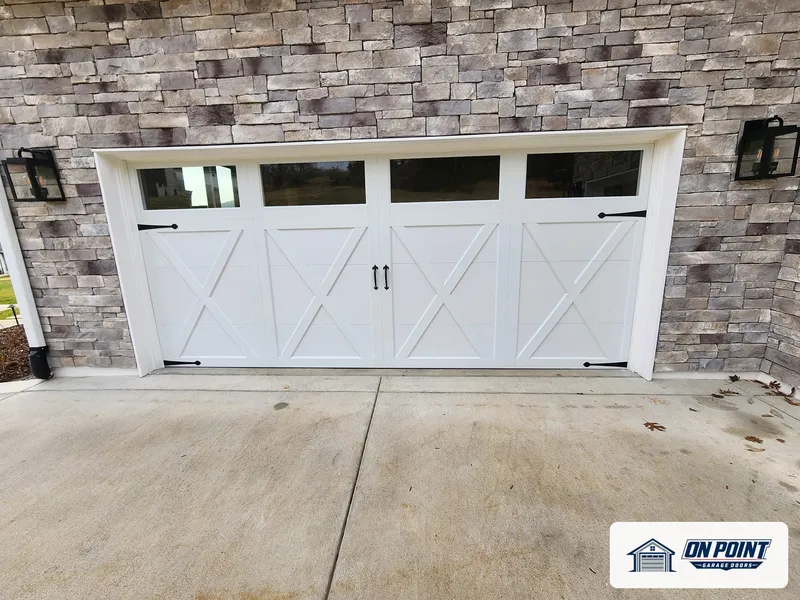
The two styles get mixed up because both borrow from old wood construction. A carriage house door imitates a pair of swing-out barn doors, so it leans on cross bucks, arches, strap hinges and a center seam. A Craftsman door is calmer. It is about proportion, the shelf under the glass and the panels lining up with the house trim. On a true bungalow, cross bucks and heavy hinges can look borrowed from a different building.
Look at the windows on the front of the house. If they have several panes over a single large pane, a door whose top windows echo that pattern will tie the two together. Look at the porch columns and the trim around the front door. Wide, plain casings point to a door with wide stiles and simple panels. Newer houses with a Craftsman flavor often have stone at the base of the columns, and a door with a warm wood tone sits well beside that stone.
The window row does most of the work. Panes that are taller than they are wide feel more traditional on this style, and simple divided lites often look better than ornate inserts. The ledge under the glass catches light and shadow and gives the door depth even on a steel model where it is molded in. Glass can be clear, frosted or textured, depending on how much of the garage you want people to see.
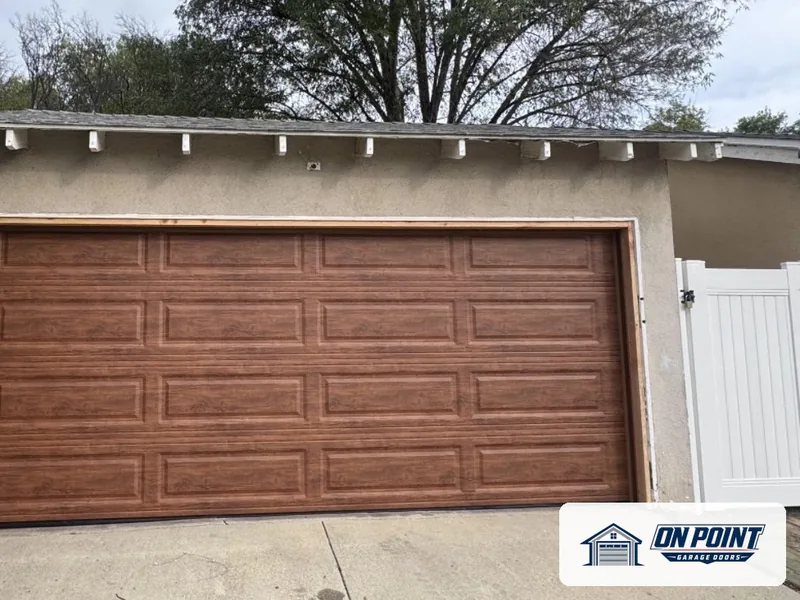
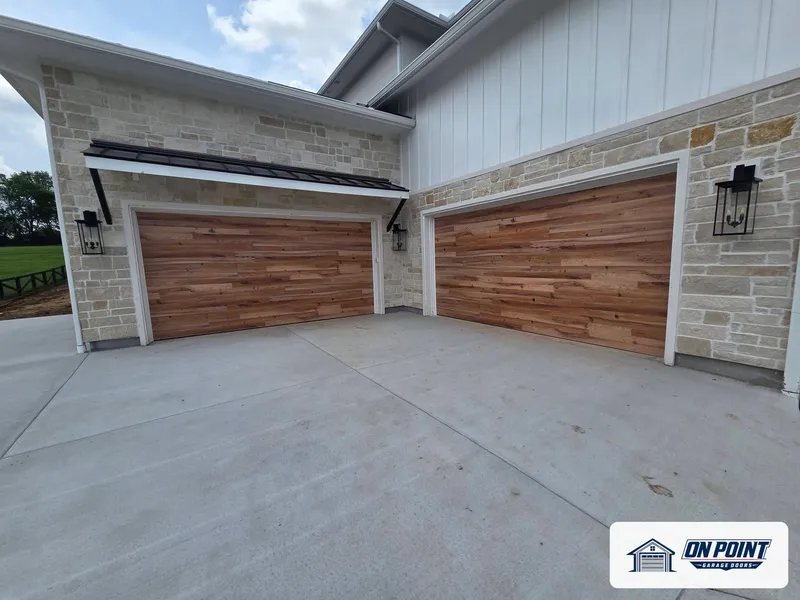
Cedar and other real woods suit the style best and can be stained to show the grain. They also ask for regular refinishing, and they are heavy. Steel doors with a printed or embossed grain, composite overlays and fiberglass skins can reproduce the look with far less upkeep. On a house near the water or on a door that gets afternoon sun, a wood-look door is often the more practical choice, and from the street few people can tell.
Arts and Crafts homes were built around natural tones: deep greens, warm browns, rust reds, olive, slate and cream. A medium or dark stain is the classic choice. If the house trim is painted, the door can match the trim or the body, but a door in a contrasting stain often becomes the best feature of the front. Very cold grays and stark white tend to fight the style, though they can work on a modern take on it.
A Craftsman door looks right only inside a frame that matches. Thin builder trim around the opening can make a handsome door look stuck on. Wider casings, a simple head trim and a small cap across the top bring the opening in line with the porch and windows. Decorative knee brackets under a gable above the garage are a house detail, not part of the door, but they are worth keeping in mind when choosing proportions.
Many Craftsman style doors carry no handles or hinges on the face at all, and that restraint suits the house. If you want hardware, small simple handles in an oil-rubbed or dark finish work better than long strap hinges. The real handles and locks on a door with an opener usually stay inside, so outside hardware is a matter of looks only.
Older bungalows often had a narrow detached garage, while newer houses with Craftsman details may have a wide two-car opening. A single wide door can be ordered with a center line in the panel pattern so it reads as two halves. Two separate doors with a post between them feel more traditional and give a spare if one opener fails. Where the framing allows either, we lay out both before you decide.
Wood doors and insulated steel doors with heavy overlays weigh more than plain steel, and the springs have to be matched to the real weight. A door from a different maker can also need new track. If there is a room over the garage, an insulated door with a solid core keeps it more comfortable and quieter. The opener should be sized for the door you choose, not the one you had.
We measure the opening, headroom, side room and back room, look at the framing and trim, and talk through windows, materials and colors with the house in view. You get a written estimate for the door, springs, track and any opener work, so you can compare options side by side before anything is ordered.
A door made to suit Arts and Crafts and bungalow homes: windows across the top, often with a small shelf under them, simple panels below and warm wood tones.
No. Carriage house doors imitate swing-out barn doors with cross bucks and strap hinges. Craftsman doors are plainer and depend on proportion and the shelf under the windows.
No. Steel, composite and fiberglass doors with a wood grain can carry the style with less upkeep. Real wood still has the richest look if you are ready to maintain it.
Warm stains and earthy colors such as deep green, brown, rust red and olive. Matching the trim or using a contrasting stain both work.
Yes. We measure the opening and write up the options before anything is ordered.
Across Brooklyn, Queens and Long Island, tell us what the door is doing and we set a visit that fits your day.
Free estimate, call (929) 429-2429.
Tell us what the door is doing and we will give you an honest arrival time. The estimate is free.
Easier to explain by phone? Call (929) 429-2429.
Tell us what the door is doing. The estimate is free either way.