Serving Brooklyn, Queens and Long Island(929) 429-2429Open six days a weekFree estimateGuaranteed work
On Point Garage Doors
Open 24 hours Sun-Thu, Fri until 5 pm Free estimate Springs, openers, cables We come to you
Emergency?Call nowBook free estimate
New York, NY - open six days a week

Your garage door opener after a flood

Free estimateSame-day serviceCommon parts on board
  • Free estimate
  • Same-day service
  • Common parts on board
Emergency garage door repair★★★★★ 5.0 on Google · 42 reviews

Book your free estimate

Takes 30 seconds. We call you back to set a time.

Or just call (929) 429-2429 and talk it through.

Home › Garage Door Opener After a Flood

When water gets into a garage, most people look at the door first, and rightly so. The opener is easy to forget because the motor hangs from the ceiling, well above the waterline. But the opener is a system, not just a motor. Its outlet, the safety sensors near the floor, the wall button, the wires that join them and, on many units, a battery all live lower down. This page explains which parts of an opener water tends to reach, why a unit that seems to work after a flood can still fail later, and what should be checked before it runs again. Free estimate at (929) 429-2429.

By Sean Cohen, owner, On Point Garage Doors · Updated

Real jobs. Real photos.

These photos are from our own jobs, with our logo on them.

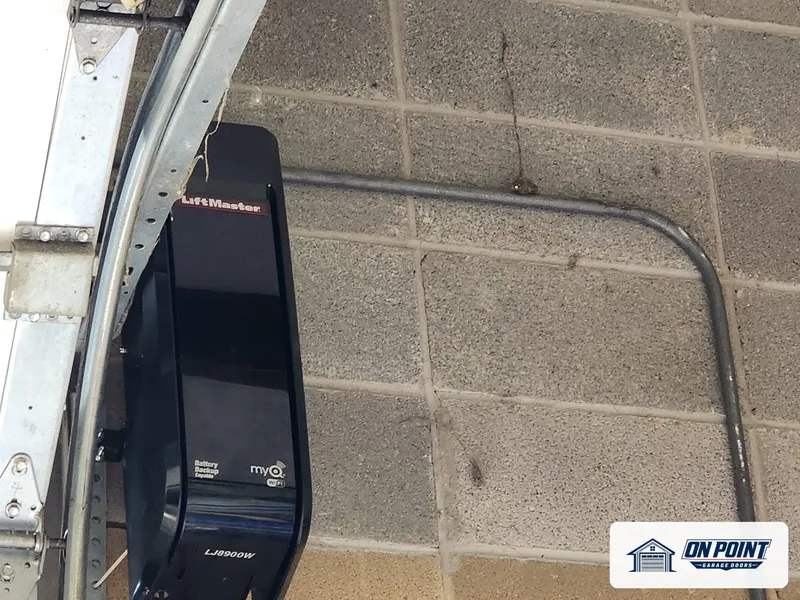
LiftMaster wall-mount operator beside a door on a block wall, from one of our jobs
LiftMaster wall-mount operator beside a door on a block wall
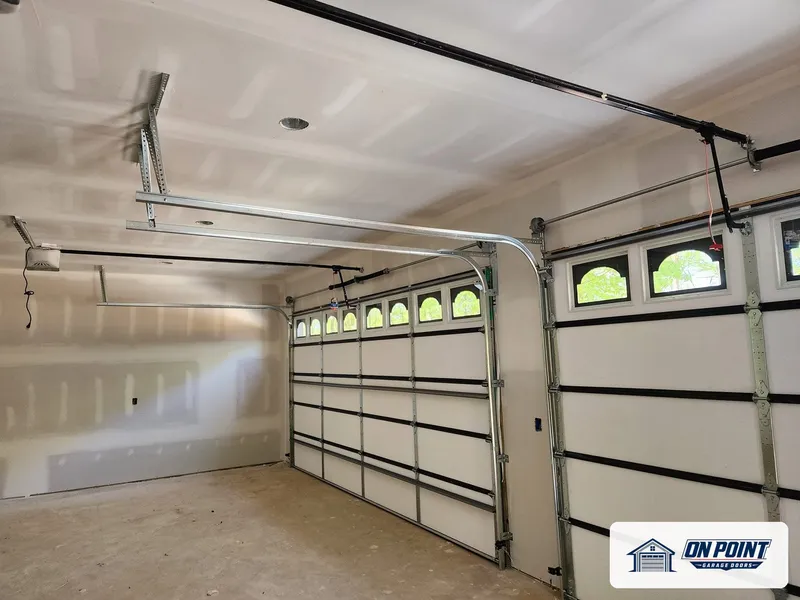
Ceiling openers and rails over two new doors, from one of our jobs
Ceiling openers and rails over two new doors
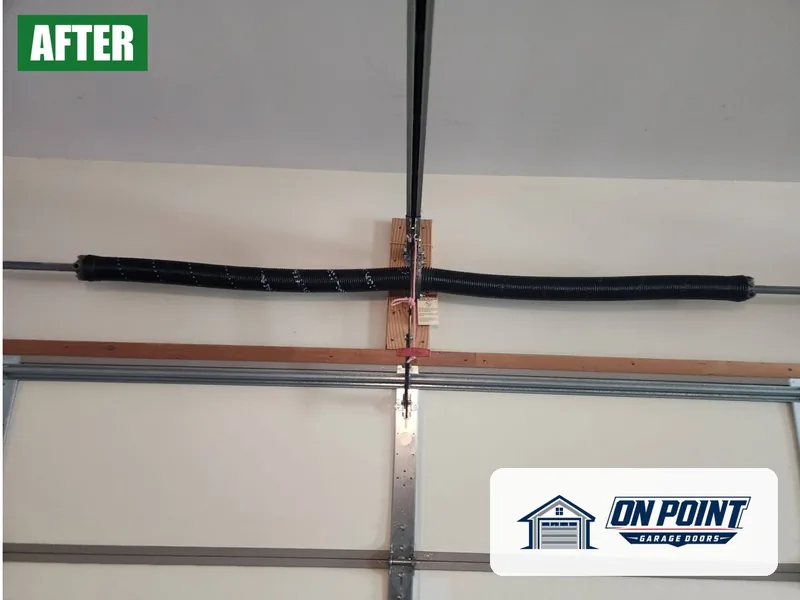
Torsion spring centered above a door, from one of our jobs
Torsion spring centered above a door

First things after the water goes down

Where water meets an opener

The safety sensors sit a few inches off the floor on each side of the door, so they are usually the first opener parts under water. The thin wires that join them to the motor run along the wall and track, often down near the slab. The wall button and its wire are next. Wall-mount openers sit on the wall beside the door, driving the spring shaft, so their lower end, their power cord and any battery box are closer to the floor than on a ceiling unit.

Salt water and fresh water

Fresh water from heavy rain or a burst pipe can dry out of some parts without lasting harm, though mud left behind still causes trouble. Salt water from a storm surge is far worse. It leaves salt in every joint and terminal, and that salt keeps drawing moisture and corroding metal long after the floor is dry. Sensors and wiring that sat in salt water are usually replaced rather than trusted.

The safety sensors

The photo eyes are what keep a closing door from coming down on a person, a pet or a car. After a flood they can fail outright, so the door refuses to close, or fail in a worse way, with corroded wiring giving unreliable signals. A door that closes normally but whose sensors have been in water still needs them tested, and they are often worth mounting a little higher on the track when they are replaced, within what the maker allows.

The outlet and the power feed

Most ceiling openers plug into an outlet above them, which is usually high and dry. Wall-mount units and openers in garages with outlets lower on the wall are another story. Any outlet or junction box that was under water is a job for an electrician before the opener is plugged in. We check what reaches the opener, but wiring inside the walls is a job for an electrician, not a door technician.

Battery backup units

Many newer openers carry a battery so the door works in a power outage. The battery lives inside the motor unit or in a separate box nearby. A battery that has been under water, or has been fully drained during a long outage, may not hold its power again and can swell or leak. It is checked and replaced if needed, and the unit is tested on battery as well as on house power.

When the power comes back

Storms that bring water often take the power down too, and the moment it returns can send a surge through every circuit in the house. Control boards in openers are sensitive to that. An opener that sat above the water and still stopped working after the storm may have a damaged board rather than water damage. A surge protector on the opener circuit is a sensible addition afterward.

Rust that shows up later

An opener can work fine for a while after a flood and then start acting up. Humid air in a garage that was wet for days corrodes the rail, the trolley, the chain and the circuit board. Terminals turn green, contacts get unreliable and the door starts reversing for no clear reason. That delayed failure is why an opener that came through a flood is worth a full check even if it still runs.

The door decides the opener's fate

Water also attacks the door: springs, cables, bottom brackets, rollers and the lower track. A door that has grown stiff or heavy from rust and grit makes the opener strain on every trip, and that strain burns out gears and motors. Checking the opener without checking the door misses half the story, so both are looked at on the same visit. Our page on the door after a flood covers that side.

Repairing parts or a new opener

When only the sensors, the wall button and some wire took water, those parts can be renewed and the opener kept. When the motor unit itself was submerged, or the board is corroded, a new opener is usually the sound choice. We tell you which applies, plainly, after testing it. You get a written description of what we found, with photos of the damaged parts.

Getting ready for the next storm

Questions we get asked

Should I use my garage door opener after a flood?

Not if water reached the opener, its outlet or its wiring. Leave it unplugged and have it checked, along with the door itself.

Why won't my garage door close after the flood?

Most often the safety sensors near the floor were under water and have failed. The opener refuses to close the door when it cannot see a working sensor signal.

Can a flooded garage door opener be saved?

Sometimes. If only the sensors and wiring got wet, they can be renewed. If the motor unit was under water, a new opener is usually the safer choice.

My opener stopped working after the storm but never got wet. Why?

A power surge when the electricity came back can damage the control board. It is tested to confirm before anything is replaced.

Is the estimate free?

Yes. We check the opener, sensors, wiring and the door, and tell you what is damaged before any work starts.

Booking takes a minute

Across Brooklyn, Queens and Long Island, tell us what the door is doing and we set a visit that fits your day.

Free estimate, call (929) 429-2429.

Water reached the garage? Leave the opener unplugged and call

Tell us what the door is doing and we will give you an honest arrival time. The estimate is free.

Easier to explain by phone? Call (929) 429-2429.

Two minutes to a free estimate

Tell us what the door is doing. The estimate is free either way.

Or just call (929) 429-2429 and talk it through.

The other six things that go wrong