Takes 30 seconds. We call you back to set a time.
Packages left on a stoop or a front step get rained on, kicked over or carried off. A garage with a connected opener offers another place to put them. With the right setup, a courier, a dog walker or a relative can open the garage door through an app for a single drop-off, and the owner gets a notice that it opened and closed again. It sounds simple, and when the door is in good shape it is. But a door that opens and closes with nobody standing beside it asks more of the door, the safety sensors and the opener than a door run from a wall button. This page covers how delivery access works, what has to be right first, and how to keep the rest of the house safe while the garage is open. Free estimate at (929) 429-2429.
By Sean Cohen, owner, On Point Garage Doors · Updated
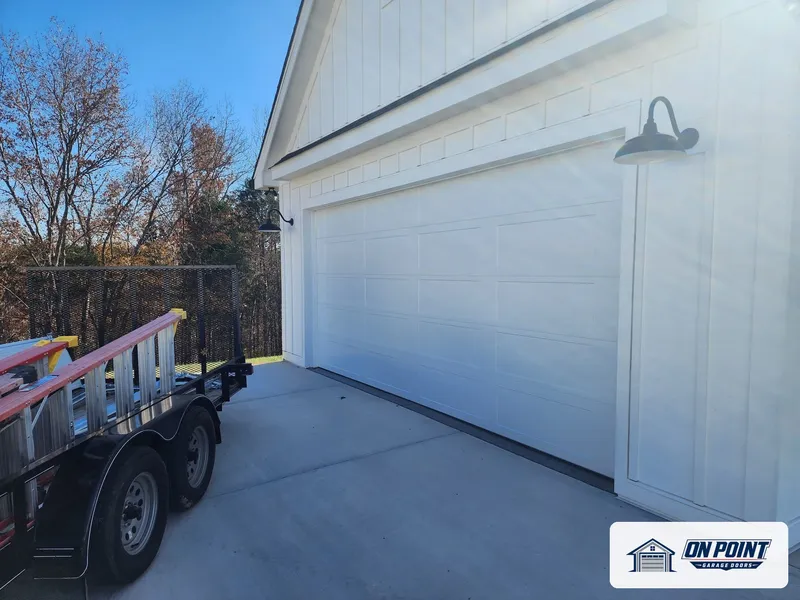
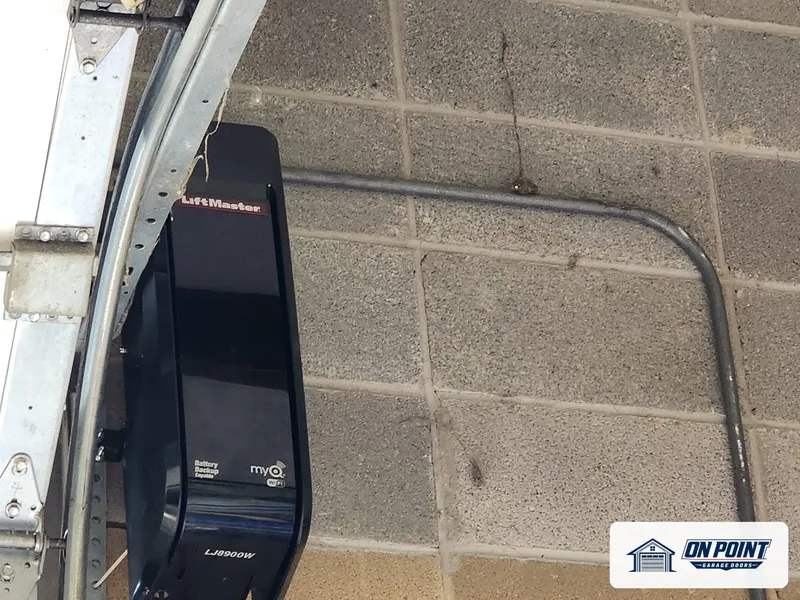
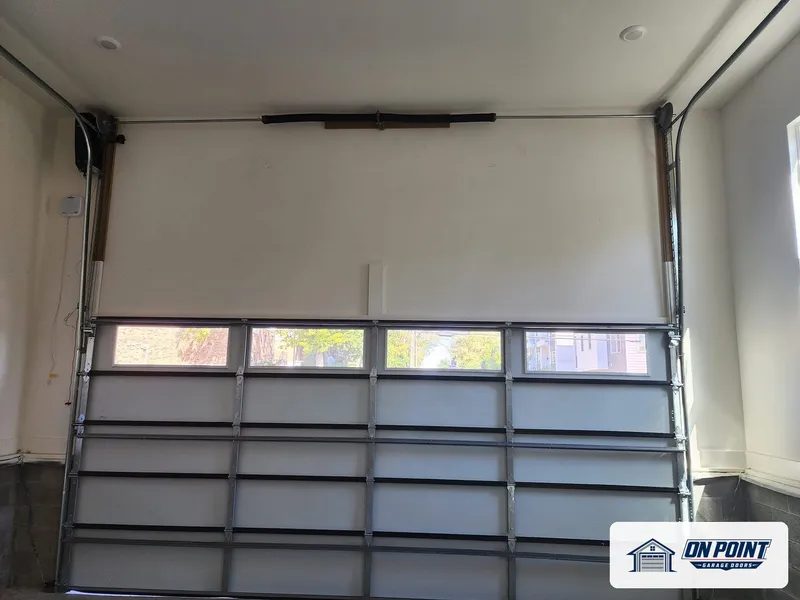
These photos are from our own jobs, with our logo on them.


Delivery access is any way of letting a person open the garage door once, or for a limited window, without handing over a remote or a permanent keypad code. Some retailers and opener apps work together so a courier who is standing at the address can trigger the door for one drop-off. Owners can also share access with a guest through the opener app, or, on some keypads, set a temporary code. In every version the door opens from a signal that does not come from a button inside the garage, and it closes again with the owner nowhere near it.
The opener needs to be connected, either built with Wi-Fi or paired with an add-on hub that talks to the existing unit. Many newer openers from the main brands have this built in, and some older ones can take a hub. Delivery programs often ask for more than a basic connection: some want a camera in the garage, and some only work with certain opener makers. What a given program supports changes over time, so the app and the program's own terms are the place to confirm it.
When a door is closed from a phone or by a courier walking away, nobody is watching the bottom edge. The safety sensors and the opener's reversing setting are doing all the work. Sensors that are out of line, a reversing force set too high, or a door that drags and binds can all turn a remote close into a problem. Openers that are made to close out of sight usually flash a light and sound a warning before the door starts to move, and that warning should never be switched off. We test the sensors and the reversal on every visit where remote access is set up.
A door with tired springs or worn rollers makes the opener strain on every trip. At the wall button that is easy to notice. With delivery access, the door may run many times a week while the owner is away, and any stall, reversal or bind happens with nobody there. A door that stops halfway and stays open is the worst outcome for a package and for the house. Before adding remote access, the springs, cables, rollers and tracks should be sound and the door should lift evenly by hand.
The garage is often one door away from the kitchen or a hallway. Opening the garage for a courier also opens a path to that inner door. The door from the garage into the house should be a solid door that stays locked, ideally with a deadbolt, and it should never be left unlocked just because the garage door is shut. On houses where the garage leads straight into a basement or a stair, that inner door deserves the same care as the front door.
Couriers are usually asked to set packages just inside the door, clear of the opening, so the door can close and the sensors stay clear. A box left in the path of the beam will stop the door from closing, which defeats the whole point. Some owners mark a spot on the floor beside the track, away from where a car parks. Keeping that area free of bikes, bins and tools also helps the person dropping off see where to put things.
A garage that holds a car, tools or a freezer is a bigger thing to open than an empty bay. Owners who use delivery access often keep valuables out of sight of the door and lock tool chests. Pets are another question: a dog loose in the garage can slip out while the door is up, or greet a courier who is not expecting it. Many owners simply keep pets in the house when deliveries are due, and some decide delivery access is not for them.
The signal has to reach the opener reliably. Garages behind brick, block or a concrete floor, and detached garages at the back of a lot, often get a weak signal. When the connection drops, the app may show the door as unknown or fail to send the command at all. A mesh point or an extender near the garage often settles it. We check the signal at the opener during the visit, since a door that answers only some of the time is worse than one that never answers.
In a two-family house or a row of attached homes, one garage may serve two households. Delivery access there needs everyone who uses the garage to know about it and agree to it. Each household can have its own app login, so the record shows who opened the door. Where one door opens onto a shared driveway or a sidewalk, owners should think about who else will be standing near the opening when a courier triggers it.
Most opener apps send a notice when the door opens and closes and keep a list of who did it. That record is one of the real benefits: an owner can see that the door closed again after a drop-off and not just hope it did. Guest access can be paused or removed at any point, and delivery programs can usually be turned off in the app. If a door is left open, many openers can be set to close after a time, which is covered on our auto close timer page.
We look at the door first: springs, cables, rollers, tracks and balance. We test the safety sensors and the reversing setting, check the opener, and either connect it or recommend a connected model or a hub that suits it. We check the Wi-Fi at the opener, look at the inner door to the house, and show you the warning light and sound the door gives before a remote close. You get a written estimate before any work, and setting up the app account stays with you.
With a connected opener and a delivery program that supports it, yes, for a single drop-off at your address. The door then closes again and the app records it.
Some programs ask for one and some do not. A camera lets you watch the drop-off, which many owners like either way. Check the program's own terms.
It can be, when the sensors are lined up, the reversing setting is right and the door is balanced. Openers that close out of sight also flash and beep before moving.
Some older openers can take an add-on hub, and some cannot. We look at the unit and tell you whether a hub or a new connected opener makes sense.
Yes. We check the door, the sensors, the opener and the signal in the garage and give you a written estimate before any work.
Across Brooklyn, Queens and Long Island, tell us what the door is doing and we set a visit that fits your day.
Free estimate, call (929) 429-2429.
Tell us what the door is doing and we will give you an honest arrival time. The estimate is free.
Easier to explain by phone? Call (929) 429-2429.
Tell us what the door is doing. The estimate is free either way.