Takes 30 seconds. We call you back to set a time.
Steel is the everyday garage door material, and fiberglass is the one people ask about when they want a deep stained-wood grain or worry about salt air eating a metal door. The two fail in opposite ways. Steel takes a knock and keeps the dent, while fiberglass flexes, springs back and one day cracks. Steel fears a broken coating, fiberglass fears years of strong sun. This page sets the two side by side so you can match the material to the house, the street and the way the driveway is used. Free estimate at (929) 429-2429.
By Sean Cohen, owner, On Point Garage Doors · Updated
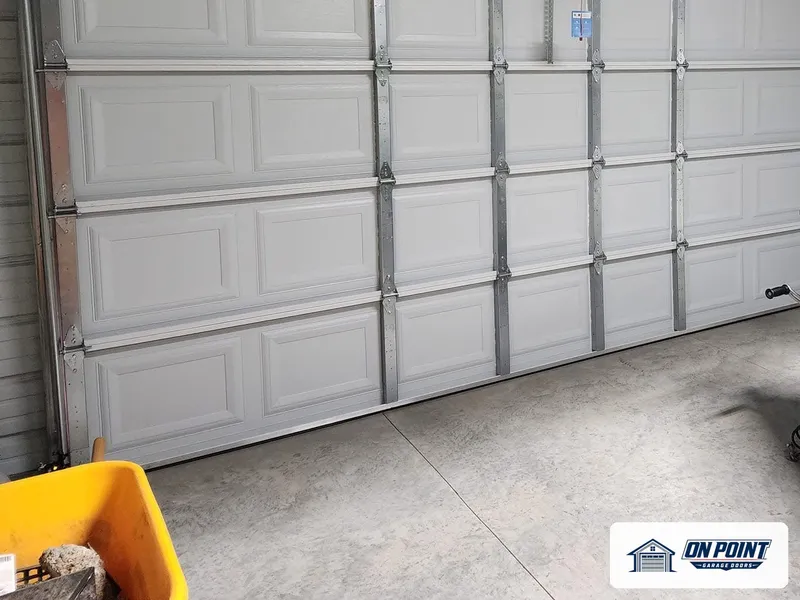
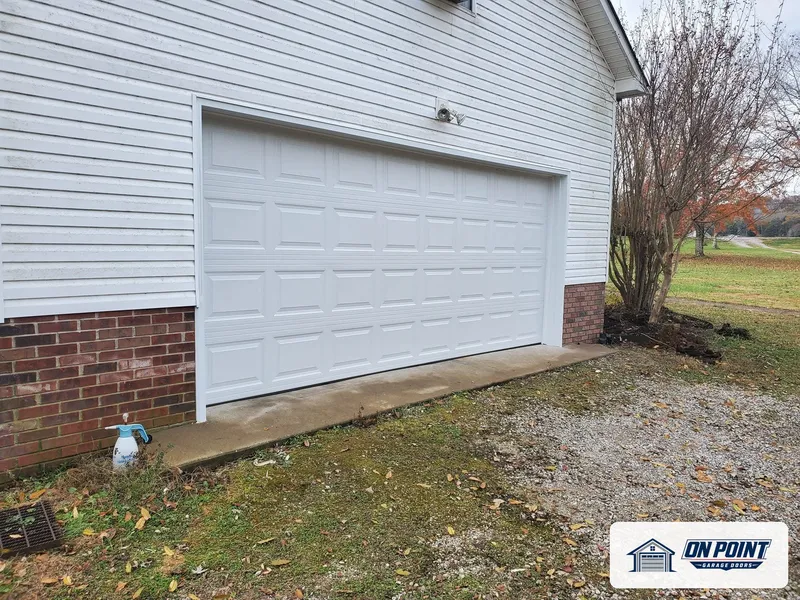
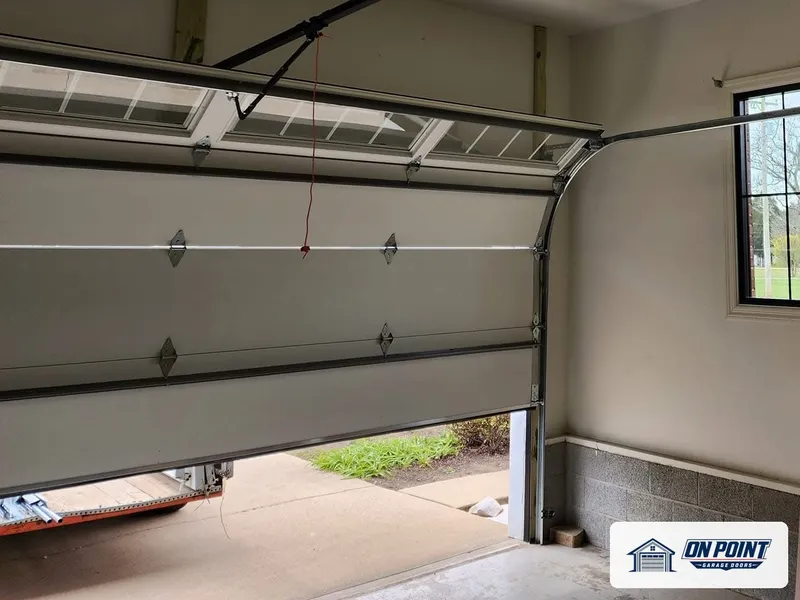
These photos are from our own jobs, with our logo on them.


A steel door is galvanized sheet steel with a baked finish, made as a single skin or as a sandwich with insulation behind or between the skins. A modern fiberglass door is a molded skin, usually over a steel frame with a foam core. The thin ribbed fiberglass doors that glow at night are an older type with problems of their own, covered on our fiberglass door page.
A thin steel skin creases from a basketball or a bumper at walking speed, and a crease never pulls out cleanly. Thicker skins and foam backing help a great deal. Fiberglass will not dent at all. It flexes and returns, so everyday bumps leave nothing behind. Hit it hard enough, especially on a cold morning when aged resin is stiff, and it cracks or splits around fasteners instead.
Steel is protected by zinc and paint. Scratch through both and rust starts, then creeps beneath the finish, most often along the bottom edge where salt and water sit. Fiberglass cannot rust, but ultraviolet light slowly breaks down the resin at its surface. Colors soften, the sheen turns chalky, and a neglected door can eventually show fibers. On a fiberglass door with a steel frame, the frame can still rust where you cannot see it.
Fiberglass skins are often molded from real boards, and many take stain, which is the closest a man-made door gets to the look of oak or mahogany. That finish needs renewing over the years, like the finish on a front door. Steel woodgrain is embossed and printed, convincing from the sidewalk and plainer at arm's length. A factory-painted steel door in a solid color asks for almost nothing for a very long time.
A fiberglass door on a steel frame with foam inside is usually as heavy as an insulated steel door, sometimes heavier. A single-skin steel door is far lighter than either. Whichever way you go, the springs are chosen for the new door's real weight, and the opener is checked for its strength and the way it reverses. Springs left over from the old door will make the new one either fight the opener or fly up.
Neither material insulates much on its own. The core does the work. A foam-filled steel door and a foam-cored fiberglass door can perform about the same, while a hollow single skin of steel is the coldest and loudest of the group. Compare the construction written on each proposal rather than the name of the material on the face.
Fiberglass is attractive near the bay and the ocean because the face is untouched by salt. The hinges, rollers, cables, springs and any steel inside the door still corrode, so coated or stainless hardware matters as much as the skin. A steel door with a heavy coating, steel on both faces and a well-sealed bottom section can also do well by the water if scratches are touched up promptly.
Fiberglass earns its place on a traditional house where a stained wood look matters, on garages close to salt water, and on doors that live with frequent small bumps. Steel suits nearly every other front: painted colors to match trim, carriage stamps, smooth modern faces and long or short raised panels. On a busy family driveway, a thick insulated steel door is usually the easier partner.
On the visit we measure the opening and headroom, note which way the door faces and how close the salt is, and ask how the driveway gets used. Then we write up a steel option and, where it fits the house, a fiberglass option, each with the springs, track and seals it needs, so you are comparing whole doors and not two words on a brochure.
Not against a hard hit. Steel dents where fiberglass would crack. Fiberglass handles small everyday bumps better because it springs back.
The fiberglass face resists salt better, but the hardware and any steel frame decide how long the whole door lasts. Coated hardware matters for either material.
A stained fiberglass door needs its finish renewed over the years, especially in strong sun. A factory-painted steel door needs very little.
No. Sections have to come from the same maker and line, and the two materials differ in thickness, weight and hinge mounting.
Yes. We can write up steel and fiberglass options for the same opening on one visit, and the estimate is free.
Across Brooklyn, Queens and Long Island, tell us what the door is doing and we set a visit that fits your day.
Free estimate, call (929) 429-2429.
Tell us what the door is doing and we will give you an honest arrival time. The estimate is free.
Easier to explain by phone? Call (929) 429-2429.
Tell us what the door is doing. The estimate is free either way.