Takes 30 seconds. We call you back to set a time.
People usually ask about steel against aluminum for one of two reasons: their steel door has rusted along the bottom, or they like the glassy modern doors that happen to be framed in aluminum. The metals behave very differently. One is strong and can rust, the other cannot rust but is softer and loses heat readily. Which is better depends on how close you are to salt, what hits the door and what the garage is used for. Free estimate at (929) 429-2429.
By Sean Cohen, owner, On Point Garage Doors · Updated
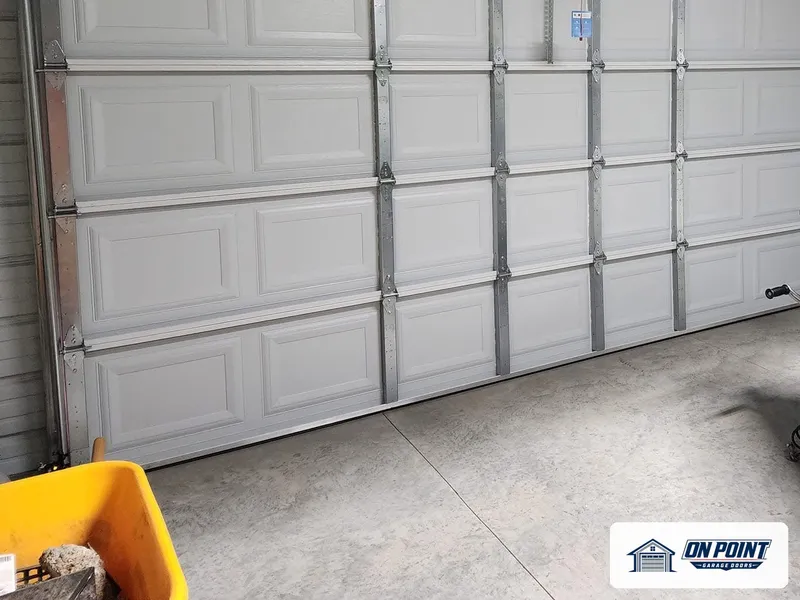
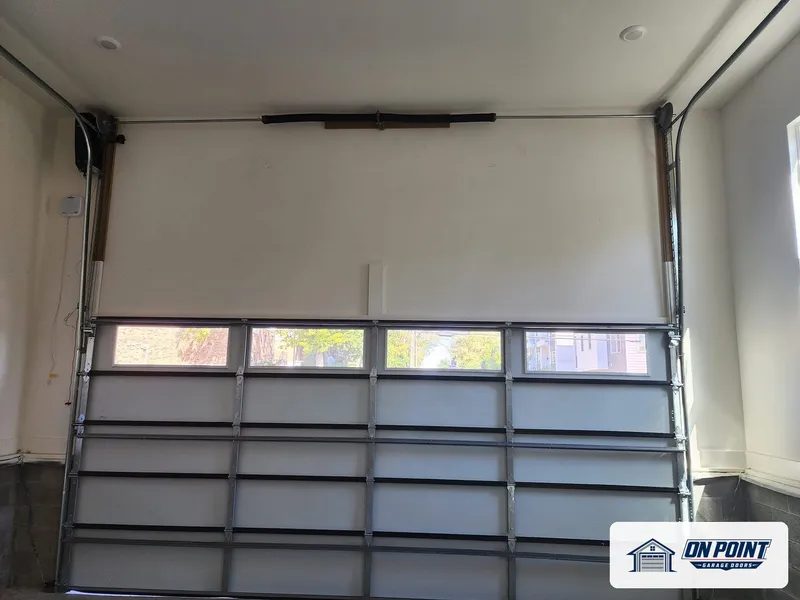
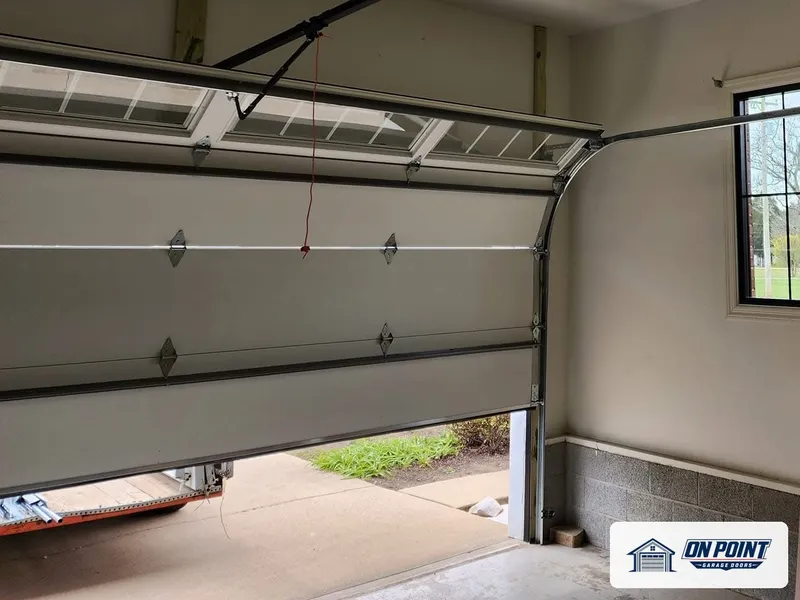
These photos are from our own jobs, with our logo on them.


Steel doors are mostly solid panels, made as one skin or as a sandwich with insulation. Aluminum comes in two very different forms. The common one today is the full-view door, an extruded frame holding glass or infill panels. The other is the sheet aluminum door, with a thin skin that looks like a steel panel. An old sheet door and a new framed door should never be judged as if they were the same product.
Steel is protected by zinc and paint. Break through both and it rusts, and rust keeps spreading beneath the paint. Aluminum forms its own thin oxide skin, so it will not flake away red. It can still pit and bloom with white powder in heavy salt, especially around fasteners made of a different metal. Salt near the water favors aluminum, provided the screws, hinges and brackets are chosen to suit it.
On Long Island and in the shore neighborhoods of Brooklyn and Queens, the lowest few inches of a door live in road salt, puddles and blown sand. A steel bottom section is normally the first to go. An aluminum bottom rail holds up there, yet the steel cables, brackets and rollers beside it age at the same rate as they would on a steel door, so the hardware still needs looking at.
Steel wins here. For the same thickness it is much harder to crease, and a foam-backed steel section is stiffer again. Sheet aluminum dimples from hail, balls and elbows. Extruded frames are sturdier than sheet, but a bent rail cannot be pulled straight and trusted, so the rail or the section gets replaced. A driveway used as a play court is a point for steel.
Bare aluminum is roughly a third the weight of steel by volume, so a sheet aluminum door is very light. Add insulated glass to a frame and the advantage disappears, and some full-view doors outweigh an insulated steel door. Springs are sized from the weight of the finished door. Never assume a change to aluminum lets you keep the old springs, whichever direction the weight moves.
A broad door works like a sail. Steel stiles and struts give a wide steel door a good deal of backbone, and reinforced versions are easy to find. Aluminum doors can be engineered for wind as well, using deeper rails, added struts and the right glass, but that has to be ordered that way. On an exposed corner lot or a street that ends at the water, ask to see the wind rating of the exact configuration.
Aluminum carries heat quickly. A frame without a thermal break can sweat on cold mornings and feel icy under a bedroom floor. Insulated glass and insulated infills help, but the best numbers still belong to steel doors filled with polyurethane. For a heated workshop or a room over the garage, steel is the simpler road to comfort.
Aluminum is the natural choice for slim frames, big panes and anodized or powder-coated finishes. Steel offers far more variety in traditional stamps, carriage faces and woodgrains. Dark colors behave differently on each: both get hot in direct sun, and a thin skin of either metal can show waviness. Seeing a large sample outdoors avoids surprises.
Steel fits the everyday house door: children, bikes, a room upstairs, a tidy traditional front. Aluminum fits the house a short walk from salt water, the modern front that wants daylight, and the garage that has become a studio or showroom. Where both pulls are strong, a galvanized, well-coated steel door or an aluminum door with insulated panels can be a sensible compromise.
We measure the opening, headroom and side room, look at what rusted or bent on the present door and why, and note how exposed the front of the garage is. Then the material, hardware finish, springs and any struts go on a written estimate, so you are comparing complete doors and not two words.
For the panels and frame, usually yes, because it cannot rust. The tracks, springs, cables and fasteners need a corrosion-resistant finish too, or they will fail long before the door does.
A magnet sticks to steel and not to aluminum. Rust spots also mean steel, while chalky white patches on a dull, easily dented skin often point to aluminum.
Yes. They need rinsing in salty spots and the same balance, roller, cable and safety checks as any other door, because the moving parts are largely steel.
The glass is normally tempered or laminated, and the door locks like any other. If privacy worries you, frosted glass or solid infills in the lower rows are common choices.
Yes. The visit is free, and we can write up a steel option and an aluminum option for the same opening.

Across Brooklyn, Queens and Long Island, tell us what the door is doing and we set a visit that fits your day.
Free estimate, call (929) 429-2429.
Tell us what the door is doing and we will give you an honest arrival time. The estimate is free.
Easier to explain by phone? Call (929) 429-2429.
Tell us what the door is doing. The estimate is free either way.