Serving Brooklyn, Queens and Long Island(929) 429-2429Open six days a weekFree estimateGuaranteed work
On Point Garage Doors
Open 24 hours Sun-Thu, Fri until 5 pm Free estimate Springs, openers, cables We come to you
Emergency?Call nowBook free estimate
New York, NY - open six days a week

Tuck-under garage doors: garages below the house

Free estimateSame-day serviceCommon parts on board
  • Free estimate
  • Same-day service
  • Common parts on board
Emergency garage door repair★★★★★ 5.0 on Google · 42 reviews

Book your free estimate

Takes 30 seconds. We call you back to set a time.

Or just call (929) 429-2429 and talk it through.

Home › Tuck-Under Garage Doors

A tuck-under garage is built into the lower level of the house, often with the living room or a bedroom right above it. In many attached and semi-attached homes, the driveway slopes down from the sidewalk to the garage door, so the garage sits below the street. These garages are everywhere in older parts of the city and in many suburbs. They save space, but they bring their own set of door problems: water at the bottom, rust on the lower section, low headroom inside and noise that carries into the rooms above. Free estimate at (929) 429-2429.

By Sean Cohen, owner, On Point Garage Doors · Updated

Real jobs. Real photos.

These photos are from our own jobs, with our logo on them.

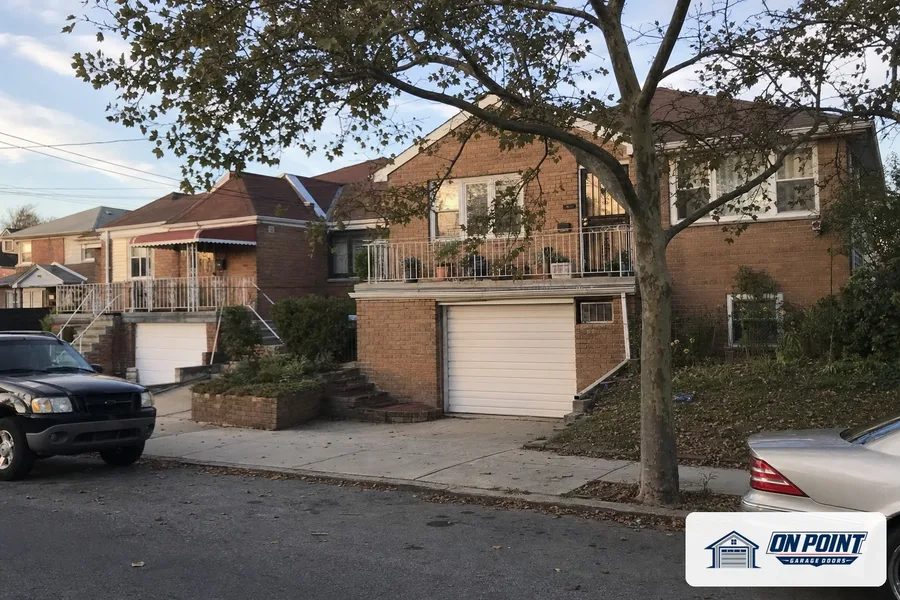
Brick house with a garage under the stoop, from one of our jobs
Brick house with a garage under the stoop
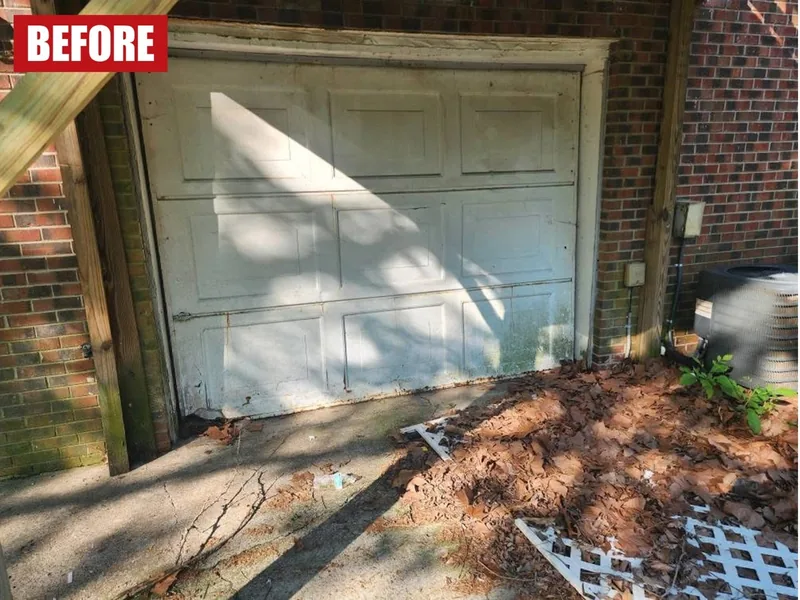
Old worn garage door before On Point Garage Doors replaced it
Rust along the bottom of a garage door
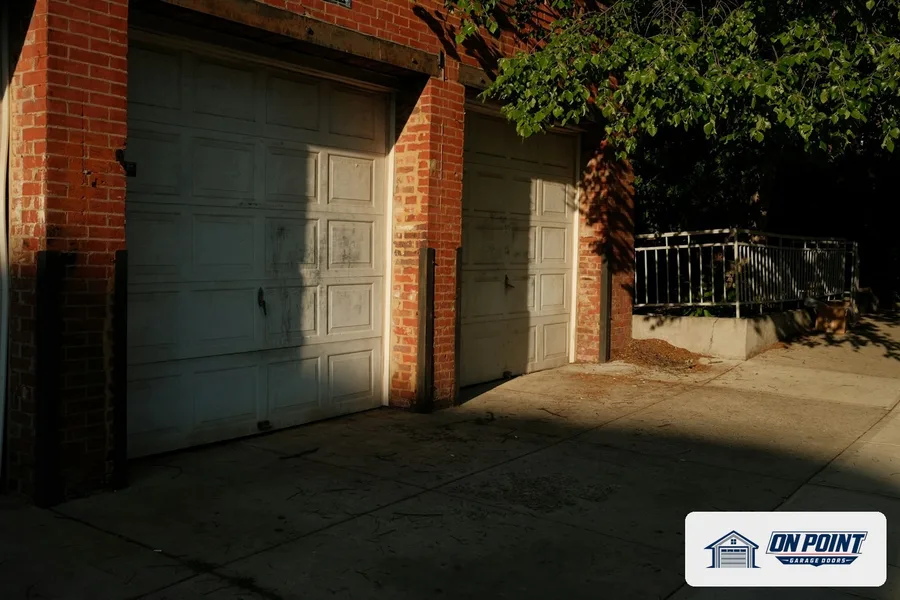
Two garage doors at a brick driveway, from one of our jobs
Two garage doors at a brick driveway

Water runs downhill to the door

When the driveway slopes toward the garage, rain and melting snow run straight to the bottom of the door. A drain in front of the door helps, but drains clog with leaves and ice. Water then sits against the bottom seal and works its way inside. Our page on water coming in under a garage door explains the usual fixes.

Rust on the bottom section

Standing water, road salt carried down the driveway and snow piled against the door all attack the bottom section. Steel doors on tuck-under garages often rust along the bottom edge years before the rest of the door shows any wear. The bottom section can often be replaced on its own if the rest of the door is sound.

The bottom seal and retainer

A good bottom seal is the first line of defense. On these doors we often use a thicker seal and check that the metal retainer holding it has not rusted through. A rusted retainer lets the seal fall out, and then water and leaves come straight in.

Low headroom inside

Because the garage sits under the house, there is often a beam, a duct or a pipe right above the opening. Standard tracks may not fit. Low headroom tracks or a wall mount opener beside the door solve many of these spaces. Our page on low headroom garage doors goes into the options.

Noise in the rooms above

With a bedroom or living room overhead, every rumble of the door and the opener carries through the floor. Nylon rollers, a balanced door and a belt drive or wall mount opener make a big difference. Our page on garage door noise under a bedroom covers this in detail.

Short driveways and tall vehicles

Tuck-under driveways are often short and steep, so a car sits at an angle as it enters. Tall vehicles can scrape the top of the opening or the door if it stops short. Setting the opener to open the door fully, and checking the clearance, helps avoid damage.

Older doors on older homes

Many tuck-under garages still have old one-piece or wood doors from when the house was built. These doors are heavy, often rotted at the bottom and hard to fit with an opener. Replacing them with an insulated sectional door is a common upgrade.

Snow and ice at the bottom

On a sloped driveway, snow slides down and piles against the door, and meltwater freezes the bottom seal to the ground. Forcing a frozen door with the opener can tear the seal or strain the opener. Our page on a garage door that will not open when it is freezing explains what to do.

Common problems we see

Drains in front of the door

Most tuck-under driveways have a trench or a round drain right in front of the garage. When it works, it catches the water before it reaches the door. When it is clogged with leaves, sand or ice, the water pools against the bottom seal and finds every gap. Keeping that drain clear is one of the simplest things an owner can do to protect the door, and if water still comes in with a clear drain, the seal or the floor at the opening is usually the cause. Drain repair is a plumbing or masonry job, but we check how the water moves when we look at the door.

Doors facing the street

On many blocks the tuck-under door is the main thing you see from the sidewalk. A new door with a clean style and a color matching the brick or trim can change the look of the whole house. Windows near the top bring in light without exposing the garage.

What a visit includes

The technician checks the door, the seals, the slope and drain at the bottom, the headroom and the opener, and explains what will fix the problem for good. You get a free estimate before any work starts.

Questions we get asked

What is a tuck-under garage?

A garage built into the lower level of the house, often at the bottom of a sloped driveway.

Why does water come in under my tuck-under garage door?

The driveway slopes toward the door, so water runs to the seal. A worn seal or a clogged drain lets it in.

Why is the bottom of my garage door rusted?

Standing water, salt and snow attack the bottom section first on these doors.

Can a tuck-under garage door be made quieter?

Yes. Nylon rollers, good balance and a belt or wall mount opener cut the noise a lot.

Is the estimate free?

Yes. We check the door and the opening before any work starts.

Booking takes a minute

Across Brooklyn, Queens and Long Island, tell us what the door is doing and we set a visit that fits your day.

Free estimate, call (929) 429-2429.

Garage under the house? We know these doors

Tell us what the door is doing and we will give you an honest arrival time. The estimate is free.

Easier to explain by phone? Call (929) 429-2429.

Two minutes to a free estimate

Tell us what the door is doing. The estimate is free either way.

Or just call (929) 429-2429 and talk it through.

The other six things that go wrong