Takes 30 seconds. We call you back to set a time.
A car dealership uses its garage doors in three very different ways. The showroom door is part of the look of the building and opens only to bring a car in or out. The service lane door opens for every customer who drives in for an oil change or a recall. The shop bays behind it run like any busy repair shop. Each door needs a different kind of door, opener and care, and when one of them stops working, customers notice. This page explains what each door at a dealership needs and what we look at when we service them. Free estimate at (929) 429-2429.
By Sean Cohen, owner, On Point Garage Doors · Updated
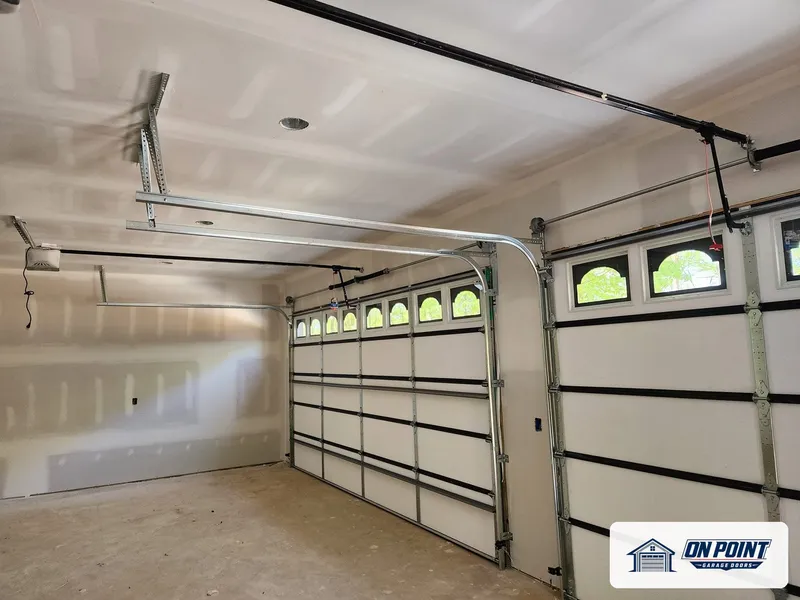
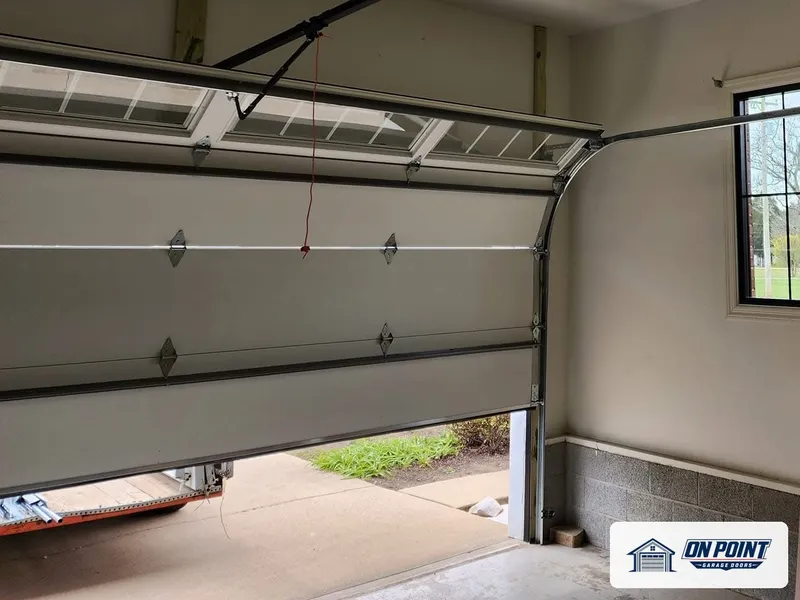
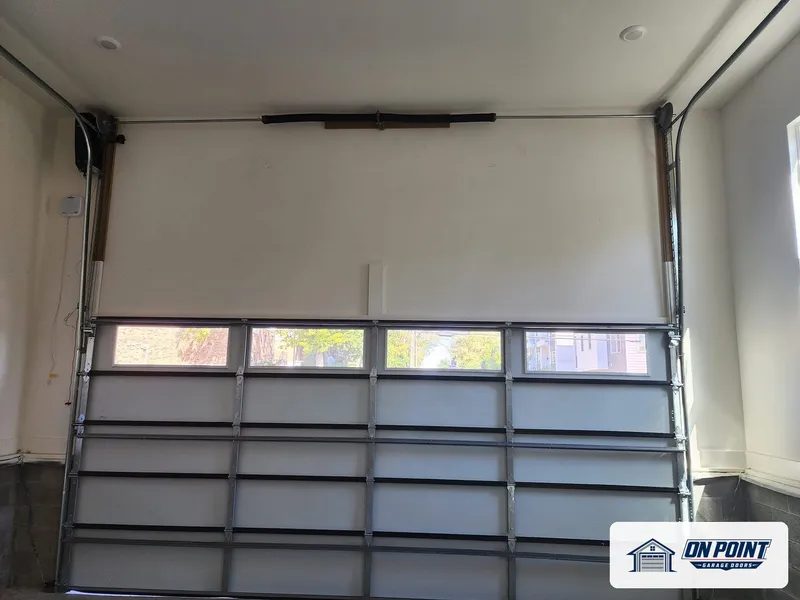
These photos are from our own jobs, with our logo on them.


A dealership door plan usually comes down to the showroom, the service drive and the shop. The showroom door is about looks and glass. The service drive door is about speed and traffic. The shop doors are about durability around lifts, air hoses and heavy use. Treating them all the same is how a dealership ends up with a showroom door that looks wrong or a service door that wears out in a season.
Showroom doors are usually full-view aluminum doors with large glass or polycarbonate panels, chosen to match the storefront glass around them. They are opened rarely, so the wear is light, but the look matters. Scratched panels, fogged insulated glass and a frame finish that has faded or pitted near the street all show. Because these doors are heavy for their size, the springs and the opener need to match the weight of the glass.
The service drive door is the busiest door on the lot. It opens and closes with every car that drives in and many that drive out, often while customers are standing nearby. These doors need high-cycle springs, sturdy rollers and a commercial operator rated for the traffic. Many dealerships use loop detectors in the floor or a remote held by the service advisors so the door opens as a car arrives and closes behind it.
In the shop, the doors work beside lifts, tool carts and cars moving in and out of bays. Tracks are often set for high lift so the door clears the lifts, and the door is easy to strike with a car being moved by a technician in a hurry. Our page on doors for auto repair shops covers shop bays in detail, and almost all of it applies to the service side of a dealership.
Glass panels on a busy door need to hold up to a knock from a mirror or a cart. Tempered glass and polycarbonate are the usual choices, and the right one depends on how close the door sits to the traffic. Insulated glass keeps a heated showroom from losing warmth through the door in the winter, and it is worth checking the seals around each panel on a door that faces the sun all day.
Customers walk through the service drive, often looking at a phone or talking to an advisor. Photo eyes, light curtains and reversing edges are tested on every visit, and we look at whether the safety devices cover the whole opening on a wide door. A door that closes on a customer's car is a bad day for everyone, and a working safety system prevents it.
A service lane door can run hundreds of cycles a week, which is beyond what a home opener is built for. We match a commercial operator to the door's weight and traffic and mount it so it does not get in the way of the lane. Controls are set so advisors can run the door from the drive, and we check every remote, wall station and floor loop on each visit.
A service drive with a door that stays open between cars loses heat fast, and staff feel it at the write-up desk. Insulated sections, good perimeter seals and an operator that closes the door promptly after each car all help. For very busy lanes, some dealerships look at a high-speed door. Our page on high-speed roll-up doors explains when that makes sense.
When the dealership closes, the doors are part of what protects the cars inside. We check that every door locks, that the operators cannot be forced open from outside and that the bottom of each door closes tight to the floor. Doors with large glass panels can be paired with interior grilles or rolling shutters where the dealership wants more protection.
Dealerships do not want a technician blocking the service drive at the busiest time of the morning. We plan visits around the schedule and work on one door at a time, so the lane stays open. Repairs that need a door out of service are planned for a slower part of the day or a day the service department is closed.
The technician checks springs, cables, rollers, hinges, tracks, panels and glass on every door on the list, tests the operators and every control, and tests each safety device. Small adjustments are made on the spot. Anything larger goes on a written estimate, and nothing beyond that is started without your approval.
Most showrooms use full-view aluminum doors with glass or polycarbonate panels that match the storefront. The springs and opener have to be matched to the extra weight of the glass.
It is usually the busiest door on the property. A service lane door needs high-cycle springs, sturdy rollers and a commercial operator rated for that much traffic.
Yes. A loop detector in the floor or a remote held by the advisors can open the door as a car arrives, with the safety devices still protecting the opening.
Yes. We plan the visit around your schedule and work on one door at a time, so customers can still get in.
Yes. We look at each door and how it is used before recommending repairs or new parts.
Across Brooklyn, Queens and Long Island, tell us what the door is doing and we set a visit that fits your day.
Free estimate, call (929) 429-2429.
Tell us what the door is doing and we will give you an honest arrival time. The estimate is free.
Easier to explain by phone? Call (929) 429-2429.
Tell us what the door is doing. The estimate is free either way.