Takes 30 seconds. We call you back to set a time.
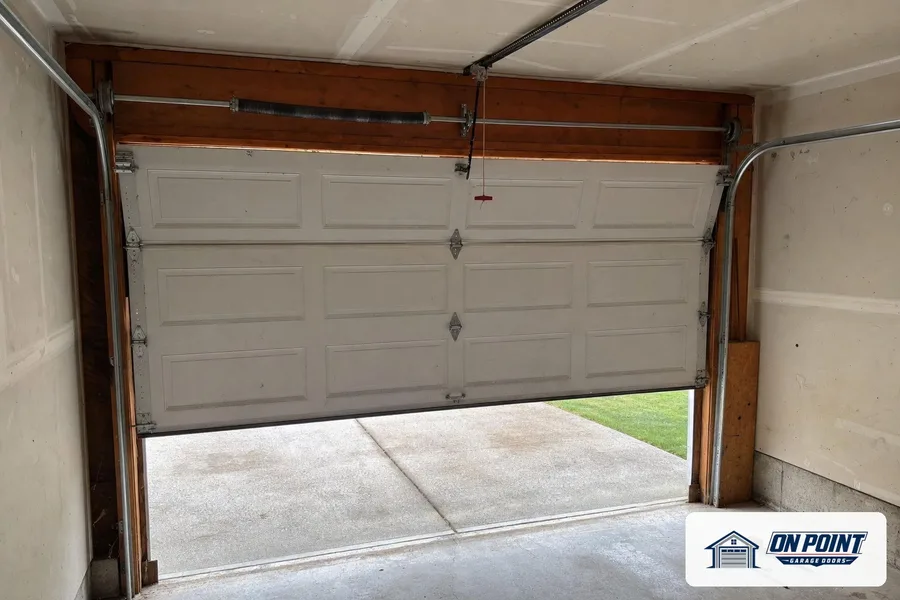
You hit the remote and the door starts up, then stops a foot or two short, or halfway, or stops and comes back down. Sometimes it is just low enough to scrape the roof rack on the car. A door that will not open fully is telling you that the opener thinks the door has reached the top, or that something is making the door too hard to lift the rest of the way. Free estimate at (929) 429-2429.
By Sean Cohen, owner, On Point Garage Doors · Updated
These photos are from our own jobs, with our logo on them.


Either the opener is stopping the door on purpose, because its up limit is set too low or it feels too much resistance, or the door physically cannot travel any farther because of a spring, cable, roller or track problem. Telling the two apart is the first step.
A door that stops at exactly the same height every time often has a travel limit set wrong or a specific bad spot in the track. A door that stops at different heights, or slows down before stopping, points more toward springs that are losing force or an opener that is struggling.
Springs lift the most at the start and less as the door rises, by design. When they get weak, the door feels heaviest near the top, and that is exactly where many openers give up. Running an opener against weak springs wears its gears and motor, so testing the springs comes first.
On garages with low headroom, the door may already stop just high enough for a car. A roof box, a lifted truck or a work truck with a rack may not fit. Options include adjusting the travel, changing the track to a low-headroom or high-lift setup, or a wall-mounted opener that frees space near the ceiling. The technician measures and explains what will work.
Holding the button or pushing the door up by hand to get past the stopping point can bend the top section, damage the opener or let a weak spring fail. If the door looks crooked or a cable looks loose, keep clear and call.
The technician disconnects the opener, tests the door's balance by hand, checks the springs, cables, rollers and tracks, then checks the opener's travel limits, force settings and drive. Once the cause is fixed, the travel is set so the door opens fully, and the safety reverse is tested.
You get a clear explanation and a free estimate before any work starts.
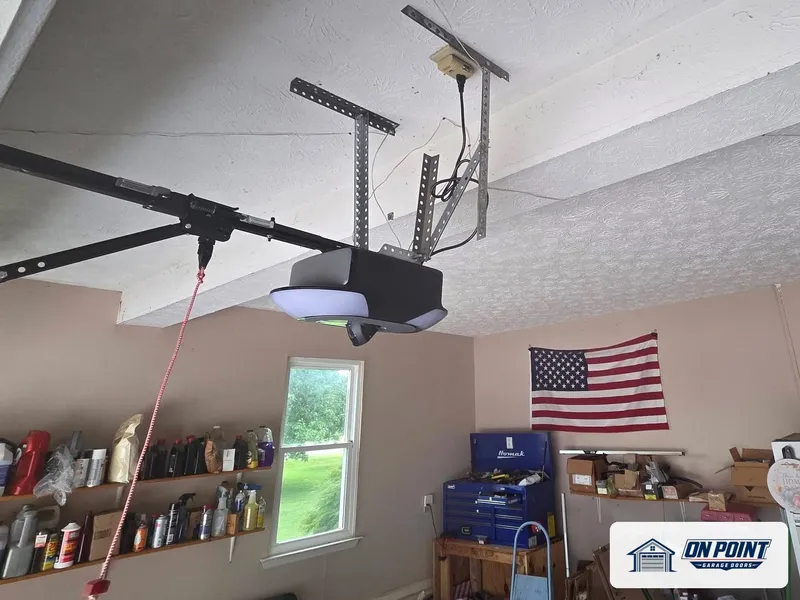
If the opener is old, its limit system is worn out or its board is failing, a repair may not hold. Then a new opener is explained with a free estimate. A new opener on a balanced door opens fully and smoothly and often adds phone control.
Many doors stop short on the first cold mornings. Cold stiffens worn rollers and tired springs, and the extra drag trips the opener's safety. That is a good sign the door is due for a tune-up before winter really sets in.
On shop and warehouse doors, a door that stops short can block deliveries or trucks. Commercial operators have their own limit and safety settings, and the springs on high-cycle doors wear quickly. Tell us it is a business door when you call and the visit is planned accordingly.
Tuck-under garages in row houses and hillside homes often have little room above the door, so the tracks and the opener rail sit close to the ceiling. A door that stops short there may be hitting a pipe, a beam or a light fixture. The technician checks the whole path of the door before changing any setting.
If the door started stopping short right after a new door, a new opener or a repair, the travel limits or the track setup were probably not finished correctly. That is a quick check, and the door is set to open fully with the right clearance for your car.
Usually the opener's up limit is set too low, the springs are weak, or the door is binding near the top.
Yes. The door feels heaviest near the top, and the opener stops when the strain is too high.
Yes. A technician sets them after making sure the door is balanced and moving freely.
Not if a spring or cable may be weak or broken. Keep clear and call.
Yes. You see the cause and the fix before any work starts.
Across Brooklyn, Queens and Long Island, tell us what the door is doing and we set a visit that fits your day.
Free estimate, call (929) 429-2429.
Tell us what the door is doing and we will give you an honest arrival time. The estimate is free.
Easier to explain by phone? Call (929) 429-2429.
Tell us what the door is doing. The estimate is free either way.