Takes 30 seconds. We call you back to set a time.
Garage doors lock in a few different ways: a handle lock with bars that slide into the tracks, a slide bolt on the inside, a padlock on older and roll-up doors, or simply the opener holding the door shut. When the lock stops working, or the door will not close far enough to lock, the garage is open to anyone who tries the door. Free estimate at (929) 429-2429.
By Sean Cohen, owner, On Point Garage Doors · Updated
These photos are from our own jobs, with our logo on them.


If the door has an opener, running it while a manual lock is engaged can bend the door, the tracks or the opener's arm. Many owners have the manual lock removed or disabled once an opener is installed, and rely on the opener to keep the door shut.
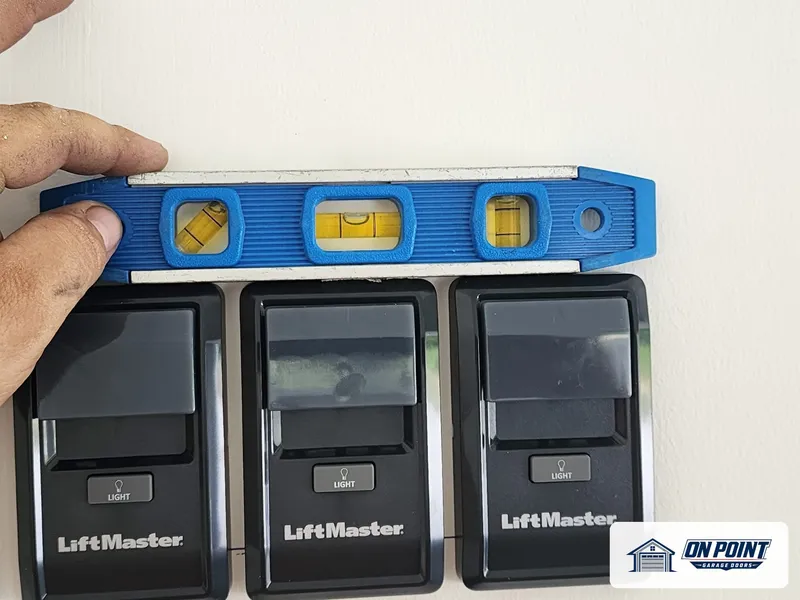
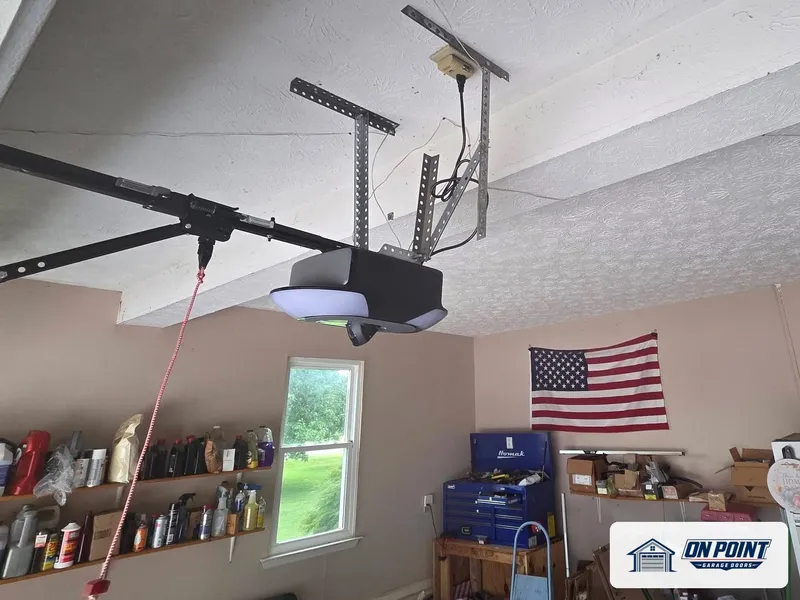
A modern opener holds the door closed through its drive, and most doors cannot be lifted from outside when the opener is engaged. Rolling-code remotes, lock mode on the wall control and a shield over the emergency release make that much more secure.
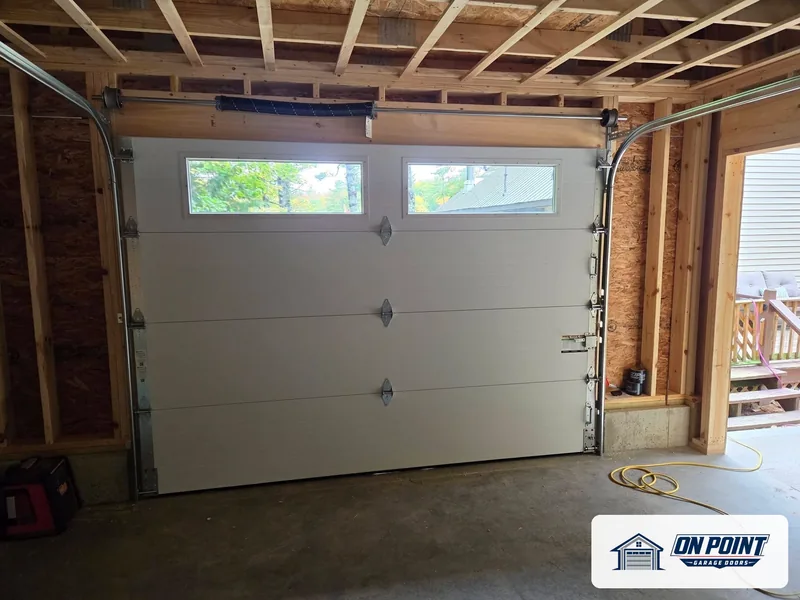
A door that stops a few inches short, or bounces back up, cannot be locked and leaves a gap. The cause is usually the sensors, the travel limits or the springs. Fixing that is the first step to a secure garage.
Roll-up doors on sheds, storage units and shops usually lock with a slide bolt into the guide or a padlock on the bottom bar. Rust and bent bottom bars stop them from lining up. Bars and locks are replaced and lined up so the door secures properly.
When you are away, lock mode on the wall control, an unplugged or locked-out opener, or a slide bolt on the inside add security. Phone alerts let you know if the door moves.
Detached garages out of sight from the house are a favorite target. A working lock, a strong door, a solid side door and an alert when the door opens are worth having.
Old handle locks can be replaced with new keyed sets, or removed and replaced with a keypad and the opener. The technician recommends what suits your door and how you use the garage.
The technician checks the lock, the bars, the track holes, the door's travel and the opener, fixes or replaces what is needed, and tests that the door closes fully and locks. You get a free estimate first.
Even with a locked garage door, the door from the garage into the house should have a good deadbolt. It is often the weakest point once someone is inside the garage.
On doors that once had a manual lock and now have an opener, the old lock bars are sometimes left in place. If someone turns the handle and then runs the opener, the door fights the bars. Removing or disabling the old bars avoids that damage.
An outside keypad lets the family come and go without a key or a remote, and the code can be changed whenever needed. It works through the opener, so the door stays held shut when closed.
The small side door into the garage is often the easiest way in. A solid door, a deadbolt and a strike plate fastened with long screws make it much harder to force.
On row houses with garages opening straight onto the sidewalk, the garage door is right where passers-by walk. A door that closes fully and stays held shut by the opener, with the emergency release shielded, keeps it secure.
An old opener with a worn gear may not hold the door firmly, and the door can sometimes be lifted a little from outside. A new gear or opener restores that hold.
Usually a seized lock, bars that no longer line up, or a door that does not close fully.
Not at the same time. Running the opener with the lock engaged can damage the door.
A closed opener holds the door down, and most doors cannot be lifted from outside.
Use lock mode, a slide bolt inside and phone alerts.
Yes. You see the fix before any work starts.
Across Brooklyn, Queens and Long Island, tell us what the door is doing and we set a visit that fits your day.
Free estimate, call (929) 429-2429.
Tell us what the door is doing and we will give you an honest arrival time. The estimate is free.
Easier to explain by phone? Call (929) 429-2429.
Tell us what the door is doing. The estimate is free either way.