Takes 30 seconds. We call you back to set a time.
A squeak is the sound of two parts rubbing that should be moving freely. On a garage door, that can be a hinge, a roller, a spring, a bearing or the rubber seals along the sides. A squeak on its own is usually a sign of wear rather than an emergency, but it often comes before louder noises and harder movement, so it is worth finding out which part is complaining. Free estimate at (929) 429-2429.
By Sean Cohen, owner, On Point Garage Doors · Updated
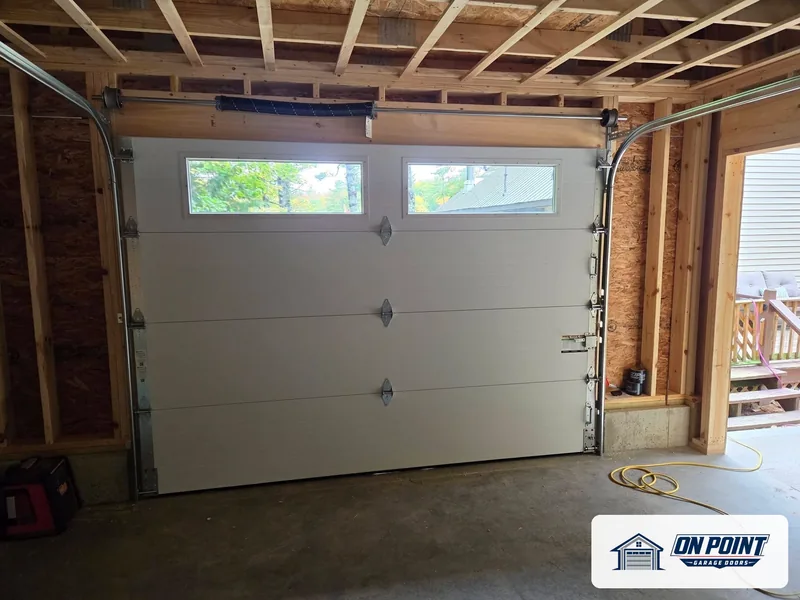
These photos are from our own jobs, with our logo on them.


If the squeak happens at the same point every time, often where the door turns from vertical to horizontal, the hinges and rollers at that section are the likely source. That curve is where the door flexes most and where worn parts complain first.
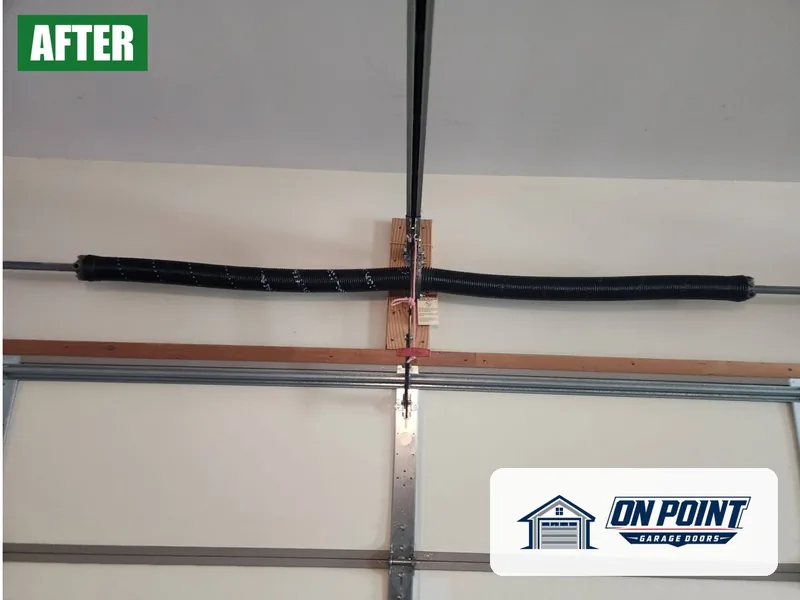
A squeak or squeal from the spring bar area usually means the springs or the bearings. Springs that squeak may simply be dry; springs that squeak and also look rusted or stretched may be near the end of their life. Bearings that squeal often also let the bar wobble. Both are jobs for a trained technician, because the springs are under high tension.
Many doors start squeaking on the first cold days, when rubber seals stiffen and dry parts get noisier. A door that squeals as it rubs the side seals may need the seals adjusted or replaced, or the tracks set so the door does not drag against them.
Putting the wrong product on a door can collect dust and grit, soften seals or drip on the car, and it does nothing for a worn hinge or a tired spring. A tune-up identifies which parts are worn, replaces the ones that need it, greases only the parts that take it, and balances the door so it moves without strain.
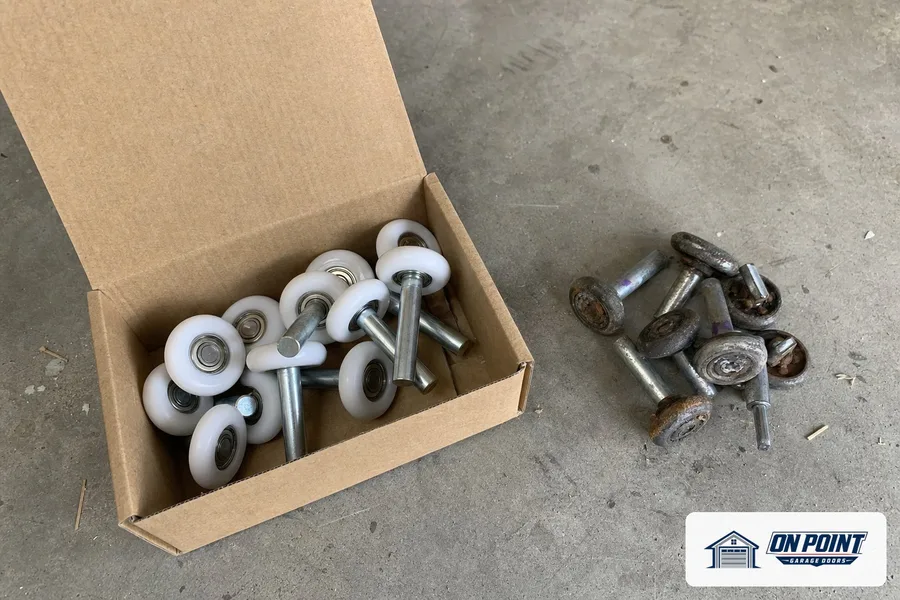
When hinge holes wear oval or a hinge cracks, the sections flex and squeak. When roller bearings wear, the rollers squeal and wobble. Replacing worn hinges and fitting sealed rollers usually turns a squeaky door into a quiet one.
Openers can squeak too: a dry chain, a worn trolley, a rail that flexes or a loose mount. Sometimes the noise is the opener working hard against a door that is out of balance. The opener and the door are checked together.
Squeaks travel. If there is a bedroom over the garage, even a small squeak is heard every morning. Sealed rollers, new hinges, a balanced door and a quiet belt-drive or wall-mounted opener together make the biggest difference.
The technician runs the door, listens for where the squeak comes from, and checks the hinges, rollers, springs, bearings, tracks, seals and opener. Worn parts are replaced, the parts that need grease get the right kind, the door is balanced and the safety reverse is tested. You get a free estimate first.
A squeak together with a door that feels heavier, moves unevenly, shakes or looks crooked is more than noise. It can mean a spring or cable is wearing out. Call before it turns into a door that will not open.
A door that squeaks right after new springs, rollers or a new door was installed may have a track set slightly out of line, a roller rubbing a hinge, or springs that need to settle. A follow-up check sets the tracks and rollers so the door runs quietly. That kind of squeak should never be left to wear the new parts.
Many doors have vinyl or rubber stops along the sides that press against the door to keep out drafts. When the stops are set too tight, or the rubber has hardened, the door squeals as it rubs them. The stops are adjusted so they seal without dragging, or replaced if the rubber is worn out.
Wood doors swell in humid weather and rub against the stops and the jambs. They also weigh more when wet, which loads the hinges. Squeaks that come and go with the weather on a wood door point to swelling, and sometimes to springs that are no longer strong enough for the door.
Usually dry or worn hinges, rollers, springs or bearings, or the door rubbing its side seals.
Often it is a sign of wear. It is worth having the door checked before louder noises or harder movement start.
Cold stiffens seals and makes dry or worn parts noisier.
Often yes, together with balancing the door and greasing the right parts.
Yes. You see what is worn and the fix before any work starts.
Across Brooklyn, Queens and Long Island, tell us what the door is doing and we set a visit that fits your day.
Free estimate, call (929) 429-2429.
Tell us what the door is doing and we will give you an honest arrival time. The estimate is free.
Easier to explain by phone? Call (929) 429-2429.
Tell us what the door is doing. The estimate is free either way.