Takes 30 seconds. We call you back to set a time.
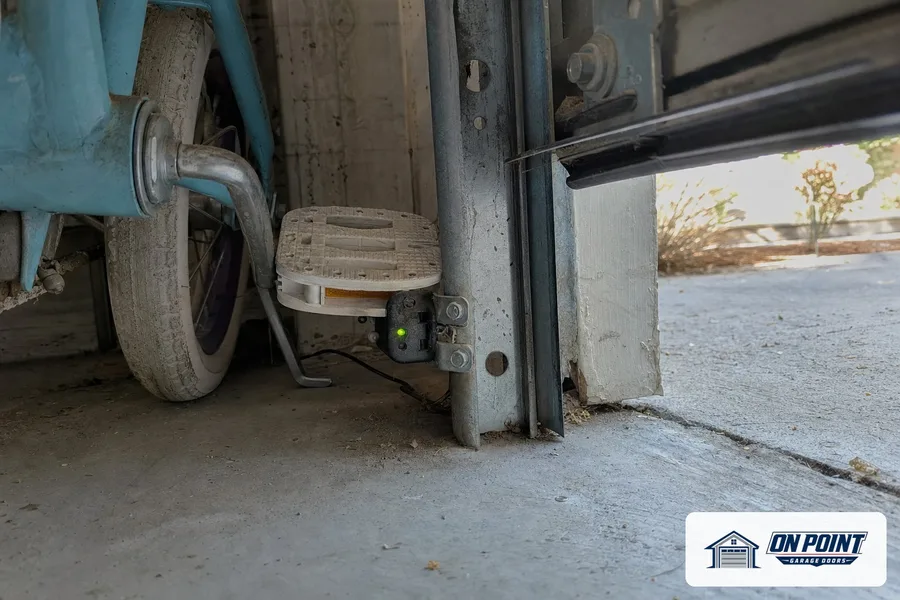
When a garage door starts down and then stops, or stops and goes back up, the opener is usually doing its job. It thinks something is in the way. The cause is most often the safety sensors near the floor, the close limit or force setting, or a door that is binding in its tracks and feels heavy to the opener. Free estimate at (929) 429-2429.
By Sean Cohen, owner, On Point Garage Doors · Updated
These photos are from our own jobs, with our logo on them.


Tell us what you see when you call. You do not need to adjust anything: the force and limit settings, the tracks and the springs are best left to a technician.
The sensors first: alignment, wiring and whether sun or dirt is confusing them. Then the door itself: the springs, rollers, hinges and tracks, to make sure it moves freely and is balanced. Only then the opener's force and travel limits.
A door that is heavy because a spring is weak should never be fixed by turning up the opener's force. That hides the real problem and makes the safety reverse less reliable, so the spring is dealt with first.
The force setting decides how hard the opener pushes before it gives up. Turning it up can make a binding door close, but it also means the door will push harder against a car, a pet or a person before it reverses.
That is why the cause is found and fixed, and the force is set back to where the safety reverse works properly.
Each of these hides the cause and makes the door less safe. It is better to leave the door closed by hand and have the cause found.
Concrete slabs settle and crack over the years, and a new bottom seal changes how far the door travels. Either can make the door touch down sooner or later than the opener expects.
The technician checks the floor at the door, the bottom seal and the close limit together, so the door seals along its whole width and still reverses when it should.
Openers measure how hard they are working. As gears wear or the board ages, the opener can misread a normal door as an obstacle.
If the door moves freely and balanced by hand, the sensors are clear and the limits are right, but it still stops, the opener is tested next. You hear whether a repair or a new opener makes more sense.
Any of these means the door is fighting the opener, and the door is fixed before any opener setting is changed.
Cold stiffens old grease in the rollers and hinges and makes the bottom seal hard, so the door needs more effort to move. An opener that was just barely coping in summer can start stopping and reversing in winter.
If the problem appeared with the first cold mornings, the springs and rollers are checked first.
Usually the close limit is set a little too far, so the opener reads the floor as an obstacle. A new floor seal or a settled slab can change it. The limit is reset and the safety reverse tested.
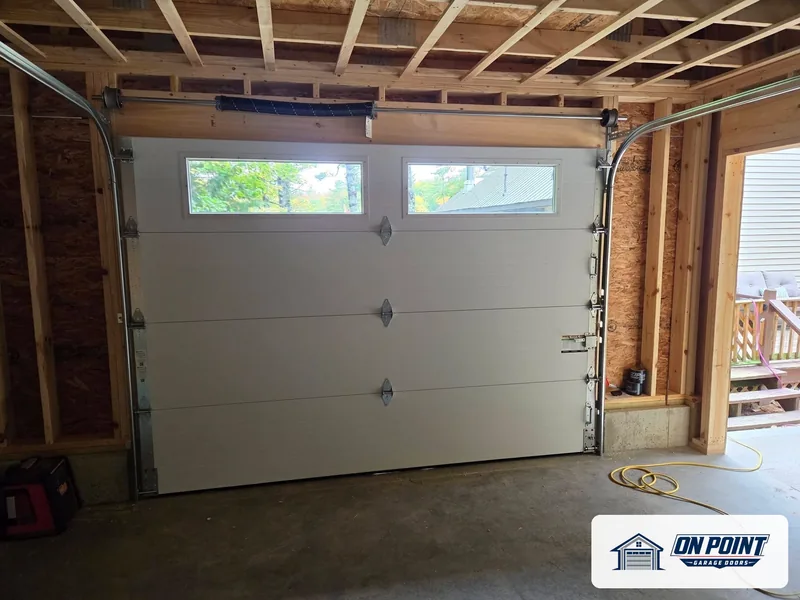
Something is making the door hard to move: a bent track, a dry roller, a damaged hinge or a weak spring. The opener stops to protect itself.
If it reverses at once and the opener light blinks, the sensors are the most likely cause. A blocked or misaligned beam stops the door from closing.
If it will not close, keep it closed manually if you can and avoid forcing it. A door that is binding can come off its track.
Yes. The technician finds the cause and explains it before any work starts.
Across Brooklyn, Queens and Long Island, tell us what the door is doing and we set a visit that fits your day.
Free estimate, call (929) 429-2429.
Tell us what the door is doing and we will give you an honest arrival time. The estimate is free.
Easier to explain by phone? Call (929) 429-2429.
Tell us what the door is doing. The estimate is free either way.