Serving Brooklyn, Queens and Long Island(929) 429-2429Open six days a weekFree estimateGuaranteed work
On Point Garage Doors
Open 24 hours Sun-Thu, Fri until 5 pm Free estimate Springs, openers, cables We come to you
Emergency?Call nowBook free estimate
New York, NY - open six days a week

Best garage door opener? It depends on your door

Free estimateSame-day serviceCommon parts on board
  • Free estimate
  • Same-day service
  • Common parts on board
Emergency garage door repair★★★★★ 5.0 on Google · 42 reviews

Book your free estimate

Takes 30 seconds. We call you back to set a time.

Or just call (929) 429-2429 and talk it through.

Home › Best Garage Door Opener for Your Door

The best garage door opener is the one that fits your door and your garage: a belt drive where noise matters, a chain drive where simple and tough matters more, and a wall mount where the ceiling is low or full. There is no single best model. The door's weight, its springs, the ceiling and the room above decide it. Free estimate at (929) 429-2429.

By Sean Cohen, owner, On Point Garage Doors · Updated

Real jobs. Real photos.

These photos are from our own jobs, with our logo on them.

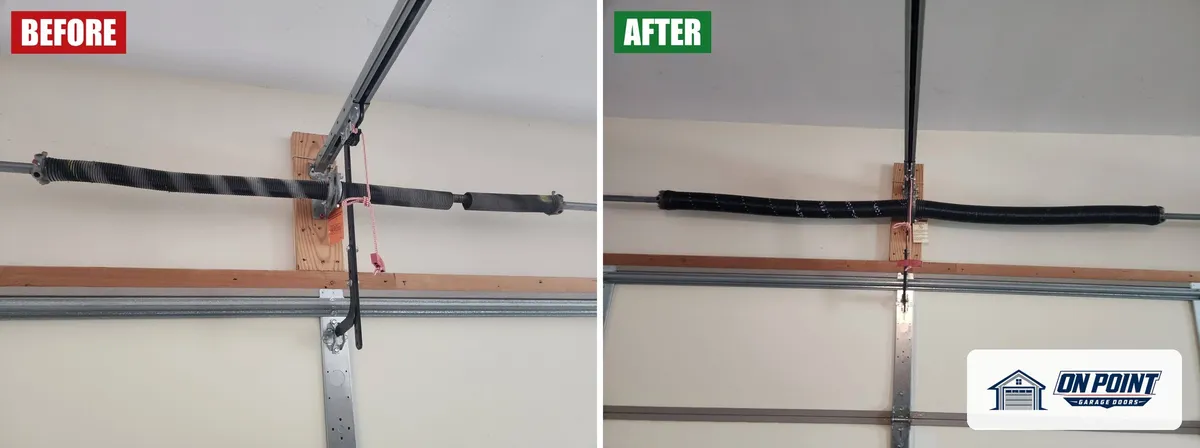
Broken torsion spring above a door, then the new spring after the repair, from one of our jobs
The springs lift the door, not the opener
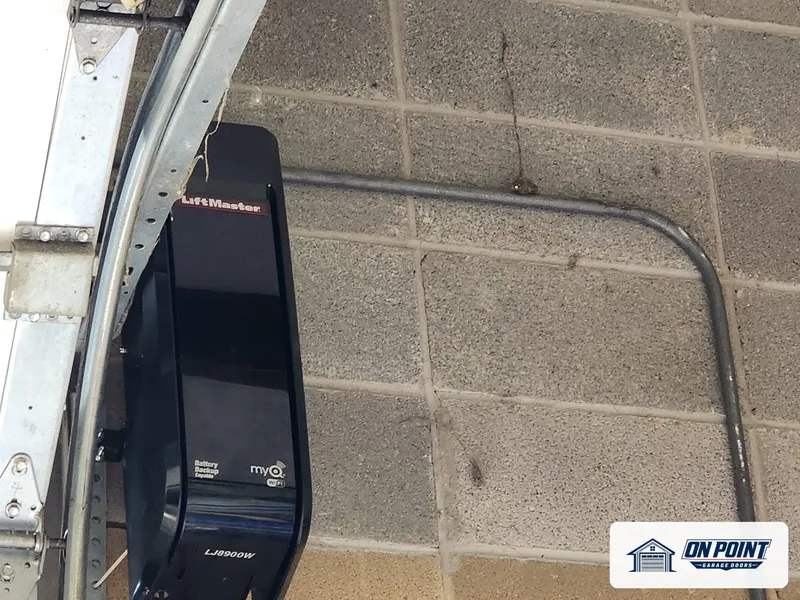
LiftMaster wall-mount opener installed beside the door track, from one of our jobs
Wall mount opener installed
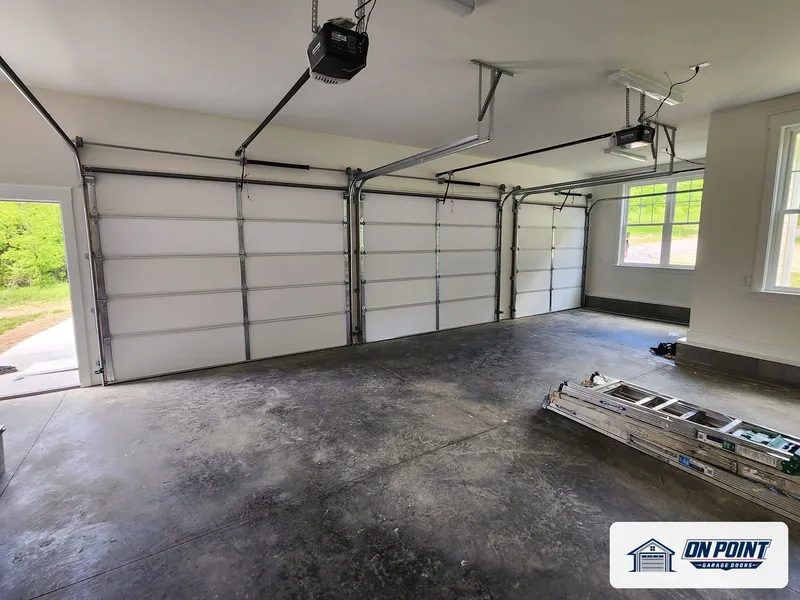
Three garage doors seen from inside, each with its own ceiling opener and rail, from one of our jobs
Rail openers on three doors

Start with the door, not the opener

The opener does not lift the door. The springs carry its weight, and the opener only guides it up and down. On a door that is balanced, a standard residential opener moves even a wide double door without strain.

So the first question is not which opener to buy. It is whether the door is right. A door with a tired spring, a frayed cable or a bent track feels heavy to any opener. A stronger motor will push it anyway for a while, then wear out early, and the real problem is still there.

A good choice starts with a door that has been checked. Then the opener is matched to the door and to the garage around it.

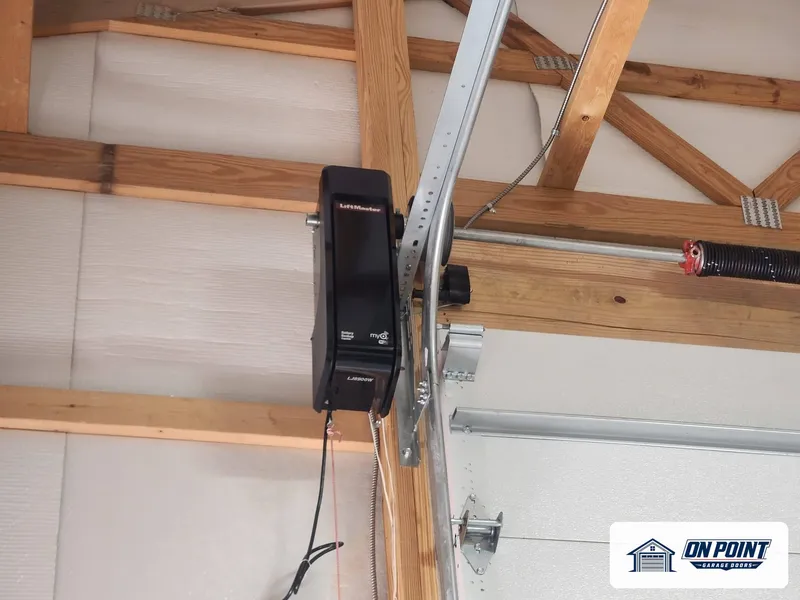
Wall-mount opener on the torsion bar, next to the spring, from one of our jobs

The four drive types, in plain words

  • Chain drive: a metal chain pulls the trolley along the rail. Strong, simple and long-lasting. It is the loudest of the four, which matters little on a detached garage and a lot under a bedroom.
  • Belt drive: the same layout, with a reinforced belt in place of the chain. Much quieter and smoother, which is why it is the usual pick for attached garages and rooms over the garage.
  • Screw drive: a long threaded rod turns and moves the trolley. Few moving parts. It is louder than a belt drive and less common than the other rail types.
  • Wall mount (jackshaft): no rail at all. The motor sits on the wall beside the door and turns the torsion bar. It frees the ceiling and runs very quietly, but it only works with torsion springs.

Many newer openers use DC motors that start and stop softly, which is quieter and easier on the door. More on the side-mounted type on our wall mount garage door opener page.

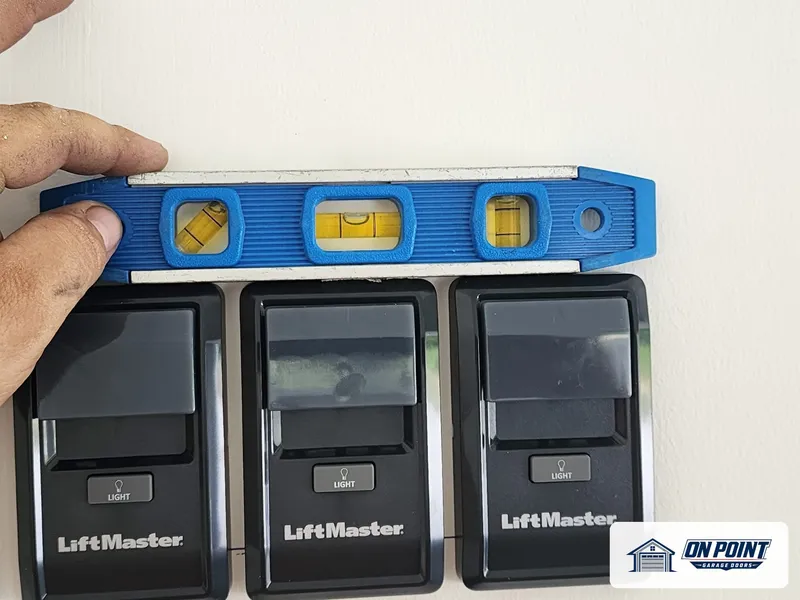
Three LiftMaster wall controls being leveled and mounted on a garage wall
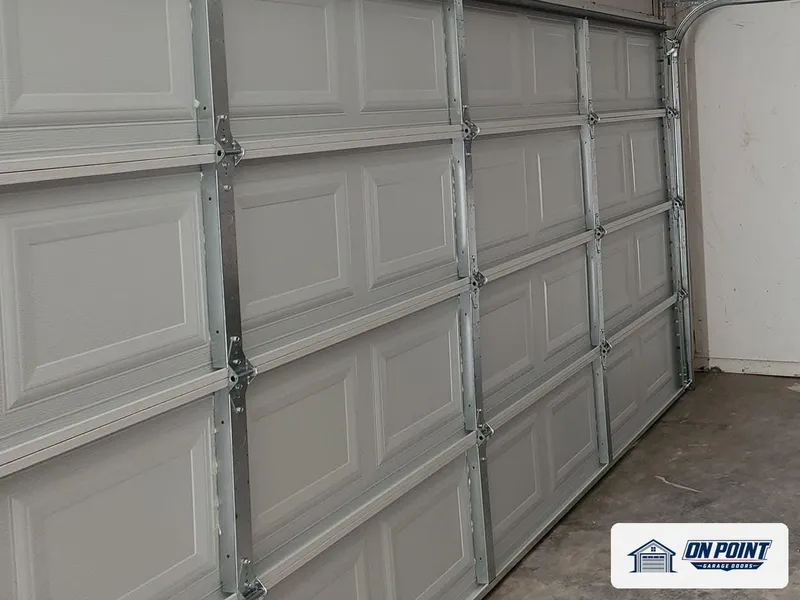
Inside of a sectional door: hinges, struts and the vertical track the rollers ride in
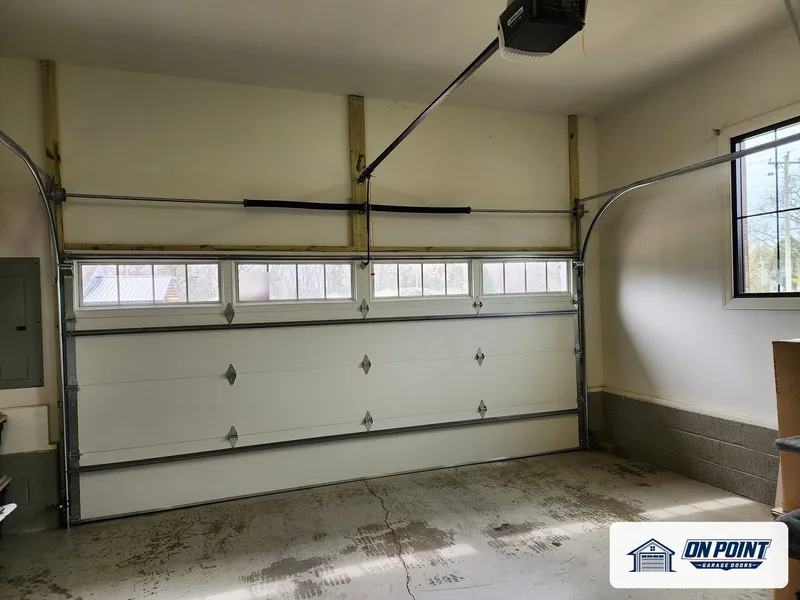
Garage door seen from inside, with the opener, rail and torsion spring above it, from one of our jobs

What decides the right opener for your garage

  1. Door weight and sizeA single steel door is light work for any standard opener. A wide double door, a solid wood door or a carriage-style door is heavier, and it calls for a stronger unit rated for it.
  2. What is above or beside the garageA bedroom, a nursery or a home office over the garage points to a belt drive or a wall mount. A detached garage can take a chain drive without anyone noticing.
  3. Ceiling height and what hangs from itA rail opener needs clear room above the door and a mounting point behind it. A low ceiling, storage racks, a car lift or a high-lift track are the usual reasons to go to a wall mount.
  4. The springs on the doorA wall mount opener turns the torsion bar, so it needs torsion springs in good shape. A door on extension springs along the tracks takes a rail opener unless the springs are changed over first.
  5. Power and signalEvery opener needs an outlet near the motor. A wall mount needs one beside the door, and a smart opener needs Wi-Fi that reaches the garage.
  6. How you use the doorIf the garage is how you come and go every day, a quiet motor, battery backup and an outside keypad earn their place. If it opens twice a week, a simple, tough unit fits better.
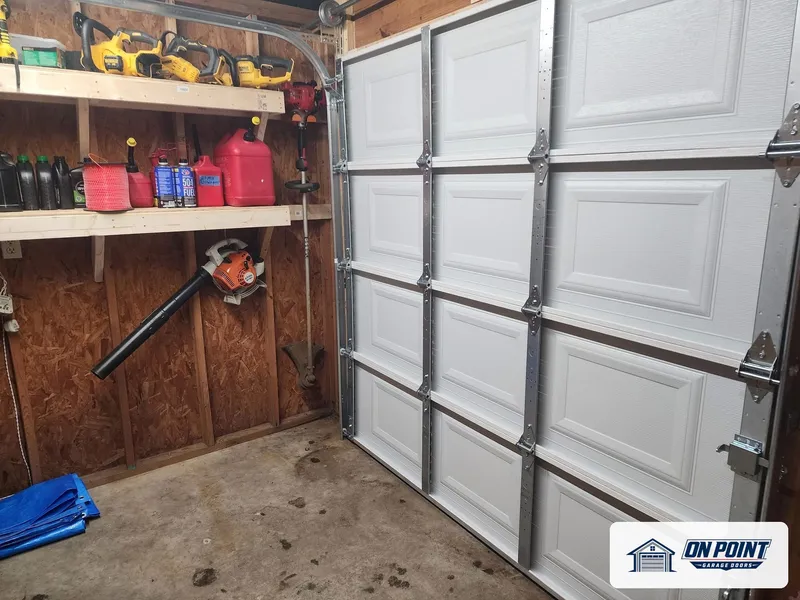
New white garage door seen from inside, with its hinges, struts and track, from one of our jobs

Smart features: which ones earn their place

  • Phone app and alerts: see if the door is open and close it from anywhere.
  • Battery backup: keeps the door working through a power cut. Worth having when the garage is the main way in and out.
  • Rolling code remotes and a keypad: the remote signal changes every time, so it can't simply be copied. A keypad outside saves you when the remote is in the other car.

Every opener sold for homes in the US must reverse when something is in the way, using photo eye sensors near the floor. That is the baseline, not an extra. Already have an opener that works? An add-on hub can often give it the app. See smart garage door openers.

Why this is not a weekend install

An opener goes up right next to the springs and cables that hold the door's weight. Its force and travel settings then have to be matched to that exact door. Set wrong, an opener can drive a door into the floor or fail to reverse on a child, a pet or a car.

Springs and cables are not a DIY job. They hold a few hundred pounds of tension and can seriously hurt you. If the door feels heavy or a spring looks gapped, leave it closed and call before any new opener goes in.

What the technician checks

The door first. With the opener disconnected, the technician checks the springs, both lift cables, the rollers, the tracks and whether the door is balanced. If the door is the real problem, you hear that before anyone talks about openers.

Then the garage: ceiling height, headroom over the door, what is mounted on the ceiling, where the outlet is, the Wi-Fi signal and what sits above or beside the garage. You get a straight recommendation for the drive type that fits, with a free estimate before any work starts.

For a new opener, see garage door opener installation. If the opener you have is acting up, see garage door opener repair. For a low or crowded ceiling, see wall mount openers.

What people are told, and what's real

More horsepower is always better. Not on a balanced door. The springs do the lifting. A heavy wood door does need more motor, but a stronger opener on a door with a weak spring only hides the problem for a while.

An old opener always means a new one. Often not. An opener acting up is often a repair: a worn gear, a sensor or a board. You hear that first, and a new opener only comes up when it is the better answer.

Questions we get asked

What is the best type of garage door opener?

There is no single best. A belt drive is the usual pick for an attached garage because it is quiet. A chain drive is simple and tough, which suits a detached garage. A wall mount fits a low or crowded ceiling on a door with torsion springs.

Is a belt drive or a chain drive better?

Both move the same doors. A belt drive is much quieter and smoother. A chain drive is louder, but simple and long-lasting. If anyone sleeps or works over the garage, a belt drive is the better fit.

What opener do I need for a double garage door?

A balanced steel double door runs fine on a standard residential opener. A heavy wood or carriage-style door needs a stronger unit. The door is checked first, because a door that feels heavy usually has a spring problem, not a weak opener.

When is a wall mount opener the better choice?

When the ceiling is low, the door has a high-lift track, or the ceiling is full of storage, and the door runs on torsion springs. It frees the space over the car and runs very quietly. It needs an outlet beside the door.

Are smart features worth it?

Phone alerts and battery backup are the two that most people end up using. Rolling code remotes and safety sensors come standard on new openers from the major brands, so they are not extras.

Is the estimate really free?

Yes. You hear which opener fits your door and garage, and what it takes, before any work starts.

Booking takes a minute

Around Brooklyn, Queens and Long Island, one call gets you a two-hour slot and a heads-up call before the technician sets off.

Free estimate, call (929) 429-2429.

Not sure which opener fits? We'll come and look

Tell us about the door, the ceiling and what is above the garage, and we'll give you an honest arrival time. The estimate is free.

Easier to explain by phone? Call (929) 429-2429.

Two minutes to a free estimate on a new opener

Tell us what the door is doing. The estimate is free either way.

Or just call (929) 429-2429 and talk it through.

The other six things that go wrong