Takes 30 seconds. We call you back to set a time.
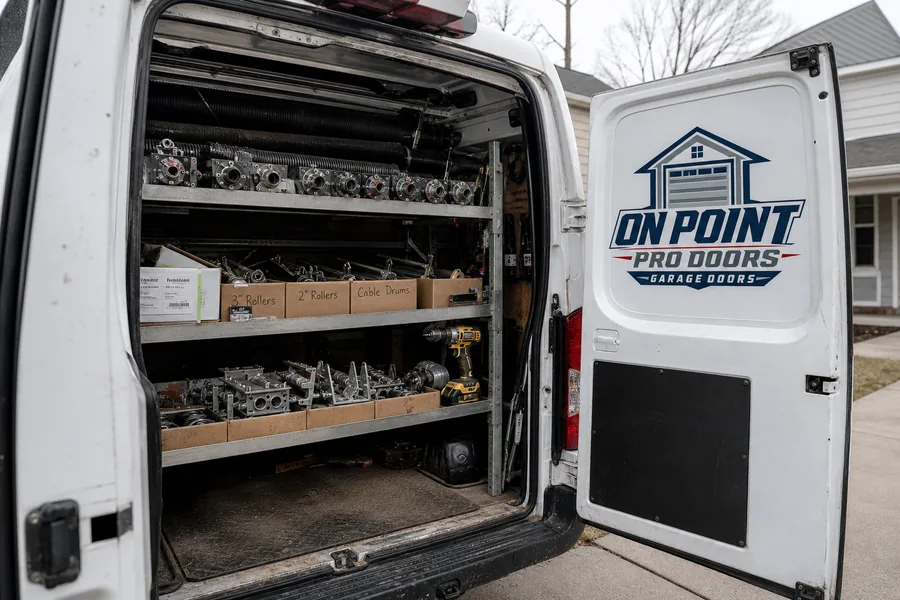
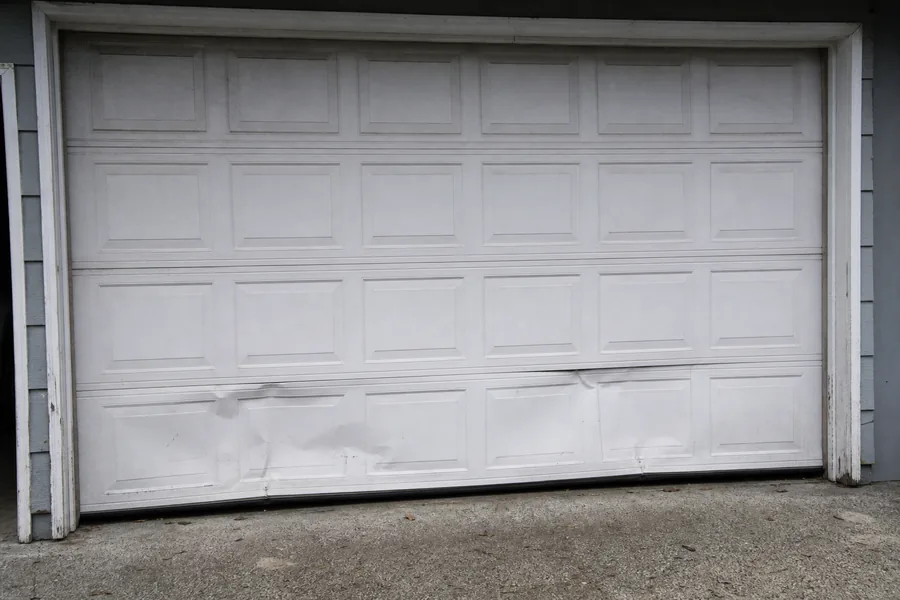
These photos are from our own jobs, with our logo on them.


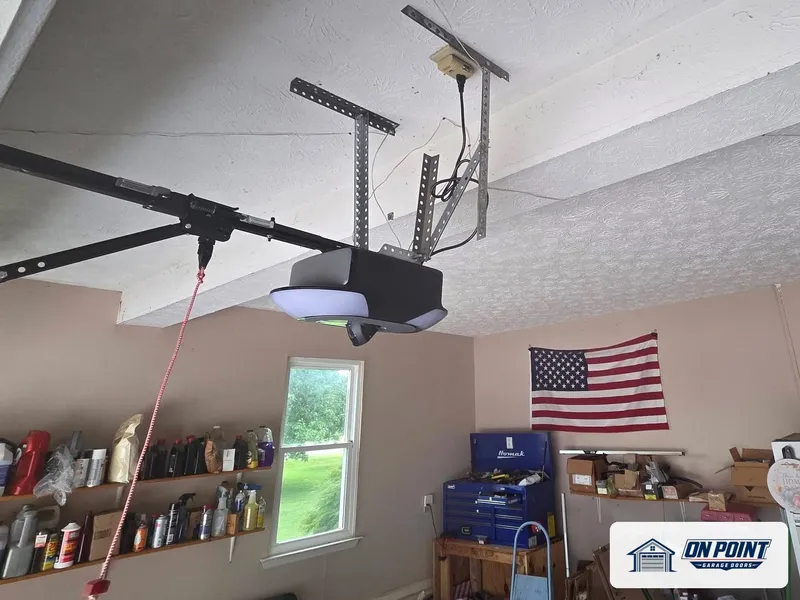
LiftMaster openers in Kensington, repaired at the garage: the drive gear, the logic board, the safety eyes, the remotes and the keypad. You get a free estimate before any part comes off the ceiling.
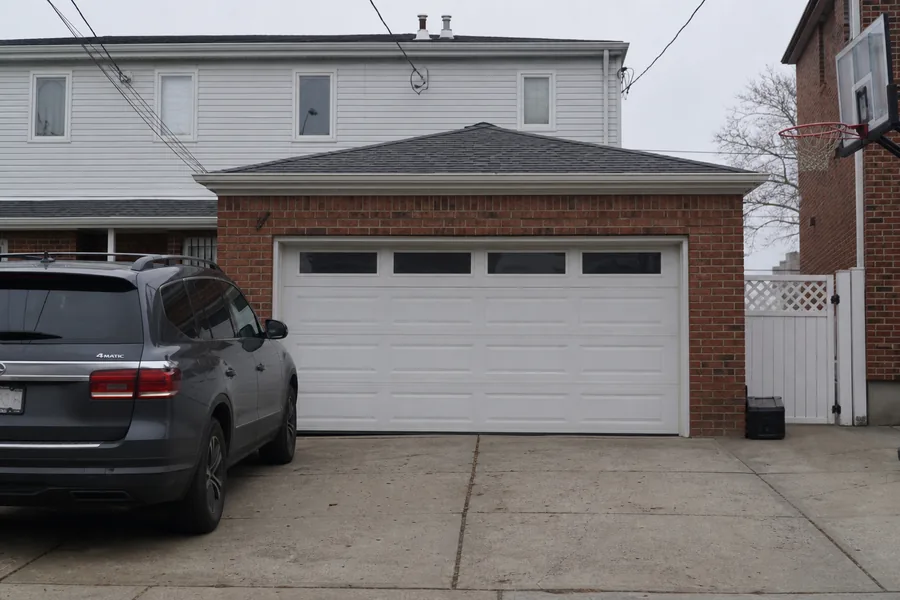
Many garages in this part of the borough sit at the back of a narrow driveway, behind the house, and the opener on them has often outlived several remotes and at least one owner.
The calls we get most are a motor that hums without moving the door, a door that goes back up just before it reaches the floor, and a wall button that still works while every remote has stopped.
Space is the other constant. With the car squeezed in beside bikes and bins, the safety eyes get knocked and the wall button ends up buried behind shelving, and the technician checks both before blaming the opener.

Opener work is one of six repairs we handle, and the parts for the doors on these blocks travel with the technician.


Our technicians work across the borough, in Queens and out on Long Island. Each visit covers the whole door, not only the box on the ceiling, and you agree to the estimate before a single part is changed.
Other makes get the same treatment, so a Chamberlain or a Genie, a Linear or a Marantec is no problem, and neither is the door under it, whether Clopay, Amarr or Wayne Dalton.
Our area is Brooklyn and Queens, and Long Island through Nassau and Suffolk. The full list of towns and neighborhoods is on the service areas page.
An opener sold for a home has to stop and back off when the door meets something, and it watches the opening with a pair of photo eyes near the floor. On each opener visit the technician sets an object under the door and breaks the beam, and the door has to reverse both times.
If either test fails, fixing it becomes part of the job, whatever the call was about. A door that refuses to close because the eyes see something is doing exactly what it was built to do; the cure is finding what they see, never working around them.
Openers give warning before they quit. A hum with no movement, a click with no hum, a door that stops short of the slab, and lights flashing in a pattern are the usual signs.
A hum with no movement usually means the plastic drive gear inside the head has worn its teeth smooth. A door that rises and then drops can mean the trolley has let go of the chain or belt.
Lights flashing in a pattern are the opener reporting its own fault, and the technician reads that report before testing anything else, which keeps the guesswork, and the parts that would have been swapped for nothing, out of the visit.
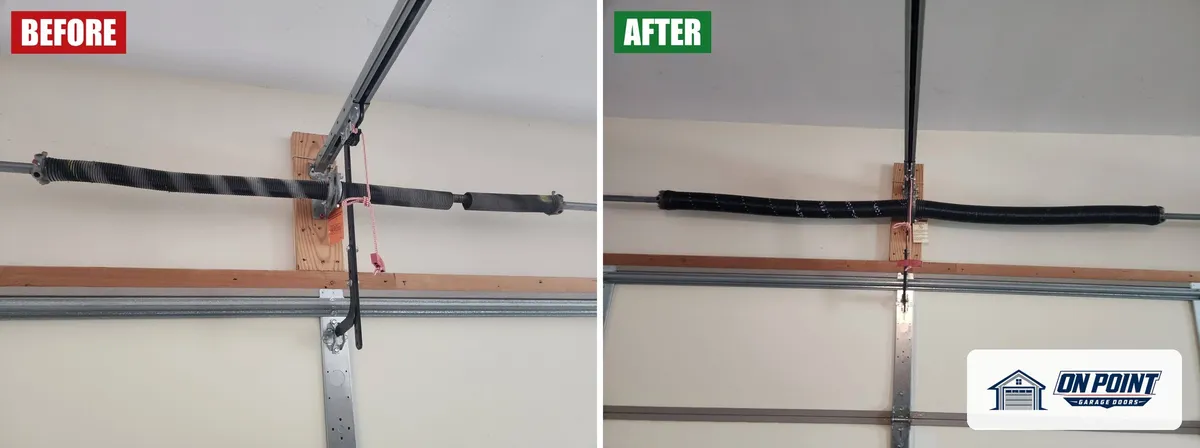
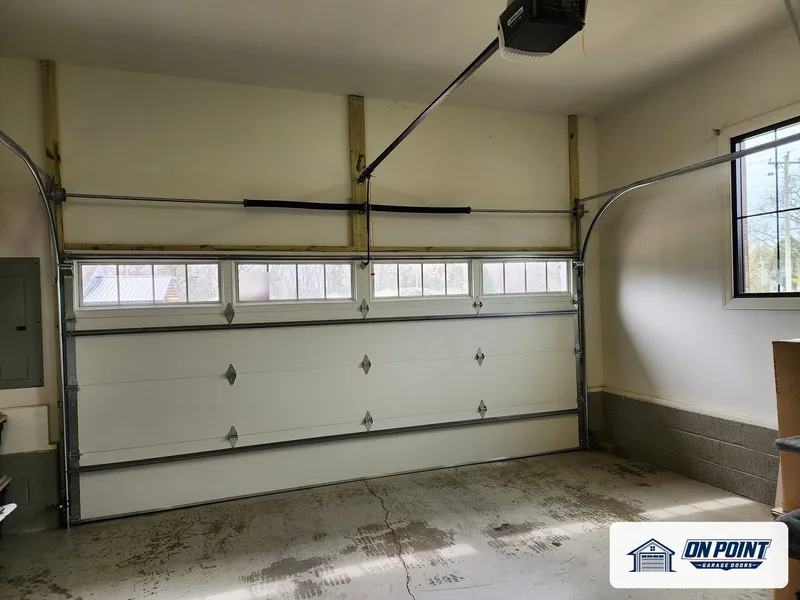
Under every opener the door's own hardware ages as well: springs, lift cables, rollers and hinges. As those wear, the motor strains on each trip, so a tired opener and a tired spring often turn up together. The visit checks both, and you hear about both.

Chain drives, belt drives, the wall-mounted units that sit beside the door, and the older screw drives all come through. Parts for the common models travel with the technician; for an older unit, you hear whether the part is still made before anything else happens.
Before deciding anything about the opener, the technician unhooks it and works the door up and down manually. A door in balance hangs still at the halfway point. If it sinks or climbs on its own, the springs are the problem, and they come first, since no opener can be judged while it fights the door.
With the door right, the opener gets its turn: gear, trolley, chain or belt, logic board, travel limits, force setting, wall control and remotes. You get the finding and a free estimate before any part is changed.
Some heads are past saving: a motor that has already been rebuilt, a rail bent by a car door, or an old unit whose board is no longer made. In those cases you hear why, and the new opener is matched to the weight and size of your door.
If the opener only needs a gear, a sensor or a new remote, that is all that gets done. The goal is a door that runs smoothly and reverses properly, not a new box on the ceiling.
On the phone, two details help most: what happens at the wall button, and whether the door can be moved without the opener. With those, the parts that come along are usually the right ones.
The estimate is free, and the work starts only when you say yes.
Say what is going wrong and a visit gets set for a day that works for you, with the free estimate included.
Easiest by phone: (929) 429-2429.
Tell us what the door is doing. The estimate is free either way.