Takes 30 seconds. We call you back to set a time.
An automatic garage door is simply a garage door with an electric opener. Press a remote, a keypad or a button on your phone, and the opener raises or lowers the door for you. Many homes in Brooklyn and Queens still have doors that are lifted by hand, often because the garage is used for storage or the door came with the house decades ago. Making a manual door automatic is one of the most common jobs we do, but the door has to be in good shape first or the opener will not last. Free estimate at (929) 429-2429.
By Sean Cohen, owner, On Point Garage Doors · Updated
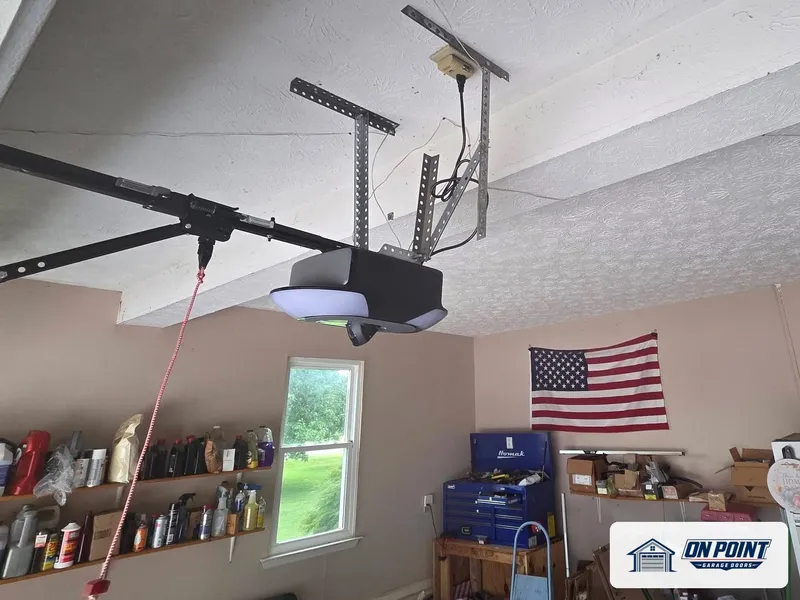
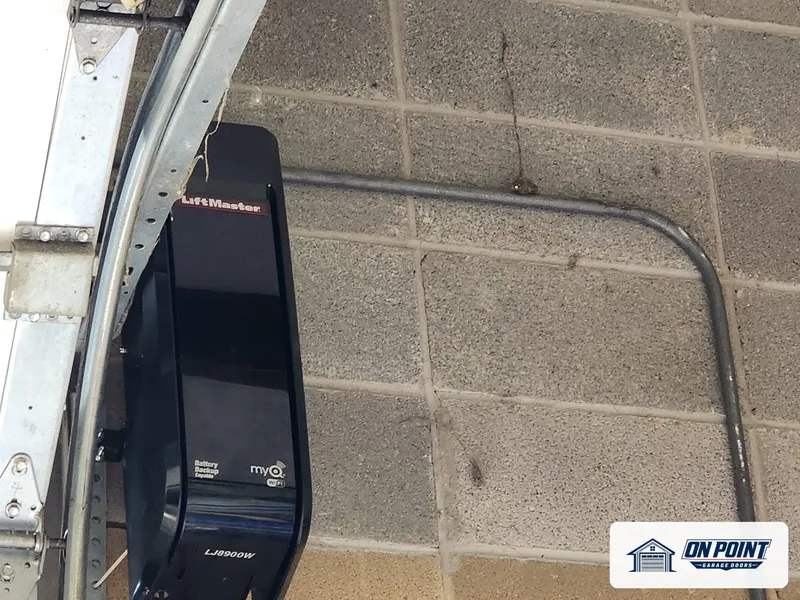
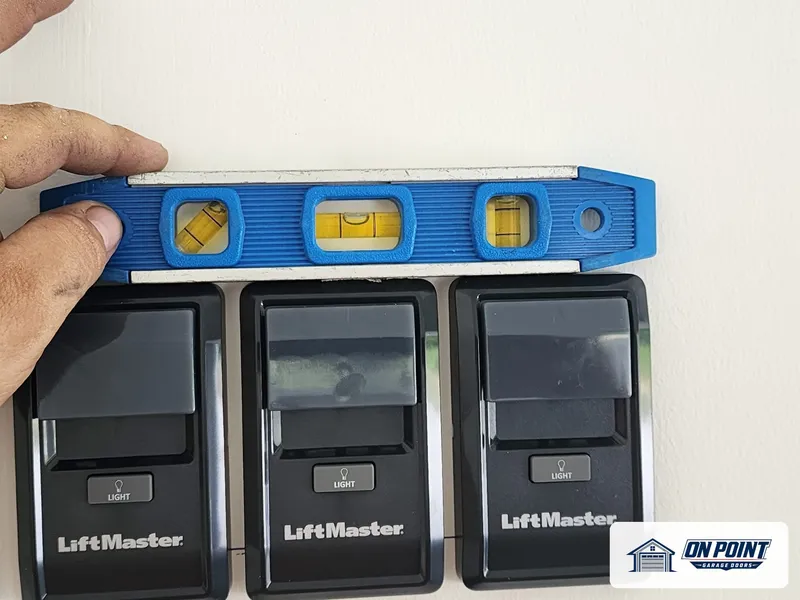
These photos are from our own jobs, with our logo on them.


An opener has a motor, a rail or drive that connects to the door, safety sensors near the floor, a wall button and one or more remotes. When you press a button, the motor moves the door along its tracks, and when the door reaches the top or the floor, it stops by itself. The opener does not lift the full weight of the door. The springs do most of the work.
An opener is built to move a door that the springs have already balanced. If the door is heavy, sags or slams when lowered by hand, the opener will strain and wear out early. Before we install an opener on a manual door, we check the springs, cables, rollers and tracks. Sometimes a spring change is needed so the door is ready for a motor.
Many manual doors have a handle lock or slide bolts that hold them shut. If an opener tries to lift a door that is still bolted, it can bend the top section or burn out the motor. When a door becomes automatic, the old lock is removed or disabled, and the opener itself holds the door closed.
An opener plugs into an outlet on the ceiling near where the motor will hang. Many older garages, especially detached ones, have no outlet there, or no power at all. In that case, an electrician needs to add the outlet before the opener goes in. We tell you where it should be placed on the first visit.
Every modern opener has safety sensors that stop and reverse the door if something crosses the opening while it closes. It also reverses if the door meets something on the way down. These features protect kids, pets and cars, and we test them before we leave.
An automatic door has an emergency release on the opener. It lets you disconnect the door from the motor in a power outage so it can be moved by hand. We show you where it is and how it works, and we make sure the door is balanced so it is safe to lift if you ever need to.
Most households want more than one way in. Remotes for each car, a keypad outside for kids and guests, and a smart app for checking the door from work are all common. We pair every remote and keypad you have before we finish.
Some old wood doors, one-piece doors and doors built by hand are too heavy or too worn for an opener. If that is the case, a new lighter door with a matching opener is the better choice. We tell you plainly if your door is a good candidate or not.
Most openers have a built-in light that comes on whenever the door moves, which helps on dark winter evenings. Some also offer a light on a motion sensor and a setting that closes the door again if it was left open. Small features like these are often what owners end up liking most.
Storefront roll-down gates and commercial rolling doors can be made automatic too, with motors made for them. Owners who open and close a heavy gate every day often find it the most welcome change to their routine. See our page on storefront gate motors.
The technician checks the door, its springs and its lock, looks at the ceiling and the power, and recommends an opener that suits the door and the house. You get a free estimate before any work starts.
Most can, as long as the door is balanced and in good shape. Very heavy or worn doors may need replacing first.
Yes. The opener needs an outlet on the ceiling near the motor. An electrician adds one if it is missing.
The manual lock is removed or disabled so the opener cannot try to lift a bolted door.
The emergency release lets you disconnect the door and move it by hand.
Yes. We check the door and the power before any work starts.
Across Brooklyn, Queens and Long Island, tell us what the door is doing and we set a visit that fits your day.
Free estimate, call (929) 429-2429.
Tell us what the door is doing and we will give you an honest arrival time. The estimate is free.
Easier to explain by phone? Call (929) 429-2429.
Tell us what the door is doing. The estimate is free either way.