Takes 30 seconds. We call you back to set a time.
A wall mount garage door opener, also called a jackshaft or side mount opener, sits on the wall beside the door and turns the torsion bar directly, so nothing hangs from the ceiling. It fits doors with torsion springs and a little clear wall at the end of the bar. It suits low ceilings, high-lift tracks and garages where the ceiling is needed for storage. Free estimate at (929) 429-2429.
By Sean Cohen, owner, On Point Garage Doors · Updated
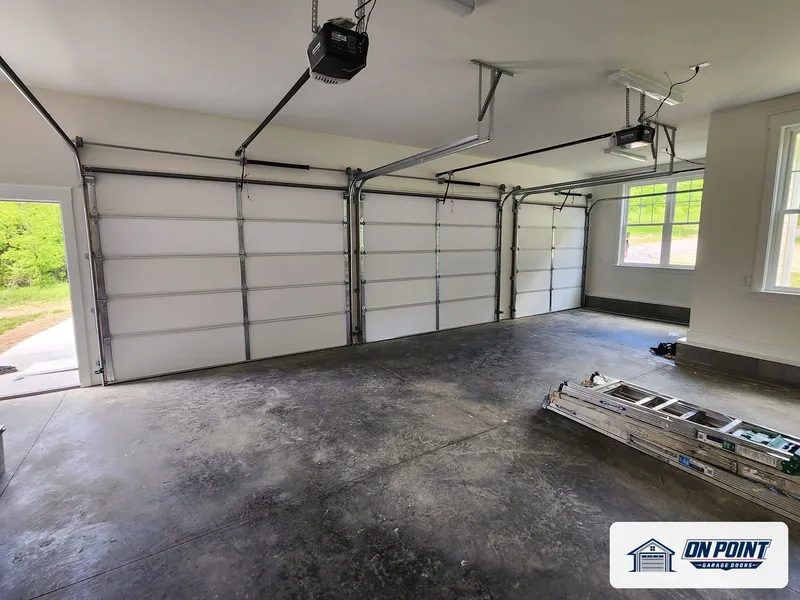
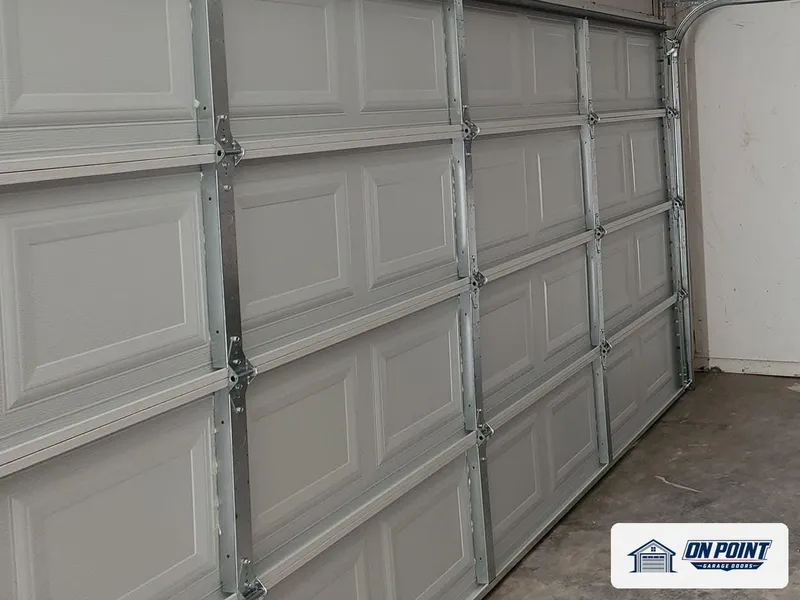
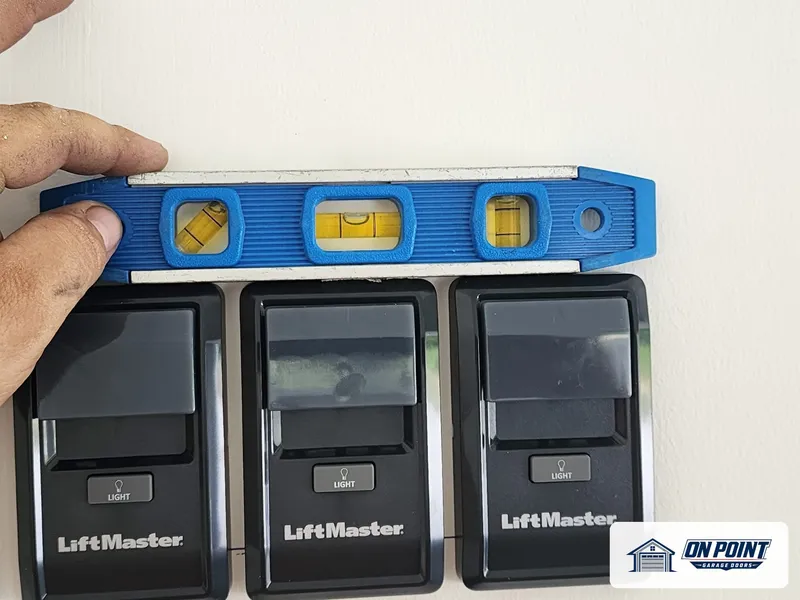
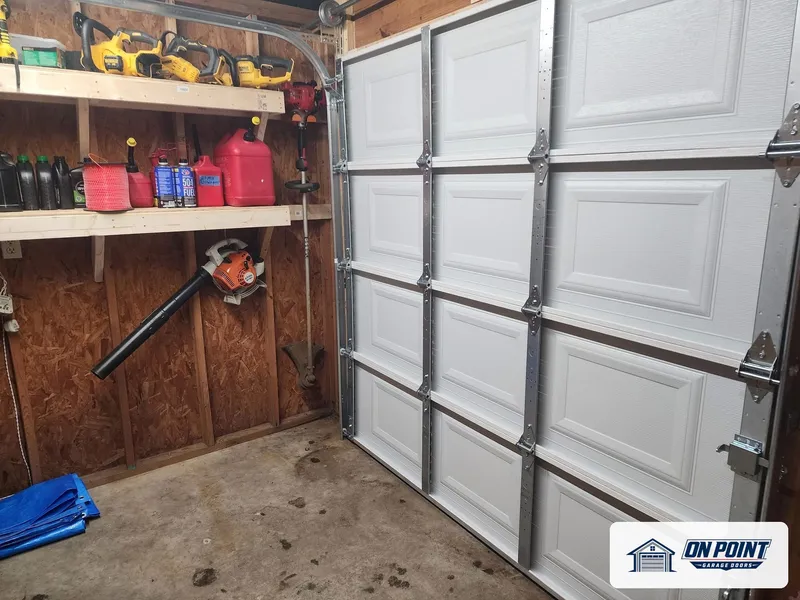
These photos are from our own jobs, with our logo on them.


Both openers do the same job. They differ in where they sit and how they move the door.
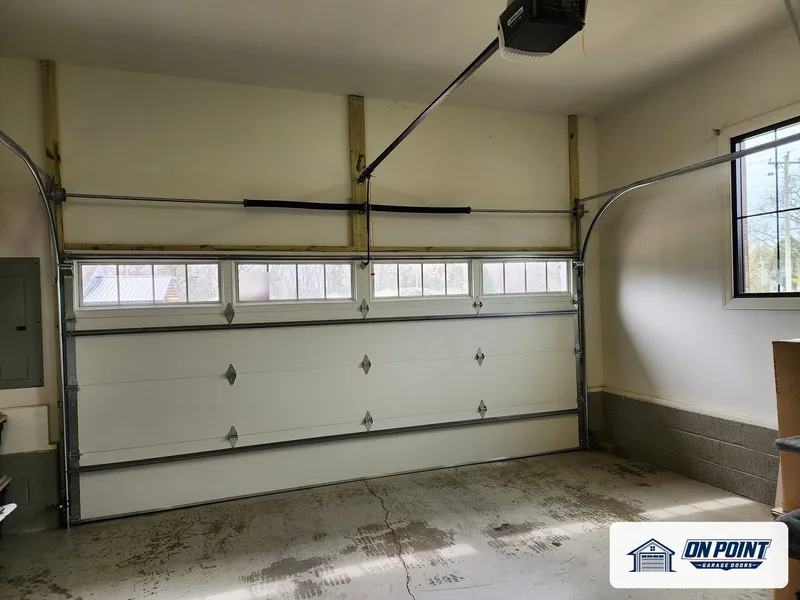
A ceiling opener hangs from the ceiling in the middle of the garage. A rail runs from the motor to the top of the door, and a chain, belt or screw pulls a trolley along it. The trolley drags the door open with an arm. It works with torsion springs and with extension springs, and it is still the most common setup.
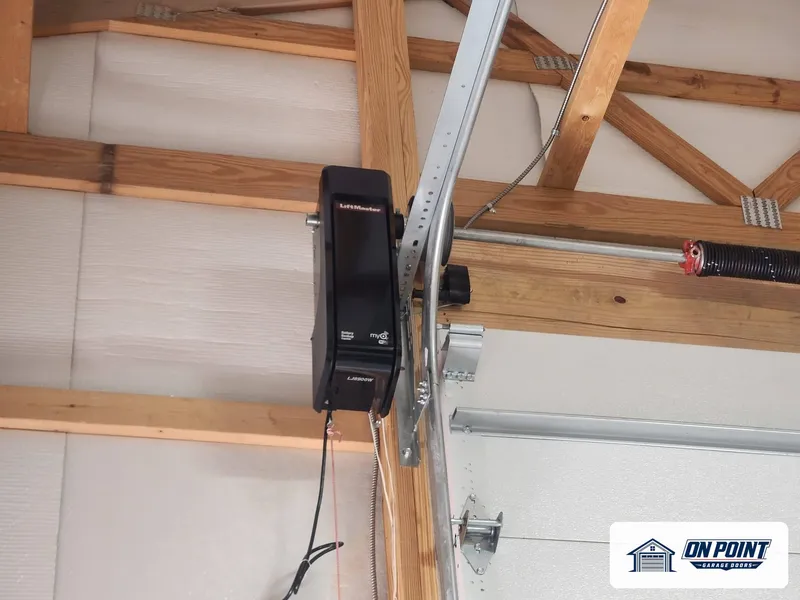
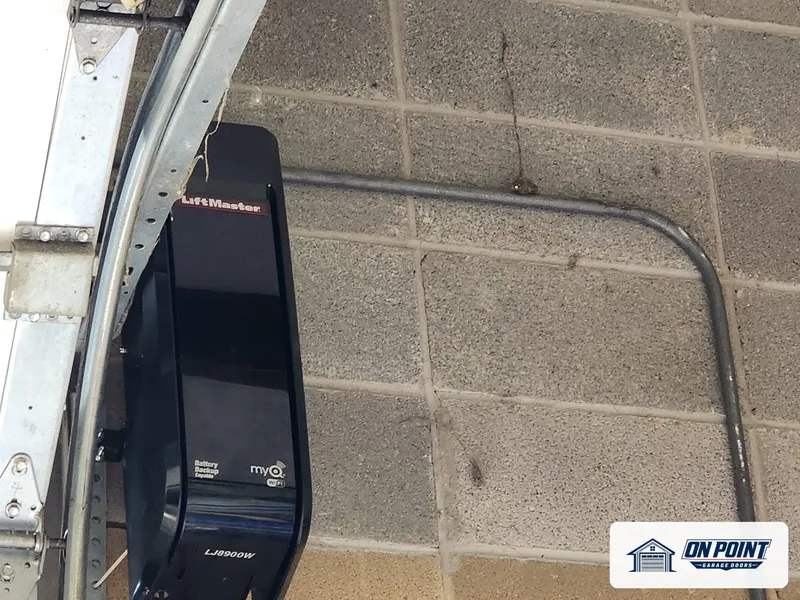
A wall mount opener sits on the side wall, level with the torsion bar above the door. It couples to the end of the bar and turns it. The bar winds the lift cables on their drums and the door goes up. There is no rail, no trolley and no motor over the car.

You don't need to measure anything. Tell us about the garage when you call and the technician checks it on site.
The two usual reasons are a low ceiling, covered on the garage door clearance page, and a tall vehicle, covered under garage doors for tall vehicles. For every other kind of opener see opener repair and installation.


A wall mount opener is not right for every garage. A ceiling opener is usually the simpler choice when:
Sometimes a door can be changed over from extension springs to torsion springs to make a wall mount opener possible. Whether that makes sense depends on the door and the garage. The technician tells you plainly if it isn't worth it.

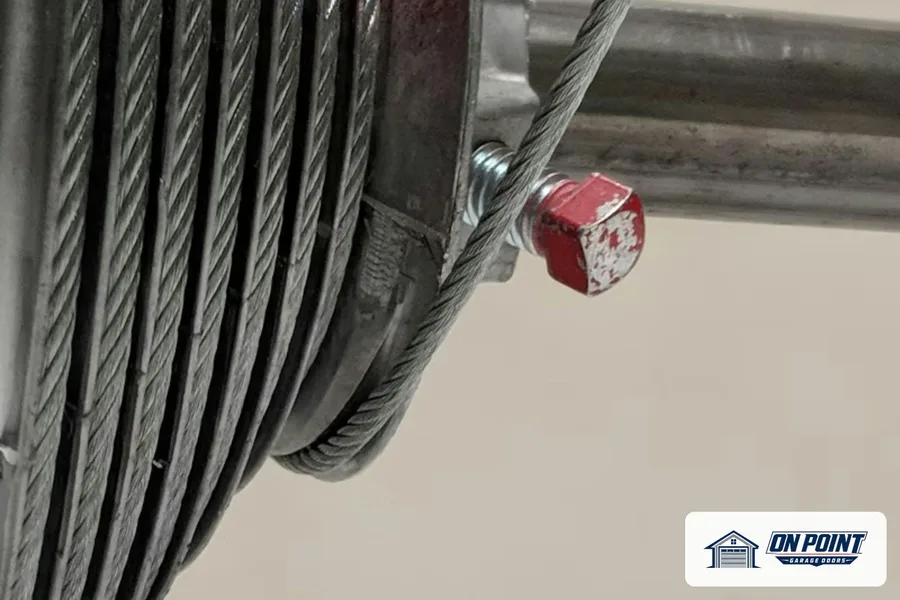
A wall mount opener bolts onto the torsion bar, and that bar holds the springs. The springs carry the full weight of the door under tension. Setting the opener up means working on that bar, and then setting the door's force and travel limits and the safety reverse.
Springs and cables are not a DIY job. They can seriously hurt you. If a spring looks gapped or a cable is frayed, leave the door closed and call. Don't loosen anything on the torsion bar or the end brackets. Keep children and pets clear of a door that is acting up.
The door first, then the opener. The technician looks at the spring type and condition, the lift cables and drums, and whether the door is balanced and runs freely in its tracks. An opener only moves a door that the springs already balance, so a weak spring gets dealt with first.
Then the fit. The technician checks the ceiling height and the track type, the clear wall at each end of the torsion bar, where the power is, and how the door locks today. Some wall mount setups use a separate lock and a cable tension sensor, and the technician explains what yours would need. Before leaving, the door gets run up and down and the safety reverse is tested. You hear which opener fits and what the job takes, with a free estimate before any work starts.
If your current opener has stopped working, see garage door opener repair. Many wall mount models connect to a phone app, and smart garage door openers covers that side. If the opener only hums, here is what a humming opener means.

A wall mount opener is stronger, so it can lift any door. It still relies on the springs. A door that is out of balance is hard on any opener, wall or ceiling.
Wall mount openers only suit big modern garages. They are often chosen for small garages with low ceilings, because they leave the space over the door free.
You have to replace the door to get one. Usually not. Most torsion spring doors can take one if there is room beside the bar.
It is an opener that mounts on the wall beside the garage door instead of hanging from the ceiling. It connects to the end of the torsion bar above the door and turns it to raise and lower the door. It is also called a jackshaft or side mount opener.
No. It needs a torsion spring system, the bar above the door, and a bit of clear wall at the end of that bar. Doors with extension springs along the ceiling tracks can't use one without a spring change. The springs and the door's balance have to be in good shape too.
Usually, yes. There is no chain or belt running along a rail over the car, and the motor sits on the wall instead of hanging from the ceiling. That matters most when there is a bedroom or living space above the garage.
No. A low ceiling is one of the main reasons people choose one. The opener doesn't use the space above the door, so it also suits garages with a storage rack, a car lift or a tall ceiling where the door is set to lift high.
Often, yes, if the door has torsion springs and there is room beside the bar. A technician looks at the springs, the wall and the outlet first and tells you if it fits before anything is ordered.
Yes. You hear which opener fits your garage and what the job takes before any work starts.
Around Brooklyn, Queens and Long Island, one call gets you a two-hour slot and a heads-up call before the technician sets off.
Free estimate, call (929) 429-2429.
Tell us about the door and the garage and we'll give you an honest arrival time. The estimate is free.
Easier to explain by phone? Call (929) 429-2429.
Tell us about the door. The estimate is free either way.