Takes 30 seconds. We call you back to set a time.
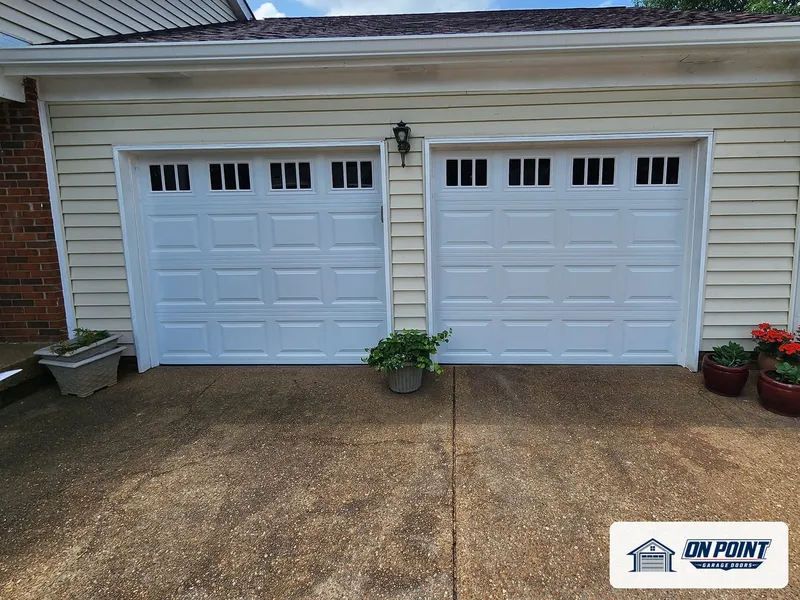
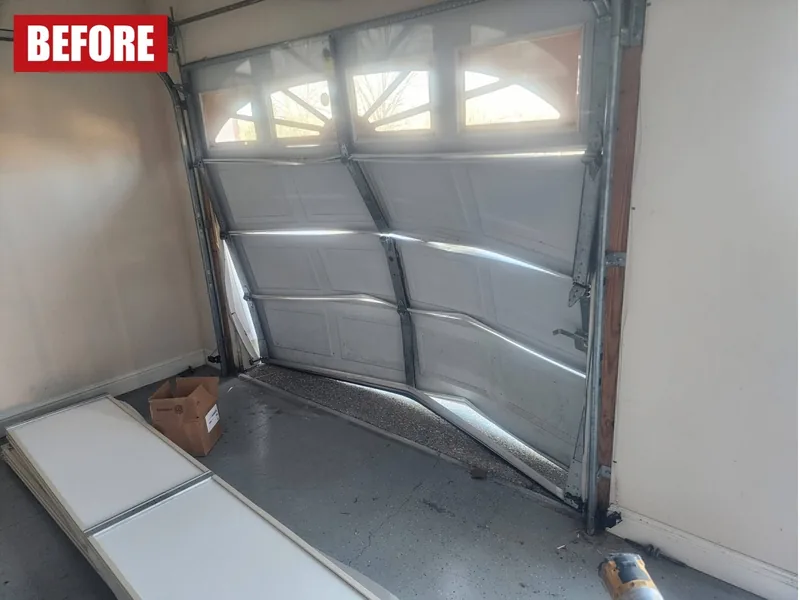
These photos are from our own jobs, with our logo on them.


Related diagnostic guides: door won't close, remote not working.
By Sean Cohen, owner, On Point Garage Doors · Updated
Most people call because the opener "stopped working," but the opener is often doing exactly what it was built to do. It refuses to close because a sensor is blocked, it gives up because the door is too heavy, or it ignores a remote because lock mode is on. The real faults we find on opener calls fall into a short list, and the technician works through it in order before anything is replaced.
Related diagnostic guides: door won't open, door won't close, door stuck halfway, remote not working.

The same six jobs as everywhere else we work, with the parts for the doors common here already on board.


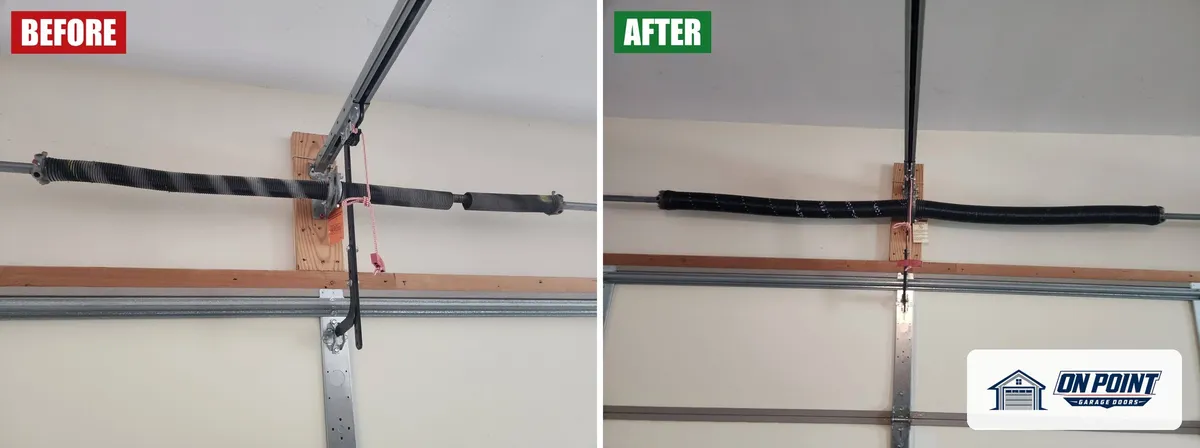
Before he touches the opener, he checks the door. He disconnects the door from the motor and lifts it by hand to feel the balance. A door that glides up and stays put halfway is balanced, and the fault is in the opener. A door that is heavy or drops is a spring or cable problem, and no opener will run it properly until that is fixed. This one test saves a lot of owners from buying a new opener they did not need.
Then he runs the door from the wall control and from a remote and watches the lights on the motor head and on the sensors. Many openers flash a pattern that points to the fault: a blocked sensor, a travel limit that has drifted, a motor that overheated. He listens too. A click with no movement, a hum with no movement and a grinding noise each mean something different.
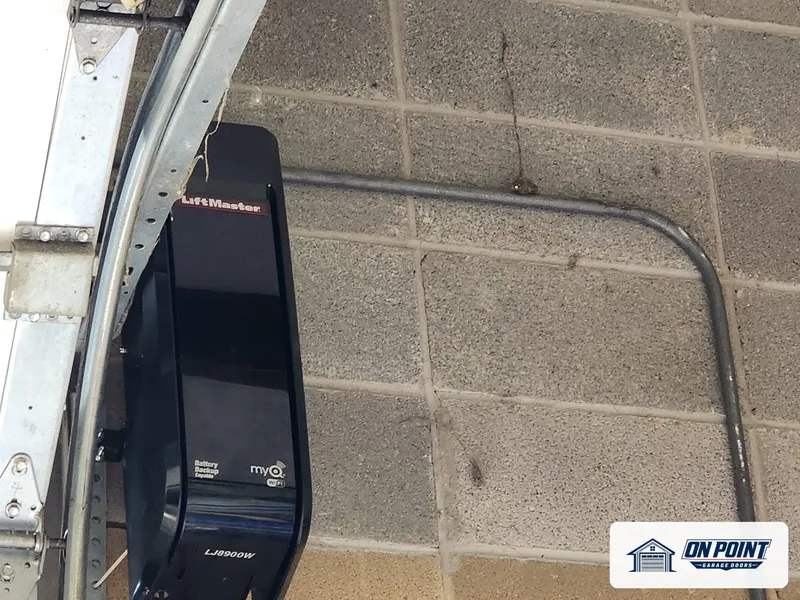
Brand matters for parts, not for the order of the checks. The LiftMaster service page and the Genie opener repair page cover the faults those openers show most often.
Openers rarely die without warning. Most give signs for weeks or months, and catching them early often turns a new opener into a small repair.
Several of these come from the door rather than the opener. A door that has lost balance makes every opener sound tired. That is why the balance check comes first on every visit.
A board, a gear, a sensor, a trolley or a wall control can be replaced on most current openers, and that is usually the better choice for an opener that is not very old. An opener that is many years old, with several worn parts, no rolling code security and no working sensors, is a different story. The technician tells you plainly which way he would go and why, and the estimate is free either way.
When a new opener is the answer, the drive type matters more than the brand. A belt drive is the quietest and suits garages with a bedroom or living room above. A chain drive is tough and suits detached garages where noise does not carry into the house. A screw drive has few moving parts and suits some older doors. There is a fourth kind that mounts on the wall beside the door, and it has its own page: wall-mount garage door openers. It frees the ceiling and fits garages with very little headroom, which is common in older row house and attached garages.
A smart opener lets you open, close and check the door from your phone, get an alert when it opens, and let a family member in when you are not home. Whether that is worth it comes down to how you use the garage. Owners who leave early and wonder whether they closed the door, landlords with shared garages and families with teenagers tend to use it every day. Others never open the app after the first week.
Many openers that are still in good shape can be given phone control with a small add-on hub, without replacing the whole opener. The technician checks whether your model can take one on the free visit, and pairs every phone, remote, keypad and car button before he leaves.
Hanging a motor from the ceiling looks simple, but most of an opener install is about the door, not the motor. The door must be balanced first, or the new opener will do the lifting and wear out early. The rail must be hung square to the door and solidly anchored, which can be hard in garages with old joists, ducts or a finished ceiling.
The opener needs an outlet near the motor, and many older garages do not have one; that is a job for an electrician. The safety sensors have to be mounted low and aimed at each other, with their wires run where they will not be stapled or chewed. Then the travel limits and the force are set so the door closes fully but reverses the moment it meets an object. Every install ends with that safety reverse tested in front of you, both against an object on the floor and with the sensor beam blocked.
Car buttons, keypads and every remote in the house are paired at the end, and older remotes that no longer match are cleared from the opener's memory.

When the motor runs and the door stays where it is, the link between the two has failed. The usual causes are a trolley that was released and did not latch again, a drive gear worn smooth, a chain or belt off its sprocket, or a door so heavy from a broken spring that the opener cannot move it. A door that is heavy should stay closed until it has been checked, since lifting it can hurt someone and running the opener against it strips the gear.
Two pages go deeper on this: the opener hums but the door won't move and the garage door won't open.
Boroughs: Brooklyn · Queens · Long Island (Nassau County and Suffolk County)
Opener calls come from every part of our area, from row houses in Park Slope and Williamsburg to the attached homes of Forest Hills and the suburban garages of Hempstead, Massapequa, Lindenhurst and Long Beach.
Opener service is only one part of what we handle. If the visit points to a different problem, each one has its own page:
Diagnostic guides: door won't close · sensor not working · remote or keypad not working · off-track · broken-spring symptoms · opener trolley problems · wall button not working.
Brand-specific opener service: LiftMaster · Chamberlain · Genie · Craftsman · Amarr.
More info: About On Point Garage Doors · emergency repair · Book online.
We provide this service across Brooklyn, Queens and Long Island.
Around Brooklyn, one call gets you a two-hour slot and a heads-up call before the technician sets off. We don't buy leads and nobody on a phone judges a door they can't see.
Free estimate across Brooklyn, NY and the towns around it.
Describe the fault and we'll give you an honest arrival time. The visit and the estimate is free, anywhere in Brooklyn, Queens and Long Island.
Easier to explain by phone? Call (929) 429-2429.
Tell us what the door is doing. The estimate is free either way.