Takes 30 seconds. We call you back to set a time.
Most ceiling-mounted garage door openers pull the door with either a metal chain or a reinforced rubber belt. Both lift the door the same way and both are reliable. The real difference is noise and vibration: a belt is much quieter, which matters most when a bedroom or living room sits over the garage. Free estimate at (929) 429-2429.
By Sean Cohen, owner, On Point Garage Doors · Updated
These photos are from our own jobs, with our logo on them.


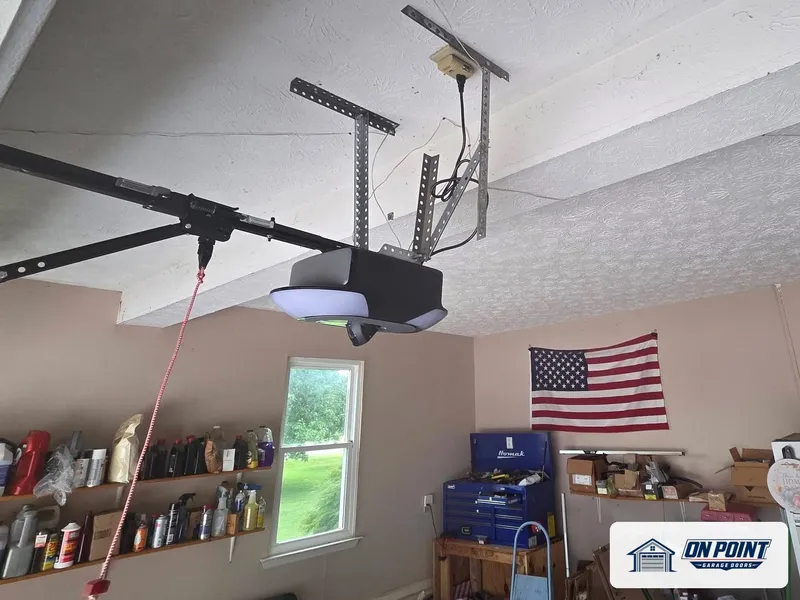
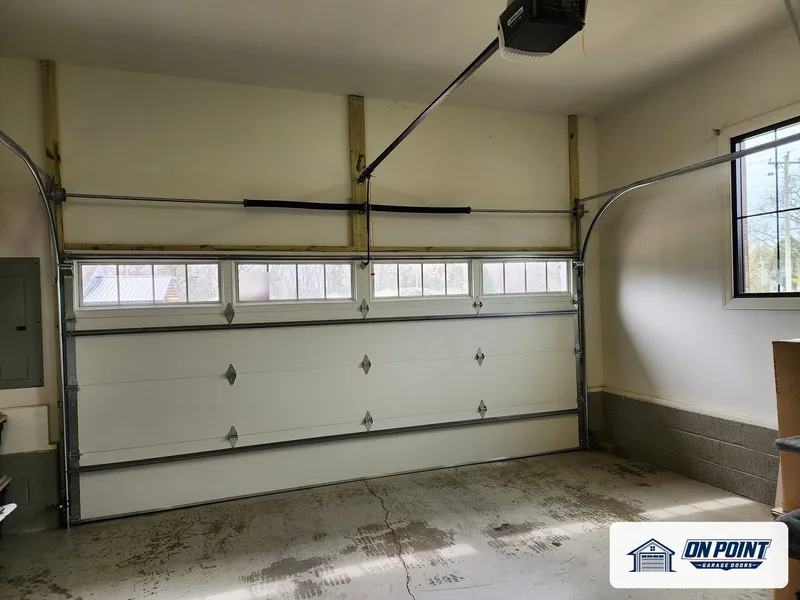
Both types hang from the ceiling with a rail running to the top of the door. A trolley rides along the rail and pulls the door with an arm. The motor moves the trolley with either a chain or a belt.
A chain drive clanks and rattles as the chain moves over the sprocket and along the rail, and the vibration travels through the ceiling. A belt drive makes a low hum.
In row houses, two-family homes and high ranches, the garage often sits under a bedroom or shares a wall with a neighbor. That is where a belt drive pays off every single morning.
Chain drives handle heavy doors and rough use well and are simple to service. Belt drives are just as strong for normal residential doors and have fewer parts that wear loudly.
For very heavy doors, oversized doors or doors that open many times a day, the size of the motor and the condition of the springs matter more than chain versus belt.
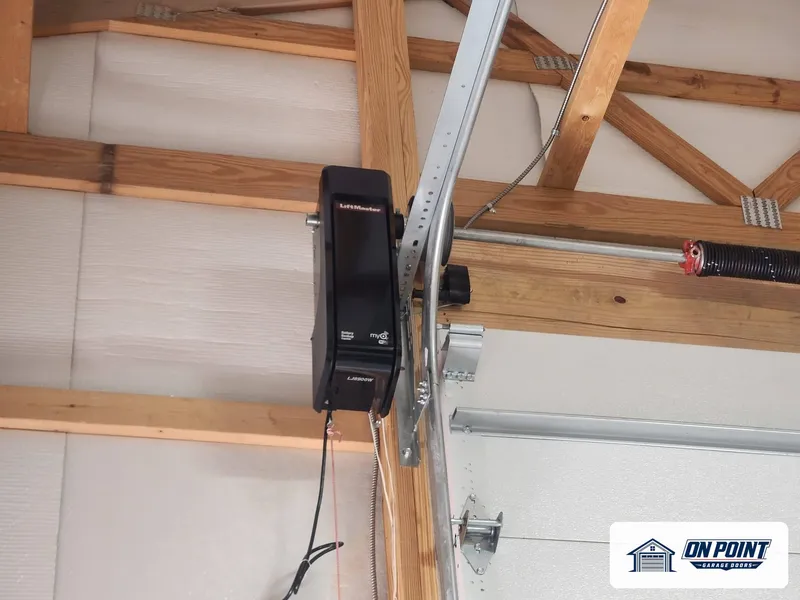
A wall-mounted opener sits beside the door on the end of the torsion bar, with no rail and no motor over the car. It is the quietest option of all for rooms above, and it frees the ceiling for storage or a low headroom garage.
It needs torsion springs and a little clear wall beside the bar, and the technician checks that on site.
The technician looks at the door, the springs, the ceiling height and what is above the garage, then explains which opener fits. If the door has a balance problem, that is fixed first, because a new opener on an unbalanced door wears out early.
After the install, the remotes, keypad and any phone app are set up, the force and travel limits are set, and the safety reverse is tested.
None of these alone means replacement; the technician tells you whether a repair or a new opener makes more sense.
When the garage stands alone at the back of the lot, nobody sleeps above it, and a chain drive's noise matters far less. Chain drives are a sensible, durable choice there.
In damp detached garages, the technician also looks at where the opener is mounted and whether the power supply and sensors are protected from moisture.
Belt and chain openers can both come with phone control, alerts when the door is left open, a built-in camera, keypads and battery backup. The drive type does not limit the features.
Battery backup is worth having anywhere the power goes out in storms, so the door still opens and closes.
Openers are sold by motor size. A bigger motor does not fix a heavy, unbalanced door; it just pushes harder. The springs carry the weight and the opener only guides the door, so a well-balanced door needs far less power than people expect.
For most homes, a belt drive is the better choice because it is much quieter. A chain drive is still strong and reliable, and suits detached garages where noise does not matter.
For normal residential doors, yes. For very heavy or oversized doors, the motor size and the springs matter more than the drive type.
Yes. A new belt-drive opener replaces the old unit and rail, and the remotes and keypad are set up again.
A wall-mounted opener is usually the quietest, followed by a belt drive. Both make a big difference under a bedroom.
Yes. You hear which opener fits your garage before any work starts.
Across Brooklyn, Queens and Long Island, tell us what the door is doing and we set a visit that fits your day.
Free estimate, call (929) 429-2429.
Tell us what the door is doing and we will give you an honest arrival time. The estimate is free.
Easier to explain by phone? Call (929) 429-2429.
Tell us what the door is doing. The estimate is free either way.