Takes 30 seconds. We call you back to set a time.
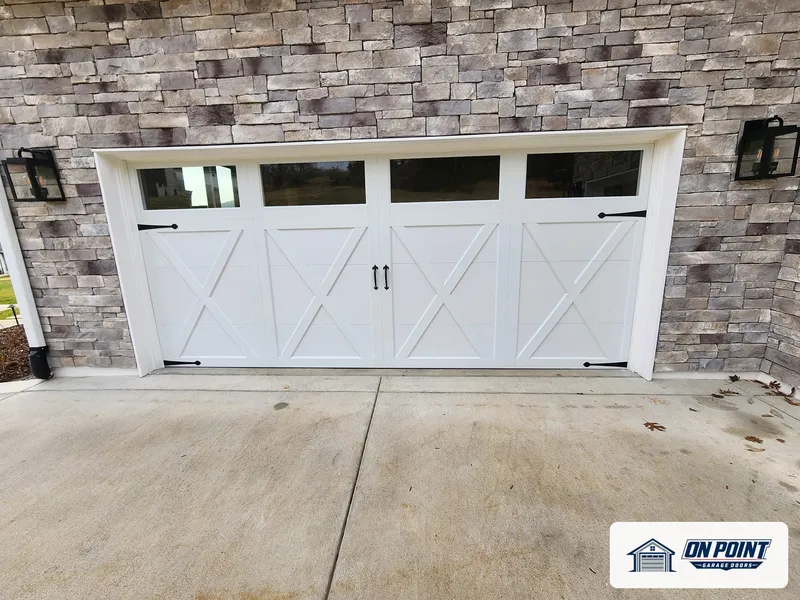
Carriage house doors copy the look of the old swing-out doors on barns and carriage houses: vertical boards, cross bucks, decorative handles and strap hinges, often with a row of windows across the top. Behind that look is a modern sectional door that opens overhead with an opener and a remote. They are one of the most popular styles we install on colonials, Tudors, farmhouses and older homes. Free estimate at (929) 429-2429.
By Sean Cohen, owner, On Point Garage Doors · Updated
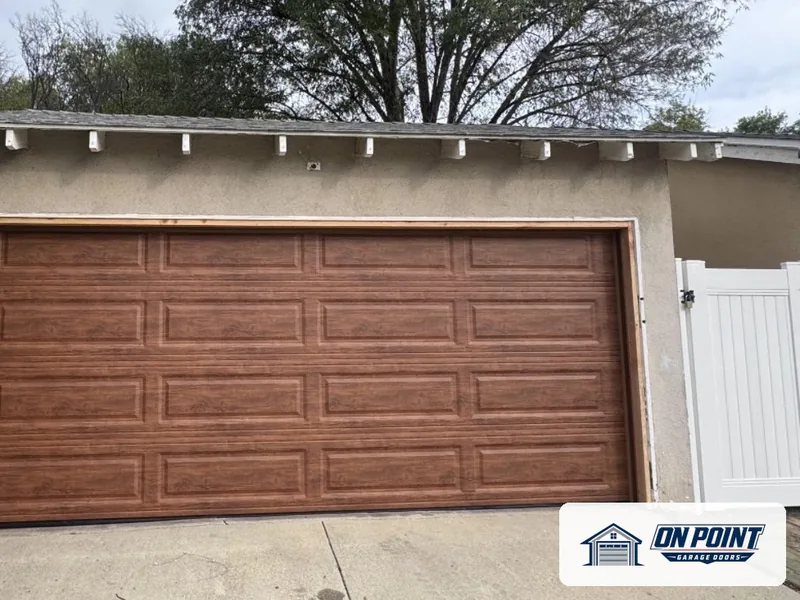
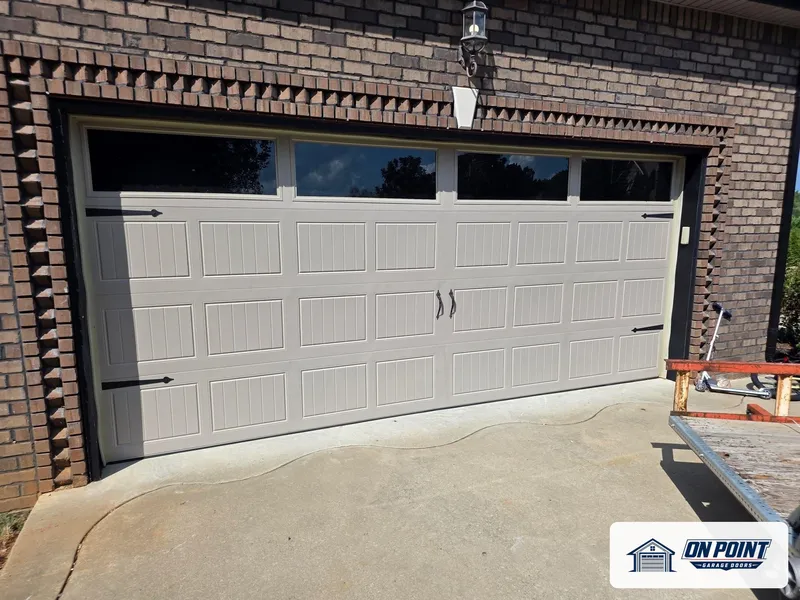
These photos are from our own jobs, with our logo on them.


Real swing-out doors are hard to use on a driveway, catch the wind and need room to open. A carriage-style sectional door gives the same look and opens straight up, so it works with an opener, a remote and a short driveway. Some designs even have handles placed where they would be on real swing doors.
A row of windows across the top lets daylight into the garage and breaks up a large door. Divided panes suit traditional houses; plain glass suits a cleaner look. Frosted or obscured glass keeps the garage private. Windows add weight, and the springs are sized to the finished door.
White and cream carriage doors with black hardware are classic on colonials. Dark wood tones suit Tudors and stone houses. Black and charcoal doors give a farmhouse look. The hardware is decorative on most doors, so you can choose the style you like.
Carriage doors with thick overlays, windows and heavy hardware can weigh more than a plain door. New springs are sized to the door's real weight so it lifts easily and the opener does not strain. This is one reason the springs always come new with a new door.
A pair of single carriage doors looks especially authentic, because real carriage houses had separate bays. A wide two-car carriage door gives one big opening with a design that suggests two doors. We show you both on photos of your house.
The old door, tracks and springs come out and leave with the technician. The new door goes in with new tracks, springs, rollers, hinges and seals. The frame is checked for rot and square, the decorative hardware is mounted, and the opener is set to the new door or replaced. The door is balanced and tested before the technician leaves.
Older homes often have garages with low headroom, odd sizes or frames that have shifted. Those are measured and fixed before the door is ordered. On detached garages at the back of the lot, the frame and the floor are checked closely, because rot and a sloped slab affect how the door seals.
The technician measures the opening, brings carriage samples and photos, and shows you the materials, windows, colors and hardware that fit, with a free estimate for each.
On canal-side and bay-side homes, a carriage door on a galvanized steel or composite core with rust-resistant hardware keeps the look without the swelling, rot and rust that salt air brings to real wood and bare steel.
A carriage door works with any modern opener. Because these doors are often chosen for homes with rooms over the garage, a quiet belt-drive or wall-mounted opener is a good match. The opener is set to the door's real weight, and the safety reverse is tested before the technician leaves.
Some owners want real wood for its depth and character. Wood carriage doors are beautiful, but they are heavy, they move with the weather and they need refinishing every few years. Stronger springs, heavy hinges and a strong opener are matched to them. Wood-look composite doors are the low-upkeep alternative, and we show you both.
Detached garages behind older homes are a natural fit for carriage doors, because many of them really were carriage houses or stables once. The frame and the slab are checked first, since rot at the jambs or a sloped floor affects how the new door seals and looks.
Most modern carriage doors only look like swing doors. They open overhead like any sectional door and work with an opener.
Most designs come insulated, which makes them quieter, stiffer and more comfortable.
They can be heavier than plain doors. New springs are sized to the door's real weight.
On most doors they are decorative. They add the look without changing how the door opens.
Yes. You see the styles and options that fit before any work starts.
Across Brooklyn, Queens and Long Island, tell us what the door is doing and we set a visit that fits your day.
Free estimate, call (929) 429-2429.
Tell us what the door is doing and we will give you an honest arrival time. The estimate is free.
Easier to explain by phone? Call (929) 429-2429.
Tell us what the door is doing. The estimate is free either way.