Takes 30 seconds. We call you back to set a time.
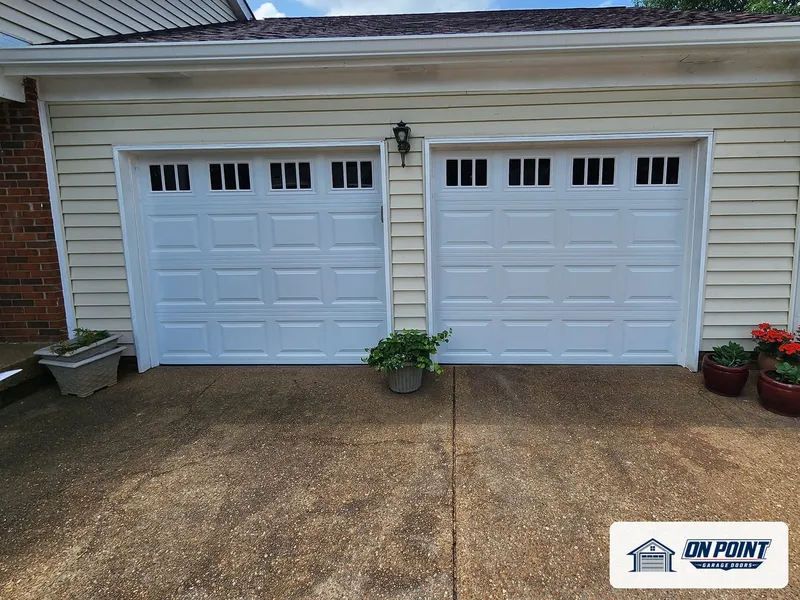
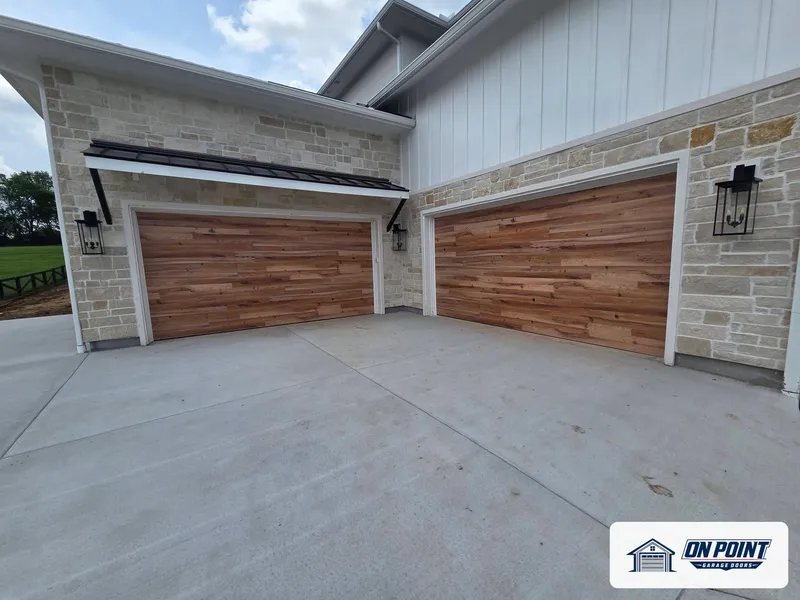
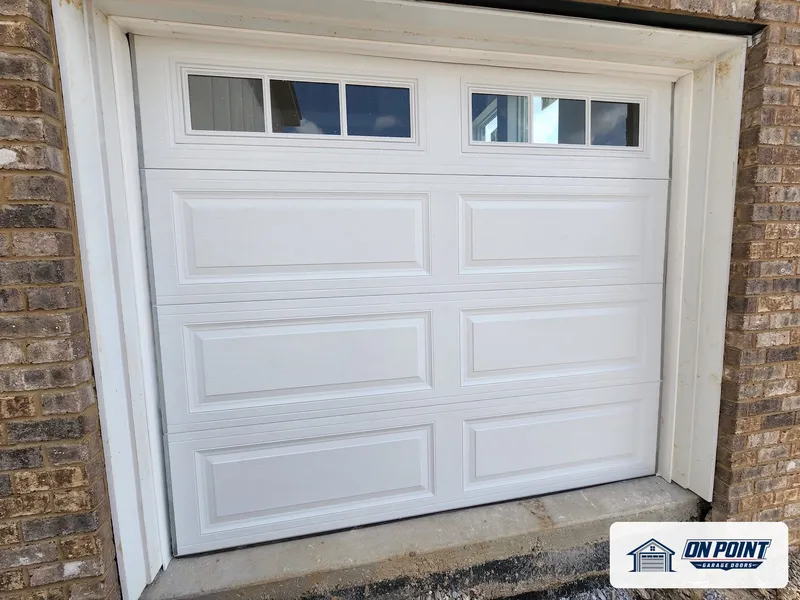
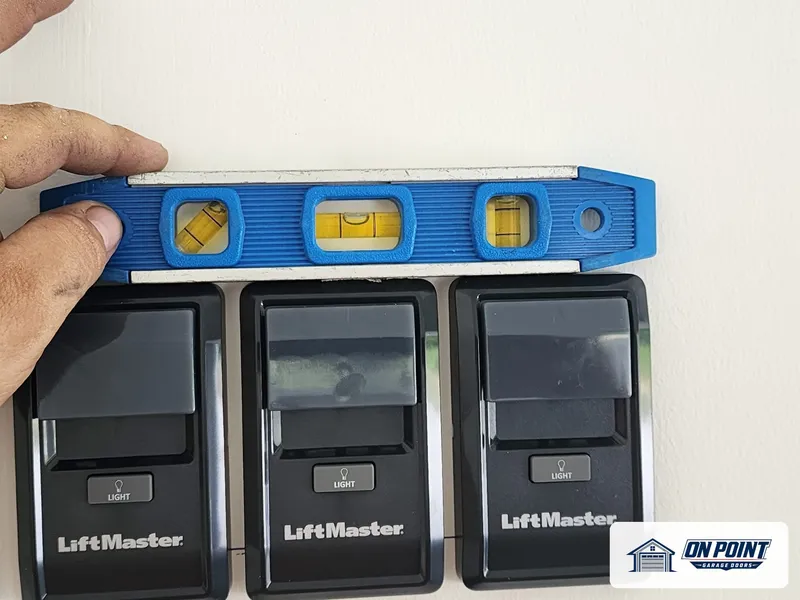
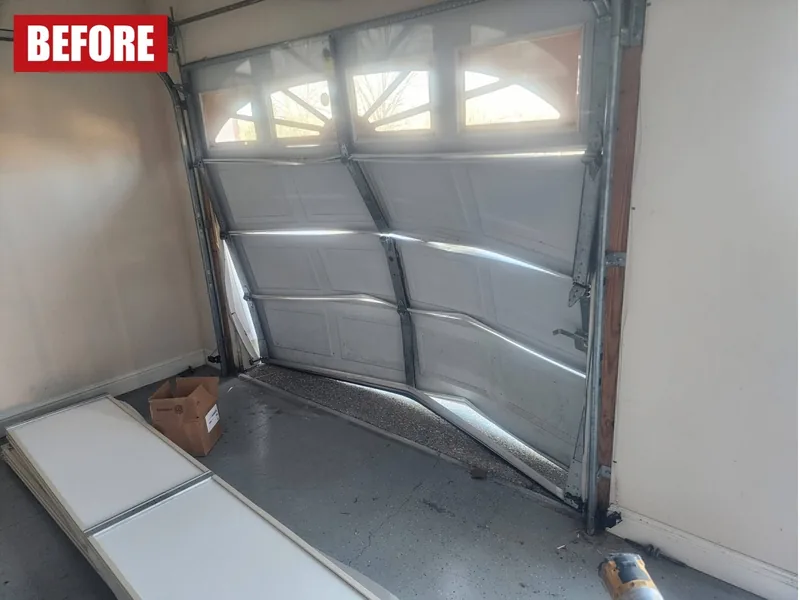
These photos are from our own jobs, with our logo on them.


Garage door repair in Farmingdale for the capes and high ranches on the village side streets, the homes near the college, and the loading doors and service doors in the business parks along Broadhollow Road. Free estimate first.
Residential streets of capes, high ranches and colonials sit a short drive from industrial parks full of warehouses, distributors and auto shops.
That means house doors, commercial sectional doors and roll-up doors are all part of the work here.
Republic Airport sits just to the east along the same road, with hangars and service buildings that run large doors of their own.
A balanced door with sealed rollers is the quietest combination under a bedroom.
High ranches often have a garage under the living room or a bedroom, so a loud opener or a rattling door is heard upstairs.
A quiet belt drive and sealed rollers solve that.
Warehouses and shops run wide doors that open and close many times every shift.
When a loading door sticks open at the end of a shift, the building cannot be locked, so that call moves to the front.
Weekend traffic around the golf courses and the village restaurants fills driveways and side streets, and doors get bumped more than you would expect.
Rentals near the college change tenants often, and remotes go missing.
New codes go into the opener and the old ones are erased, so a remote left behind by a past tenant stops working.
Older capes near the village center often have single-car garages that now hold storage instead of a car, and their springs can fail after long idle stretches.
Main Street, with its restaurants and shops, runs up to the train station, and the older houses on the nearby blocks often have a detached garage at the back.

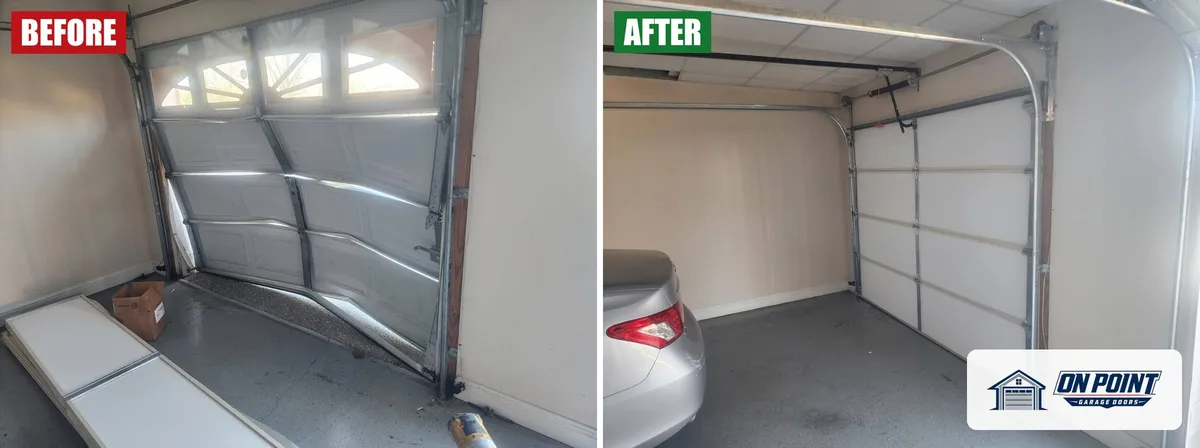
Every door, at a house on a side street or a warehouse off the main road, starts with a look at the whole door and a free estimate.


Broken springs. A loud crack from the garage followed by a door that will not budge points to a spring; leave the door down.
Busy family doors get longer-life springs when they are replaced.
When the door feels heavy, he tests the spring tension before the opener takes any blame.
High ranch garages. Noisy openers under living space are swapped for quiet belt drives.
Every remote, keypad and car button is paired again before he finishes.
Commercial sectional doors. Heavy springs, cables and rollers on warehouse doors are sized for daily cycles.
Operators are checked for limits, safety edges and photo eyes.
In garages turned into workshops, a wall-mounted opener leaves the ceiling clear for racks and lights.
Roll-up doors. Doors that drag, stick or will not lock usually need spring, slat or guide work.
Bent bottom bars from forklift and truck bumps are replaced.
Insulated doors keep high ranch garages under living space warmer and quieter.
If a truck, car or forklift hit the door, keep it closed and let us look before anyone runs it.
A door bumped while backing out onto a busy road can twist one side of the track, so it is checked before it runs.
We cover Farmingdale on both sides of the county line, plus the rest of Long Island, Queens and Brooklyn.
Whatever you mention about the door when you call is in the technician's notes when he arrives.
A car stuck in the garage, or a warehouse door that will not shut, gets moved up the list.
Winter. Cold snaps tired springs on homes and puts wear on loading doors that stay open in the wind.
Ice can glue the bottom seal to the slab; let it thaw instead of running the opener against it.
Spring. Rain runs down sloped driveways into high ranch garages and rusts the lowest track.
Summer. Heat dries out seals on dock doors and house doors facing the afternoon sun.
Fall. Before the first freeze, a check of springs and rollers lets worn parts be changed when it suits you.
He runs the door a few times and watches it travel, then goes over the springs, cables, rollers, track, seals and the opener or operator.
You hear what is wrong in everyday words, with a free estimate that lists each part.
Parts are matched to the real weight and use of the door, from a single garage to a loading door.
The springs, cables and rollers most doors here need ride along with him.
Before he goes, he tests the photo eyes and the safety reverse with you watching.
Old parts leave with him.
You see each door open and close before he leaves.
Business doors can be scheduled around shifts and deliveries.
A call comes before arrival.
Nothing begins until you say yes.
On doors that run all day, springs and rollers set the schedule.
With a broken spring, the door is dead weight; never try to lift it.
Coils with gaps mean the spring is close to failing.
Cables fray at the bottom bracket first; both sides are replaced together.
Drums and bearings are checked with the cables.
Sensors and safety edges on business doors are tested on every visit.
On warehouse doors, the rubber edge along the bottom is pressed to make sure the door stops and backs off.
A track bent by a bumper makes the door bind, so it is straightened or replaced before the door runs again.
Brackets that worked loose are fastened back into sound framing or steel.
Opener boards, gears and operators are tested before anything is replaced.
When an opener is worn out, quiet belt, wall-mounted and commercial models are explained.
Let us know if it is a house door or a business door, and what it is doing.
Every estimate is free.
Tell us about the door, pick a time, and the estimate is free.
Call us at (929) 429-2429.
Say what the door is doing, and the estimate is free whatever you decide.