Takes 30 seconds. We call you back to set a time.
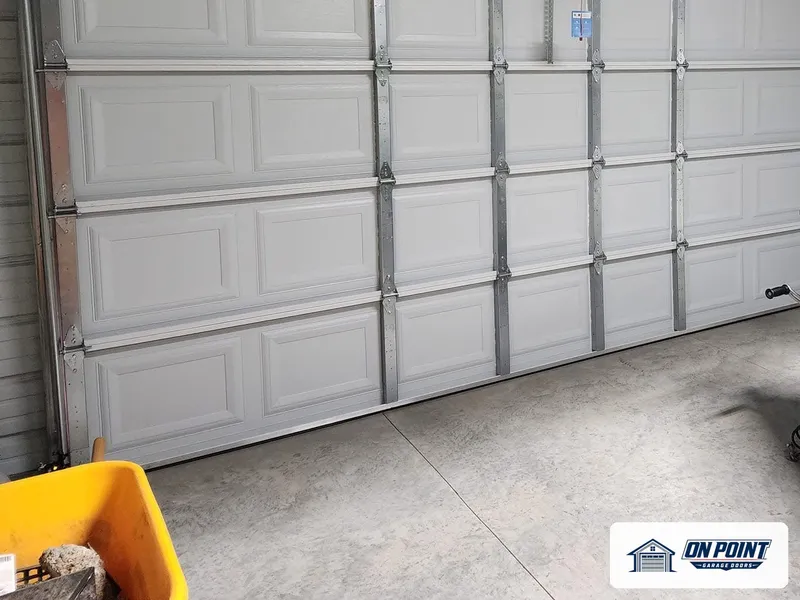
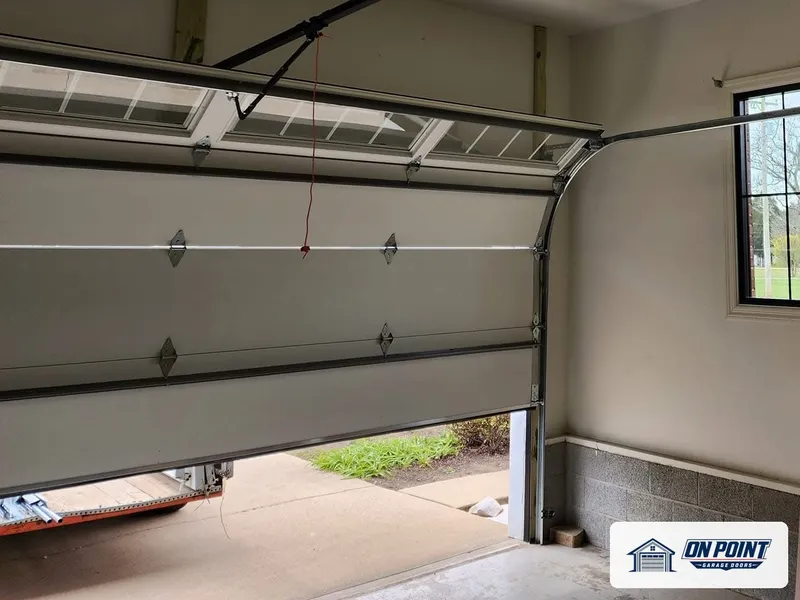
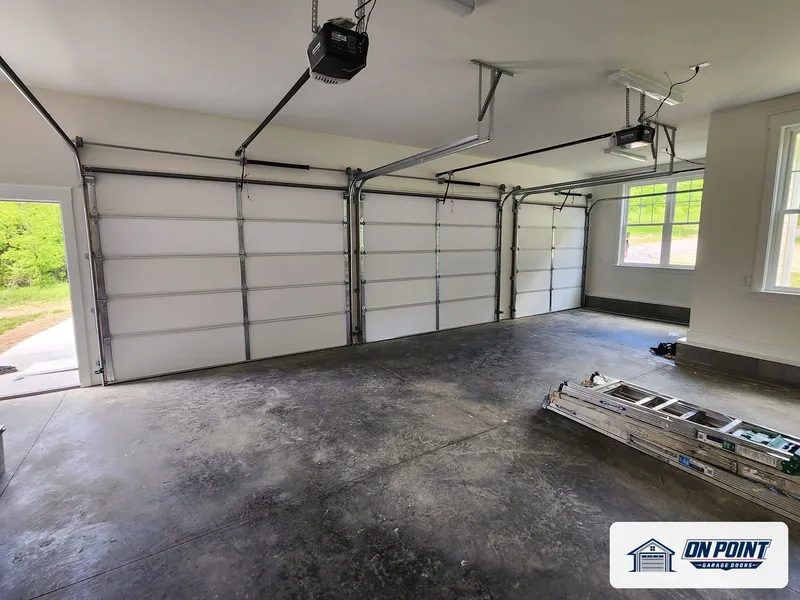
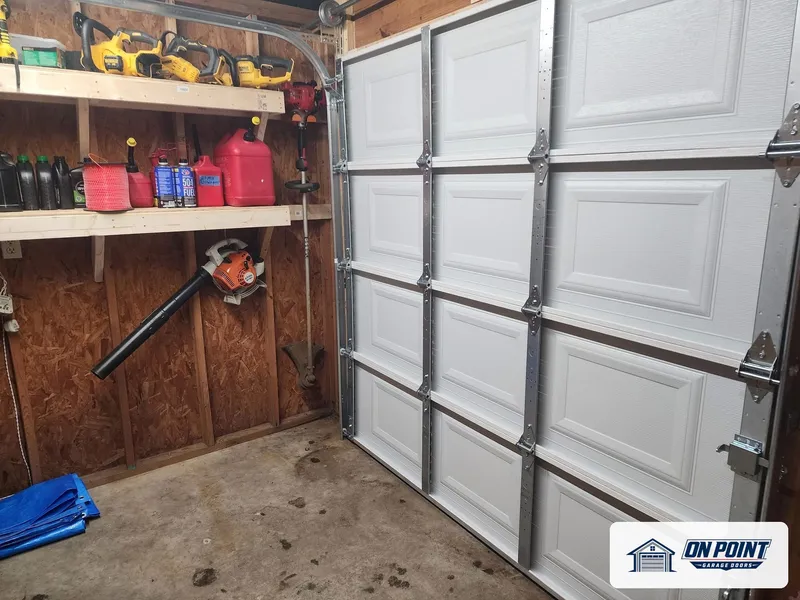
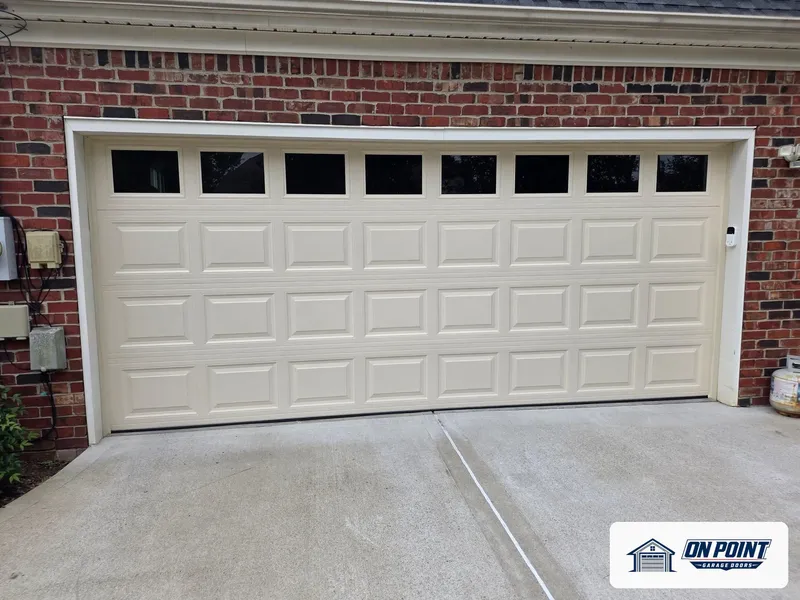
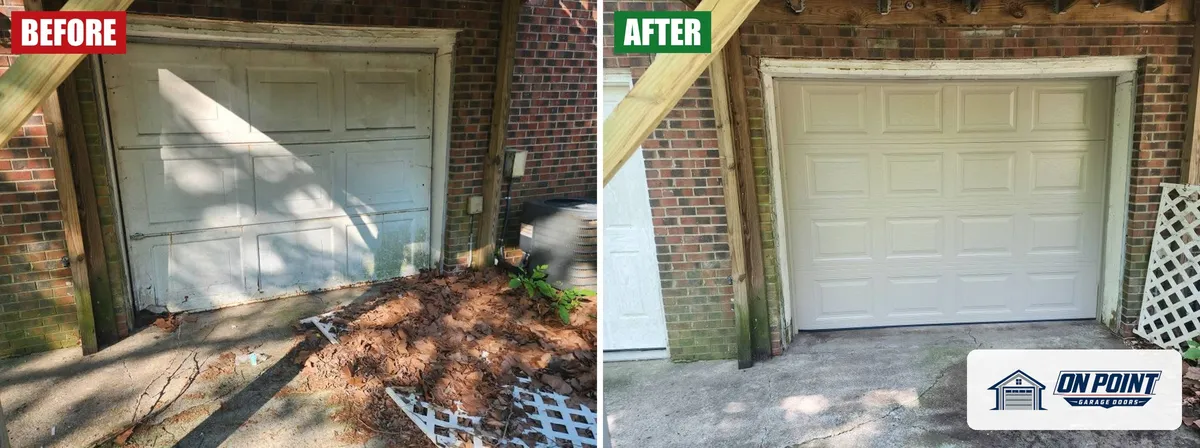
These photos are from our own jobs, with our logo on them.


Garage door repair in Elmont for the brick and frame houses with front and rear garages near the Queens border and the race track. Free estimate first.
Many homes here house more than one generation, and the garage door opens and closes from early morning until late at night.
All that use wears springs, rollers and opener gears faster than on a quieter street.
Brick capes usually have a single front garage beside or beneath the main floor.
Others have a detached garage at the end of a long driveway behind the house, often with its original framing still in place.
Storage stacked close to the track is the most common reason a door rubs or a sensor gets bumped.
Game nights at the arena fill nearby streets with parked cars, and a door that will not open then is a real problem.
A look at the door before the busy season starts saves that headache.
On those nights cars line both curbs, so mention it when you book and the technician plans where to leave the truck.
Large gatherings at home on holidays mean extra cars and extra trips through the garage, which is when weak doors finally fail.
Short driveways leave the car parked close to the door, which is easy to clip when it stops short.
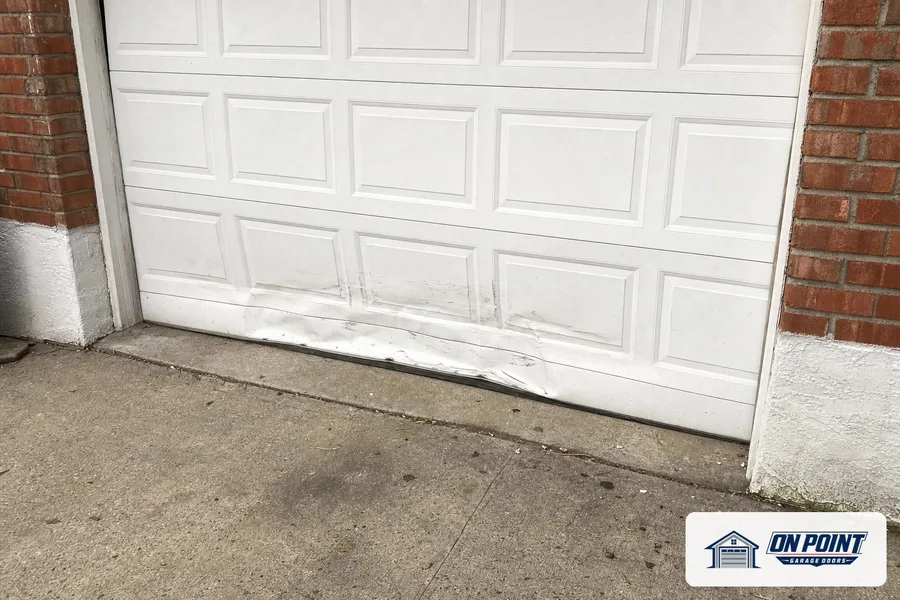
A bumper that taps the door at slow speed still creases the bottom section, and a creased section can bind in the track.
Houses close to the busy roads take winter salt splash from passing traffic, and it rusts the lowest section and its brackets.
Two-family homes often split the garage between households, so both sets of remotes and the wall button are tested after any repair.

Each visit runs in the same order: he sees the door run, finds out what is really wrong, and only then writes an estimate.


Broken springs. A bang in the garage followed by a door that will not budge means a spring; leave it down.
Doors that run all day for a big household go through springs sooner than most.
A second spring on the same bar is usually close behind, which is why both are replaced together.
Openers. Constant use wears chains and gears; belt drives run quieter in rooms above a front garage.
Every family member's remote is tested after the opener is serviced.
If the opener has been working against a heavy, unbalanced door, it often runs smoothly again once the door is balanced.
Rollers and hinges. Rattling rollers shake the door; sealed nylon ones last longer and run quiet.
Cracked hinges on the top section are replaced before the panel bends.
Off-track doors. A door out of its track is left in place until it is reset.
Insulated replacement doors help front garages that sit under a bedroom stay warmer in winter.
Creased panels. A section bent by a bumper can usually be changed on its own when the same style is still made.
The hinges on each side of a creased panel are checked too.
These blocks by the Queens border are on our western Nassau route, and the same crews run through Queens and Brooklyn.
Your description from the call reaches the technician first.
If the house is a two-family, say which household uses the garage, so the right person is home to let him in.
A car shut in on a workday, or a door stuck open at night, goes to the front of the line.
Winter. Freezing mornings are when hard-working springs finally snap.
Heavy family use through the holidays adds cycles just when the cold makes the steel most brittle.
Spring. Salt from the winter roads leaves rust at the bottom brackets.
Summer. Heat dries out seals and rollers, and a door that squeals on every trip deserves a look.
Fall. A visit before the cold catches a spring near the end of its life while there is time to plan for it.
He watches the door make a few trips, listens for strain, then goes through the springs, cables, rollers, tracks and opener.
He tells you what he found in plain words and breaks the free estimate into separate items.
Parts are sized to your door; the ones used most are already on board.
Anything that needs ordering is explained first.
The opener must stop and reverse correctly before the visit ends.
He takes the old parts away and leaves the garage as tidy as he found it.
Before leaving he takes the door all the way up and back down so you can see it working.
Because the garage is used all day, the visit is set for when it is needed least.
He phones while he is on the way to the house.
The decision stays with you.
A few parts take nearly all the strain, and in a busy household they wear quickly.
The spring carries the door's weight; once it breaks, that weight falls to whoever lifts it.
A door that slams down or will not hold halfway is often a spring on its way out.
A frayed cable can let one corner of the door drop, so both cables are renewed together.
Rust where the cable meets the bottom bracket is an early warning.
Floor sensors bumped by boxes or bikes are the usual reason a door will not close.
Tracks bent by a car make the door bind; it is not run until they are straightened.
Loose track brackets also let a door shudder.
Opener boards and gears wear out with heavy use; replacements are explained when repair no longer makes sense.
An older chain opener that has lifted the door for a busy family over many years is often near the end of its gears, and a newer belt unit runs far quieter under a bedroom.
With a battery in the opener, the door still lifts when the power goes out in a summer storm.
Say how many people use the garage and what the door is doing.
Mention it if the garage is detached at the back of the lot, so he knows where to bring the truck.
Estimates are free on every visit.
The springs, the rollers and the opener's gears or belt. Every trip of the door uses up part of a spring's life, so a busy door goes through springs much sooner than one that runs twice a day. Higher-cycle springs and sealed rollers are worth asking about when parts are due.
Yes. Most openers hold several remotes and a keypad, so each household can have its own, and a lost one can be cleared from the opener without redoing everyone else's. After any repair, every remote and the wall button are tested so nobody is left with one that no longer works.
Yes. Tell us when you book and the visit is set for a time when the street is quieter. If the door fails on an event night and the car is shut in, say so when you call, and the visit is moved up.
It can be. If the jambs or the header have rotted or sagged, a new track will not stay straight and the door will bind. The technician checks the frame first, and if it needs work, that is written on the estimate before any door is ordered.
Often, yes, as long as the same style of section is still made for that door. The bottom section, its brackets and the cable ends are replaced together, since salt usually reaches all three. If the door is too old to match, he will say so and show you other choices.
Describe what the door is doing and choose a day that suits the family; the estimate is free.
Call us at (929) 429-2429.
Say what the door is doing and how often it runs; a free estimate comes back whatever you decide.