Takes 30 seconds. We call you back to set a time.
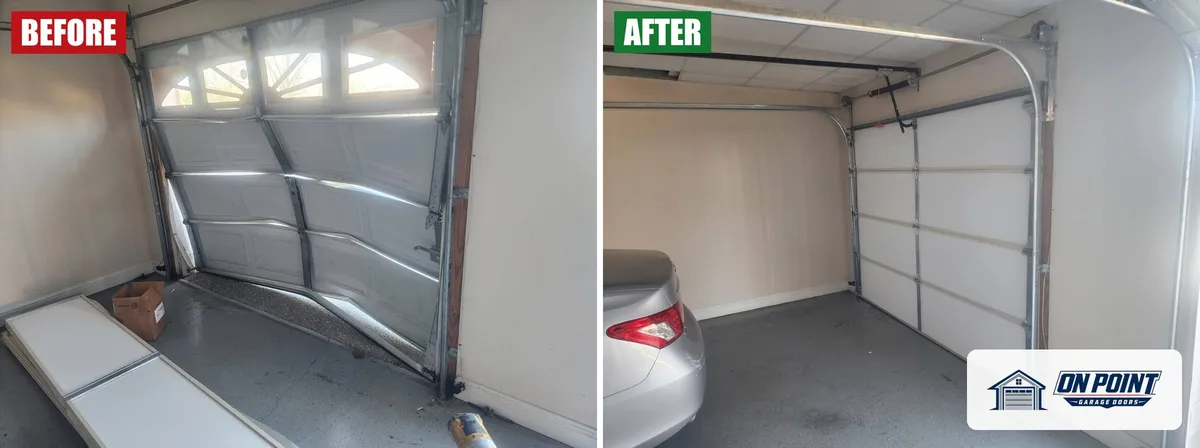
Every photo here is from our own work, with our logo on it.


A garage door that won't open is usually a broken spring, and the rest of the time it is the opener, its power or controls, or a door that is locked or jammed in its track. Here is how to tell which, what the red cord changes, and what we check. Free estimate.
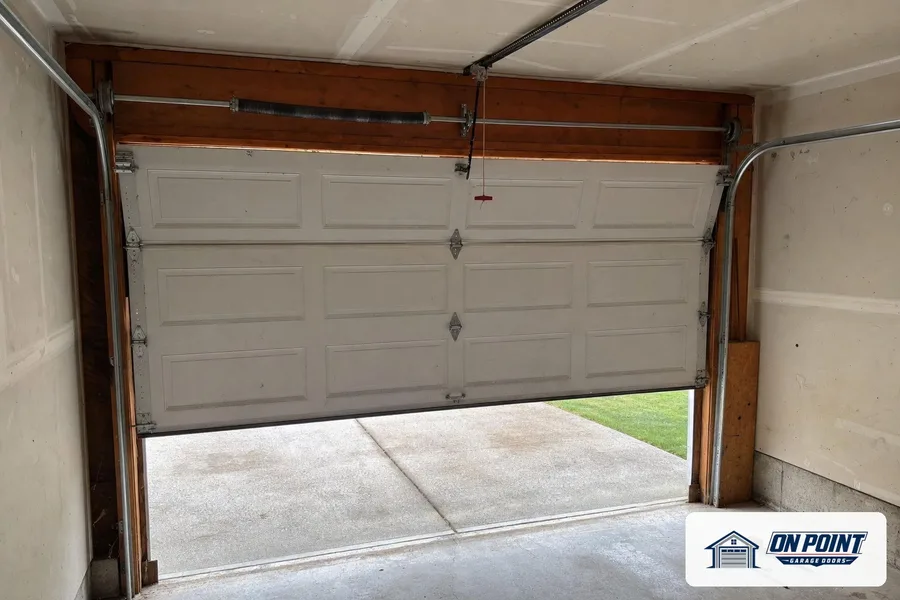
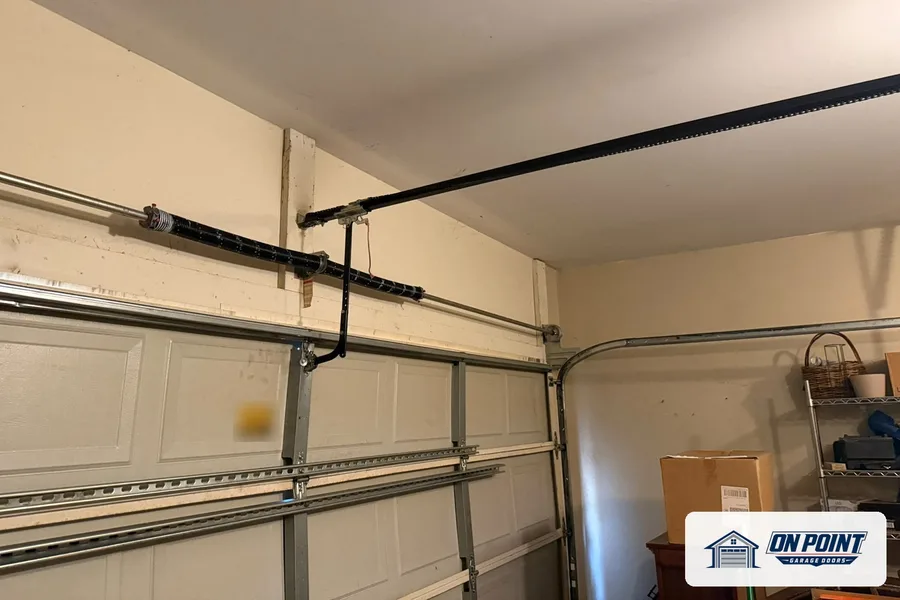
A garage door weighs a few hundred pounds. The springs above it carry that weight, and the opener only guides a door that is already balanced. That is why a door that won't open is most often a spring. When one snaps, usually with a loud bang from the garage, the opener tries to lift the full weight and gives up after a few inches, hums, or just clicks.
The rest of the time the opener, its power, its controls, or the door itself is the fault. The sound the door makes, and whether it moves by hand, narrows it down before anyone arrives.

You don't need to test anything. Say which of these you hear when you call, and the right parts ride along.


The order the faults come in on our calls, which is the order the technician checks them.

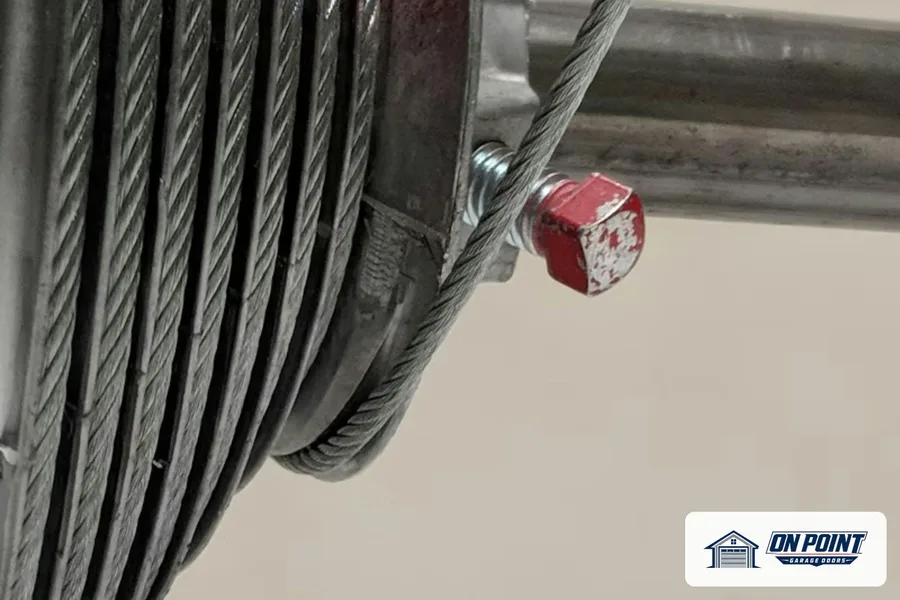
Once the door is disconnected from the opener, the opener is out of the picture. A door that still won't lift by hand has a problem in the door: a broken spring, a cable off its drum, the lock engaged, or the door bound in its track.
This is the point to stop. Without a working spring you are lifting the whole weight of the door, and a door that does get up won't stay there. Don't prop it on a board, don't drive under a door that is partly open, and keep children and pets away from it. Leave it closed and call.
The red cord hanging from the opener rail is the emergency release. It separates the door from the opener so the door can be moved by hand when the power is out. If you pulled it and the remote now runs the motor without moving the door, nothing new has broken. The door and the opener are simply apart.
What matters is why you pulled it. If the door was stuck, the reason it was stuck is still there, and reconnecting it to the opener won't fix that. If the door was open when you pulled the cord and a spring had broken, the door can come down fast. That is the most common way people get hurt with a garage door, so if a spring may be broken, leave the cord alone and call first.
The door first, then the opener. With the opener disconnected, the technician checks whether the door is balanced, then looks at the springs, both lift cables and drums, the rollers and the track. A door that is out of balance is the real fault behind most no-open calls, and it gets fixed before the opener is judged.
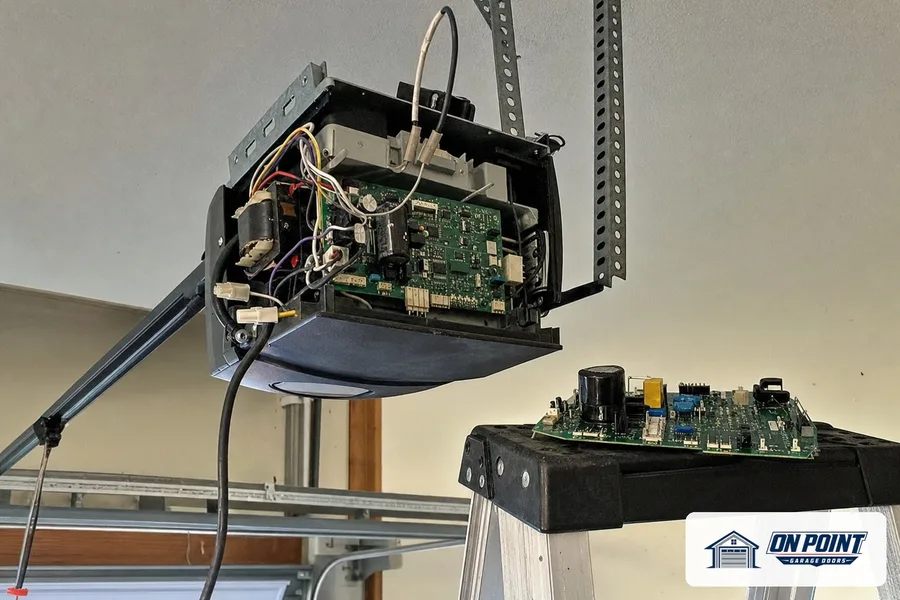
Then the opener: power at the outlet, the wall control, the remotes, the safety sensor lights, the drive gear, the logic board and the travel settings. You hear what failed and what it takes to fix, with a free estimate before any work starts. If it is a spring, see our broken garage door spring repair page. If it is the opener, see garage door opener repair.
The opener is dead, you need a new one. Often not. Most no-open calls are springs, and a good opener that was straining against a broken spring works again once the door is balanced.
Get a stronger opener. No opener is meant to lift a door without its springs. A bigger motor on an unbalanced door wears out the gear and the door both.
Just force it up. A door that won't move by hand is telling you something is broken. Forcing it bends panels and pulls cables off their drums, which turns one repair into three.
A click with no motor sound is usually the opener switching on while the motor, its gear or its board fails to follow. A click and a short hum with a door that won't move is more often a broken spring. Tell us which you hear when you call.
With the opener disconnected, the door's weight is on the springs and cables alone. If it won't lift by hand, a spring has broken, a cable has come off its drum, the door is locked, or it is binding in the track. None of those are the opener. Leave it closed and call.
That is expected. The red cord separates the door from the opener, so the motor runs but no longer moves the door. If the door was stuck before you pulled it, whatever stuck it is still there, and the technician checks that first.
No. The opener is built to guide a balanced door, not to lift its full weight. Running it against a broken spring strips the gear or burns the motor, and can pull the door out of its track.
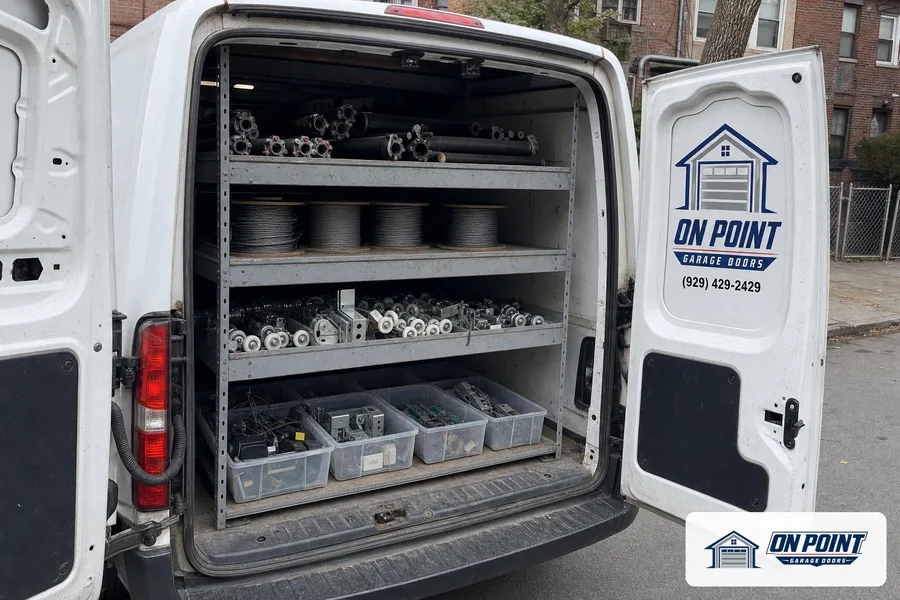
Usually, yes. A door stuck shut with a car inside gets priority on the schedule, and the common springs and opener parts ride on the van.
Yes. You hear what is wrong and what it takes before any work starts.
Around Brooklyn, Queens and Long Island, one call gets you a two-hour slot and a heads-up call before the technician sets off. A door stuck shut with the car inside gets priority.
Free estimate, call (929) 429-2429.
Describe the fault and we'll give you an honest arrival time. The visit and the estimate is free, anywhere in Kings County.
Easier to explain by phone? Call (929) 429-2429.
Tell us what the door is doing. The estimate is free either way.