Serving Brooklyn, Queens and Long Island(929) 429-2429Open six days a weekFree estimateGuaranteed work
On Point Garage Doors
Open 24 hours Sun-Thu, Fri until 5 pm Free estimate Springs, openers, cables We come to you
Emergency?Call nowBook free estimate
New York, NY - open six days a week

Garage door with a built-in entry door: what to know

Free estimateSame-day serviceCommon parts on board
  • Free estimate
  • Same-day service
  • Common parts on board
Emergency garage door repair★★★★★ 5.0 on Google · 42 reviews

Book your free estimate

Takes 30 seconds. We call you back to set a time.

Or just call (929) 429-2429 and talk it through.

Home › Garage Door With Entry Door

A garage door with a built-in entry door has a smaller, hinged door cut into its panels. You open the small door to walk in and out, and the big door still rolls up when you need to move a car or a load. The small door goes by a few names: pass door, wicket door or walk-through door. It is common on workshops, warehouses and garages that have no side door at all, and owners usually ask about it because they are tired of lifting a whole garage door just to grab a bike or take out the trash. Free estimate at (929) 429-2429.

By Sean Cohen, owner, On Point Garage Doors · Updated

Real jobs. Real photos.

These photos are from our own jobs, with our logo on them.

Steel door on a work building, from one of our jobs
Steel door on a work building
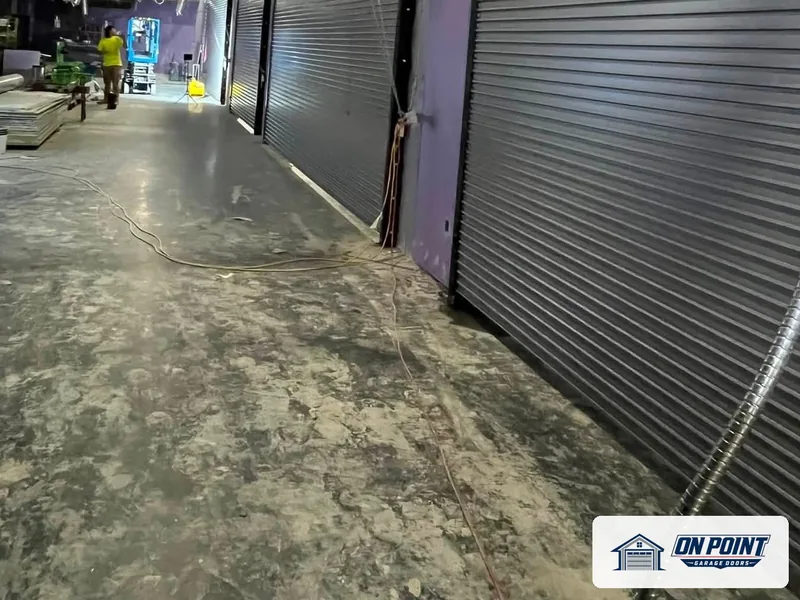
Rolling steel doors in a commercial building, an On Point Garage Doors job
Commercial door on a city street
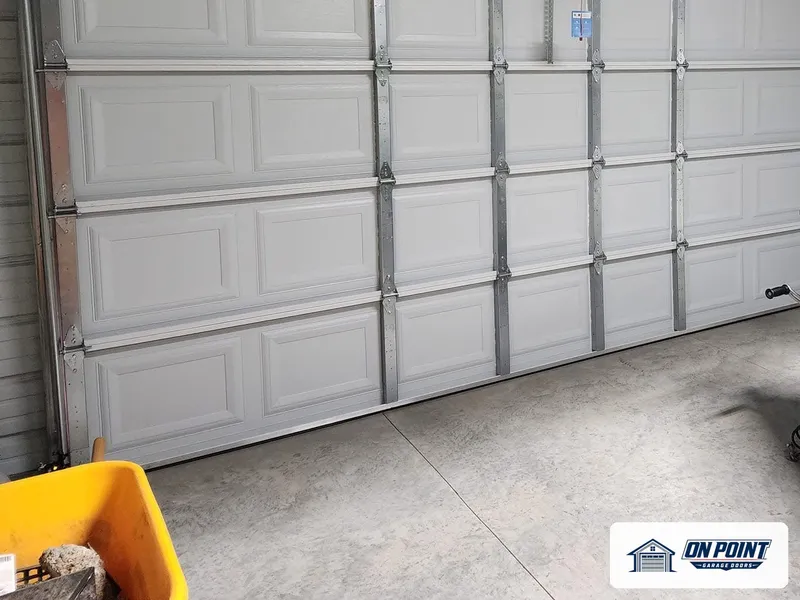
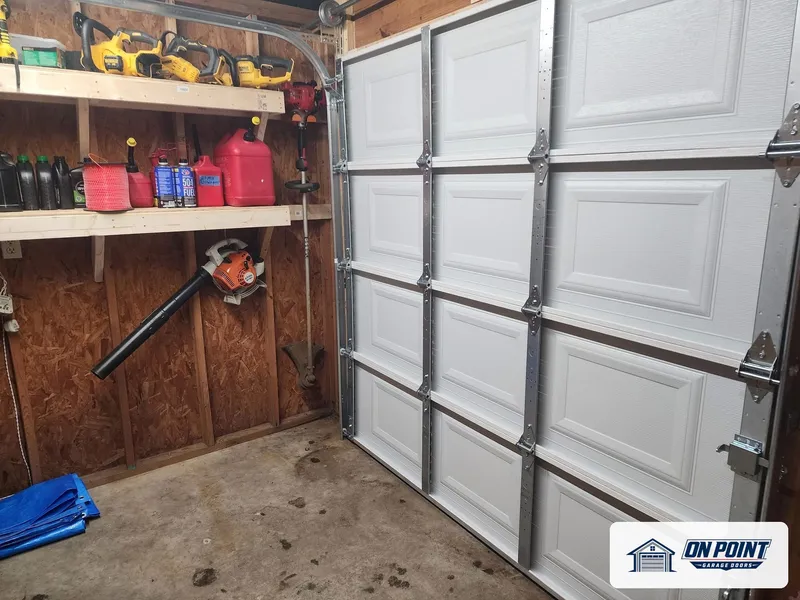
Inside view of a new sectional door, from one of our jobs
Inside view of a new sectional door

How a pass door works

The entry door is built into the sections of the big door at the factory. It has its own frame, hinges, lock and handle. When the small door is closed, the big door moves as one piece, with the pass door riding along inside it. When you want to walk in, you unlock the small door and swing it open while the big door stays down.

Why people ask for one

Many garages behind older homes and many shop buildings have only one way in: the garage door itself. Opening it every time lets in cold air, rain and leaves, wears out the springs and the opener, and leaves the whole front of the garage open to the street while you are inside. A pass door lets you come and go without any of that.

Where they make the most sense

The threshold at the bottom

A pass door needs a frame all the way around, so there is a raised sill at the bottom where you step over. It is not tall, but it is there, and it matters if you plan to roll carts, mowers or a wheelchair through the small door. For flat, step-free entry, a separate entry door in the wall is the better choice.

Weight, springs and the opener

The frame and hardware of a pass door add weight to the sections that hold it. The springs have to be sized for the finished door, not for a plain one of the same size, or the door will feel heavy and the opener will strain. On doors with an operator, a switch usually stops the motor from running while the small door is open, so the big door cannot lift with the pass door swinging loose.

Locks and security

Because the small door is a real door, it needs a real lock. Most have a keyed handle, and many owners add a deadbolt or a keypad lock on the inside. The big door keeps its own lock or an opener with a locking feature. Two doors means two things to lock at night, so it helps to plan who carries which key.

Can one be added to my door

In most cases, no. A pass door is designed into the panels and the reinforcing of the big door. Cutting an opening into a door you already have weakens the sections and throws off the balance. If you want one, the usual path is a new door built with the pass door in it, or a separate door in the garage wall.

The other option: a side entry door

If there is a wall with room for it, a separate entry door is simpler. It gives you a flat step, a full-height opening and a normal door lock, and it does not change the garage door at all. Adding it means framing work in the wall, so it is a building job rather than a door job, but many owners find it worth doing.

Pass doors on commercial doors

On shop buildings and warehouses, pass doors are often set into large sectional or rolling steel doors so staff and delivery people can walk in without opening the bay. These doors see heavy use, so the hinges, closers and switches need attention along with the rest of the door. We repair and adjust commercial doors with pass doors as part of our regular commercial work.

Common problems we see

What a visit includes

The technician measures the opening, looks at how you use the garage and whether a side wall can take a separate door, and explains which choice suits you. You get a free estimate before anything is ordered.

Questions we get asked

What is a garage door with an entry door called?

It is called a pass door, wicket door or walk-through door. It is a small hinged door built into the big garage door.

Can a pass door be added to my existing garage door?

Usually not. It has to be built into the door's sections, so most owners get a new door with one or add a side door in the wall.

Is there a step at a pass door?

Yes. The small door has a frame all around, so there is a low sill to step over.

Does a pass door work with an opener?

Yes. A switch usually keeps the opener from running while the small door is open.

Is the estimate free?

Yes. We measure and explain your options before anything is ordered.

Booking takes a minute

Across Brooklyn, Queens and Long Island, tell us what the door is doing and we set a visit that fits your day.

Free estimate, call (929) 429-2429.

Want a walk-in door in your garage door? We will measure it

Tell us what the door is doing and we will give you an honest arrival time. The estimate is free.

Easier to explain by phone? Call (929) 429-2429.

Two minutes to a free estimate

Tell us what the door is doing. The estimate is free either way.

Or just call (929) 429-2429 and talk it through.

The other six things that go wrong