Takes 30 seconds. We call you back to set a time.
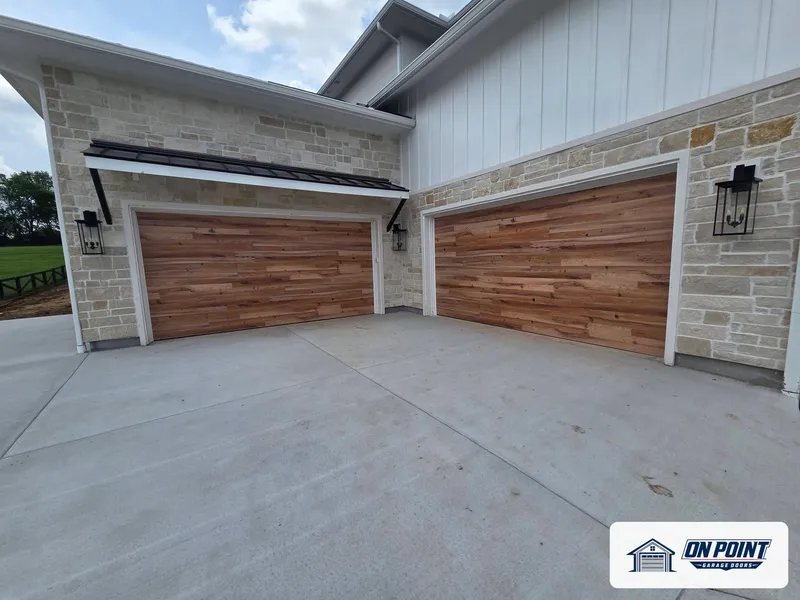
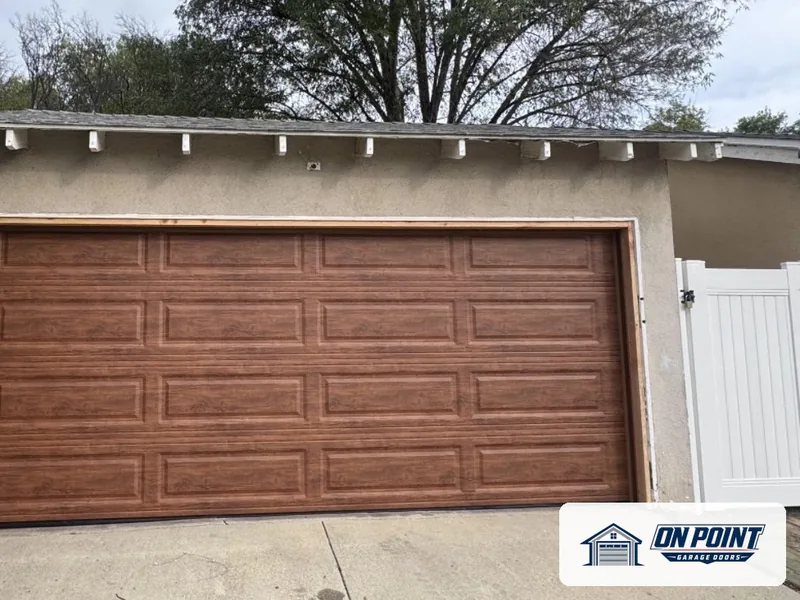
Faux wood garage doors, also called wood-look doors, are made of insulated steel or composite with a finish that copies the grain and color of oak, walnut, cedar or mahogany. From the street they look like real wood. Up close they need no sanding, sealing or staining, they do not swell or rot, and they weigh much less than a solid wood door. Free estimate at (929) 429-2429.
By Sean Cohen, owner, On Point Garage Doors · Updated
These photos are from our own jobs, with our logo on them.


Wet springs, humid summers and freezing winters are hard on real wood doors, and we often see them swollen, sticking or soft at the bottom. A faux wood door gives the same warm look without those problems.
Near the water, a steel faux wood door with a galvanized core and good finish also handles salt air better than real wood.
When a real wood door has rotted at the bottom or become too heavy for its springs, a faux wood door is the most common replacement. It keeps the look the owner chose while dropping the weight and the upkeep.
Because the new door is lighter, new springs are sized to it and the opener is set again.
Faux wood finishes range from light oak and cedar tones to dark walnut and mahogany. Matching the front door or the trim makes the house look put together.
Some finishes are printed and some are textured; textured finishes look more convincing up close.
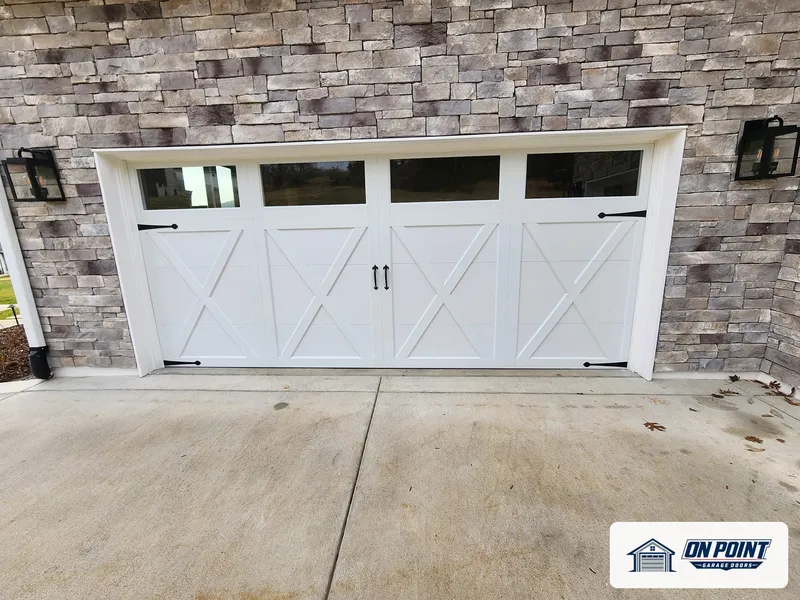
Black handles and strap hinges complete a carriage look. A row of windows near the top lets light in and breaks up a large door. The technician shows you the combinations that suit your house.
The technician measures the opening, the headroom, the side room and the back room, checks the frame for rot or damage, and looks at the springs and opener you have now. Then you see the styles, colors, insulation levels and window options that fit, with a free estimate for each.
The new door comes with new springs sized to its weight, new tracks, rollers and seals, so everything starts fresh together. The opener is checked and set to the new door, and the safety reverse is tested before the technician leaves.
Wash it a few times a year, keep the bottom seal in good shape and have the hardware checked once a year. There is no sanding, sealing or staining.
Carriage-style faux wood doors with black hardware are one of the most popular looks on colonials, Tudors and farmhouses. They give the look of old swing-out barn doors while opening overhead like any sectional door.
A solid wood door can weigh several times more than an insulated steel door of the same size, and it gets heavier as it absorbs water. Heavy doors need heavy springs, strong hinges and a strong opener, and they wear all three faster.
A faux wood door drops that weight, which makes the springs and opener last longer and the door feel lighter by hand.
Most faux wood doors are built on insulated steel, so they keep the garage and the rooms around it more comfortable. That matters on attached garages and garages under bedrooms.
A faux wood garage door looks best when its tone matches or complements the front door, the shutters or the porch ceiling. Bringing a photo of the front of the house, or holding samples against the siding during the visit, makes the choice easy and avoids a door that looks out of place.
On canal-side and bay-side homes, a faux wood door on a galvanized steel core with rust-resistant hardware gives the warm look of wood without the swelling, rot and rust that salt air brings.
Good faux wood finishes look very convincing from the street. Textured finishes look more real up close than printed ones.
For most homes here, yes: they need almost no upkeep, do not swell or rot, and weigh less. Real wood still has unmatched depth up close.
Many are built on insulated steel, so they often insulate better than real wood.
Yes, and it is one of the most common upgrades. The springs are sized to the lighter new door.
Yes. You see the finishes and styles that fit your opening before any work starts.
Across Brooklyn, Queens and Long Island, tell us what the door is doing and we set a visit that fits your day.
Free estimate, call (929) 429-2429.
Tell us what the door is doing and we will give you an honest arrival time. The estimate is free.
Easier to explain by phone? Call (929) 429-2429.
Tell us what the door is doing. The estimate is free either way.