Takes 30 seconds. We call you back to set a time.
Openers are sold by power, usually described in horsepower or an equivalent rating for newer DC motors, and the boxes make it sound as if more is always better. In practice, the right opener depends on the door it will move: how big and heavy it is, how it is built, how often it runs, and above all whether its springs are balanced. A balanced door needs far less power than most people expect. Free estimate at (929) 429-2429.
By Sean Cohen, owner, On Point Garage Doors · Updated
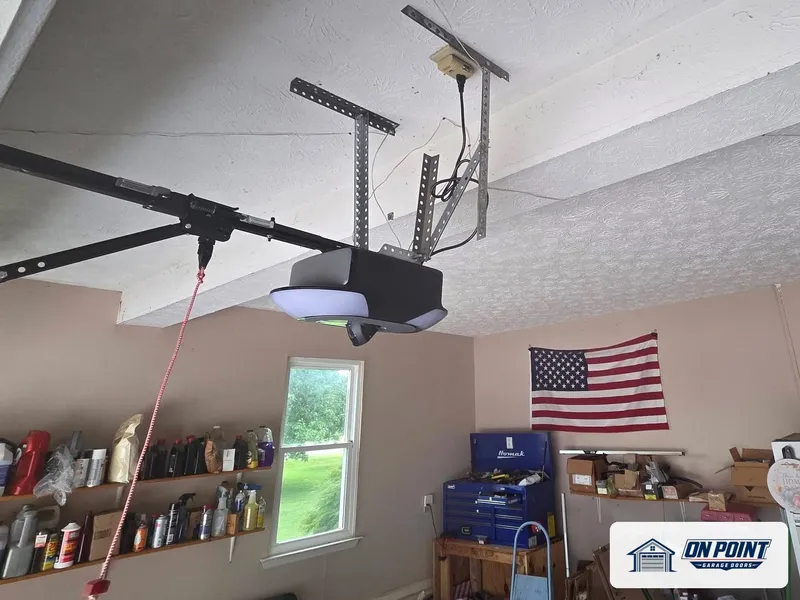
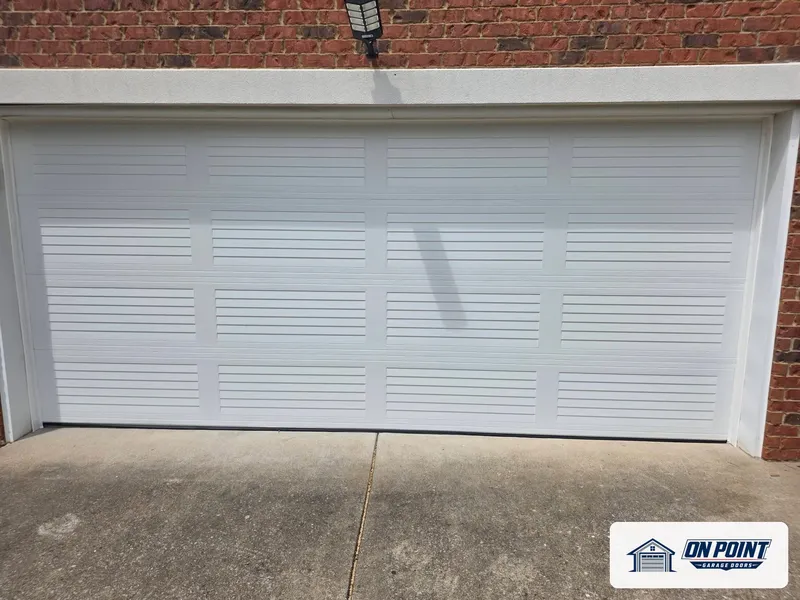
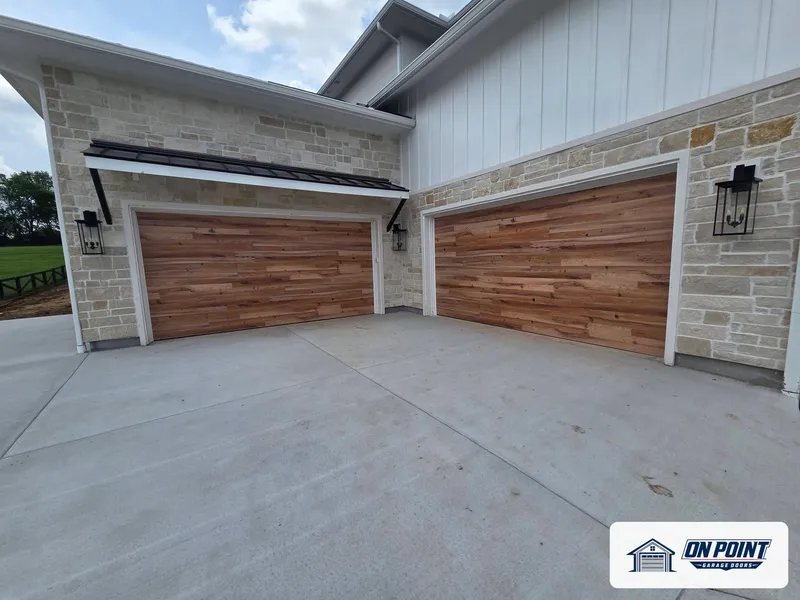
These photos are from our own jobs, with our logo on them.


On a properly set up door, the springs carry nearly all of the weight. The opener only has to start the door moving, guide it and stop it. That is why a modest opener can run a heavy door smoothly, and why even a powerful opener struggles and wears out on a door with tired springs.
Before choosing any opener, the springs are checked and the door is balanced.
An opener far stronger than the door needs is not harmful in itself, but it can hide a problem. If the springs weaken, a strong opener keeps lifting the door anyway, wearing itself and the door's hardware until something breaks. A correctly sized opener on a balanced door tells you sooner when something is wrong.
Many newer openers use DC motors with ratings that do not line up neatly with the old horsepower numbers. They tend to be quieter, start and stop softly, and often work with battery backup. What matters is that the model is rated for your door's size and weight, not the number on the box.
Every opener has force and travel settings. They are set to the door's real weight, so the door closes firmly but reverses if it meets something. Turning the force up to make a heavy door work is a common and dangerous mistake. The right fix is balancing the door.
Wall-mounted openers turn the spring bar directly and are rated by the door weight and size they can handle. They suit low ceilings, high-lift tracks and garages with storage overhead. They need a torsion spring system in good condition.
Shop, warehouse and parking garage doors are much larger and run far more often. They use commercial operators sized to the door, the number of daily cycles and the kind of use. Residential openers are not used on those doors.
The technician weighs and balances the door, checks the springs and cables, recommends an opener sized to it, removes the old unit, mounts and wires the new one, sets the force and travel, pairs remotes and the app, and tests the safety reverse.
If the springs are old, the wrong size or the door is heavy to lift by hand, they are replaced with the opener. A new opener on old springs is the most common reason a new opener fails early.
The technician looks at your door, how it is built and how you use it, and recommends the opener size and type that fit, with a free estimate.
Window rows, full-view glass and decorative carriage hardware all add weight. A door that looks the same size as your neighbor's may weigh much more. The technician weighs the door with the opener disconnected, so the springs and the opener are matched to what is really there.
In garages with two doors, each door gets its own opener sized to that door. A wide double door and a single door side by side often need different units. Remotes, keypad and app can still control both.
Openers with battery backup run on the battery during an outage, with the same rating as on house power for a limited number of trips. On a balanced door, those trips are easy for the battery.
One rated for your door's size and weight. On a balanced door, a standard residential opener handles most single and many double doors.
Heavier and wider doors benefit from a stronger unit, but the springs must still carry the weight.
Not necessarily. A correctly sized opener on a balanced door lasts longest and warns you sooner of problems.
Yes. Old or wrong-size springs are the top reason new openers fail early.
Yes. You see the opener options that fit before any work starts.
Across Brooklyn, Queens and Long Island, tell us what the door is doing and we set a visit that fits your day.
Free estimate, call (929) 429-2429.
Tell us what the door is doing and we will give you an honest arrival time. The estimate is free.
Easier to explain by phone? Call (929) 429-2429.
Tell us what the door is doing. The estimate is free either way.