Serving Brooklyn, Queens and Long Island(929) 429-2429Open six days a weekFree estimateGuaranteed work
On Point Garage Doors
Open 24 hours Sun-Thu, Fri until 5 pm Free estimate Springs, openers, cables We come to you
Emergency?Call nowBook free estimate
New York, NY - open six days a week

Sectional garage doors, explained

Free estimateSame-day serviceCommon parts on board
  • Free estimate
  • Same-day service
  • Common parts on board
Emergency garage door repair★★★★★ 5.0 on Google · 42 reviews

Book your free estimate

Takes 30 seconds. We call you back to set a time.

Or just call (929) 429-2429 and talk it through.

Home › Sectional Garage Doors

Nearly every modern home garage door is a sectional door. It is built from several horizontal panels joined by hinges, with rollers at each hinge that run in tracks on both sides of the opening. As the door opens, the panels bend around a curve in the track and slide back under the ceiling. That simple idea is why sectional doors are so common: they seal well, they need no space in front of the garage, and they work with any opener. Free estimate at (929) 429-2429.

By Sean Cohen, owner, On Point Garage Doors · Updated

Real jobs. Real photos.

These photos are from our own jobs, with our logo on them.

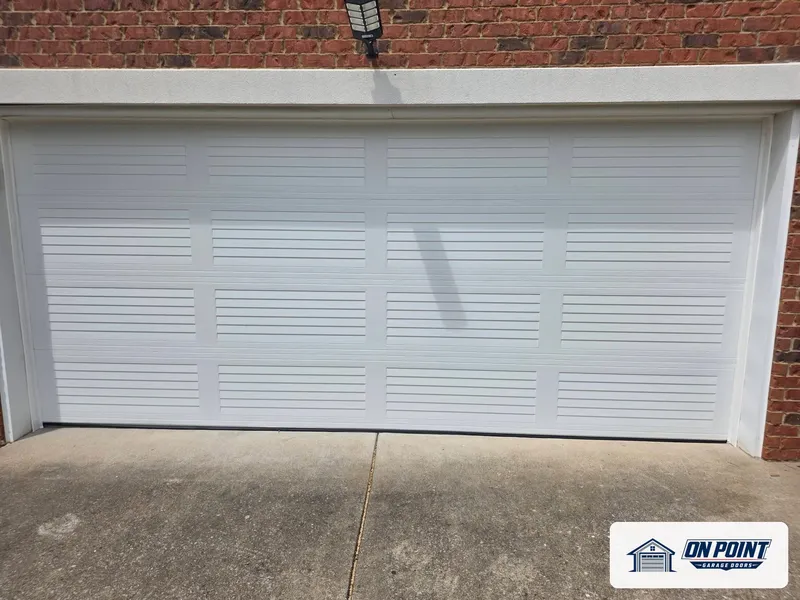
New sectional door, from one of our jobs
New sectional door
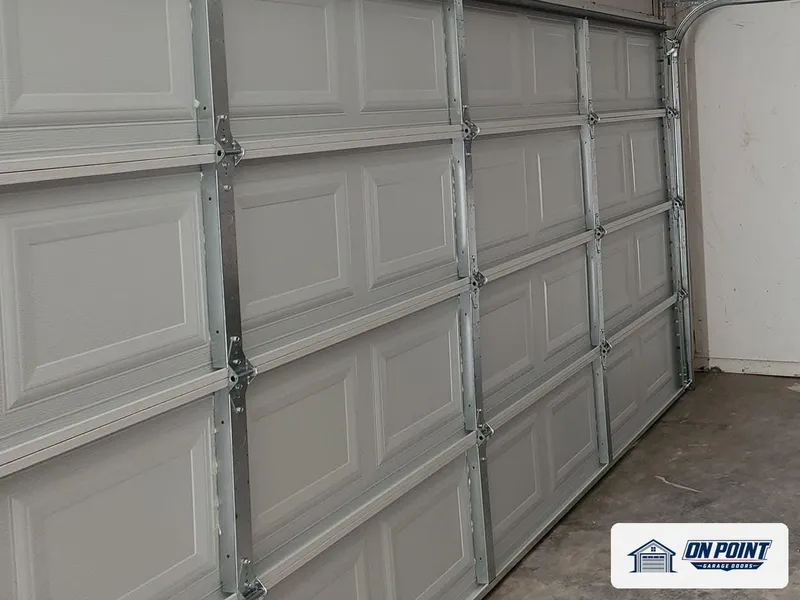
Tracks inside a garage, from one of our jobs
Tracks inside a garage
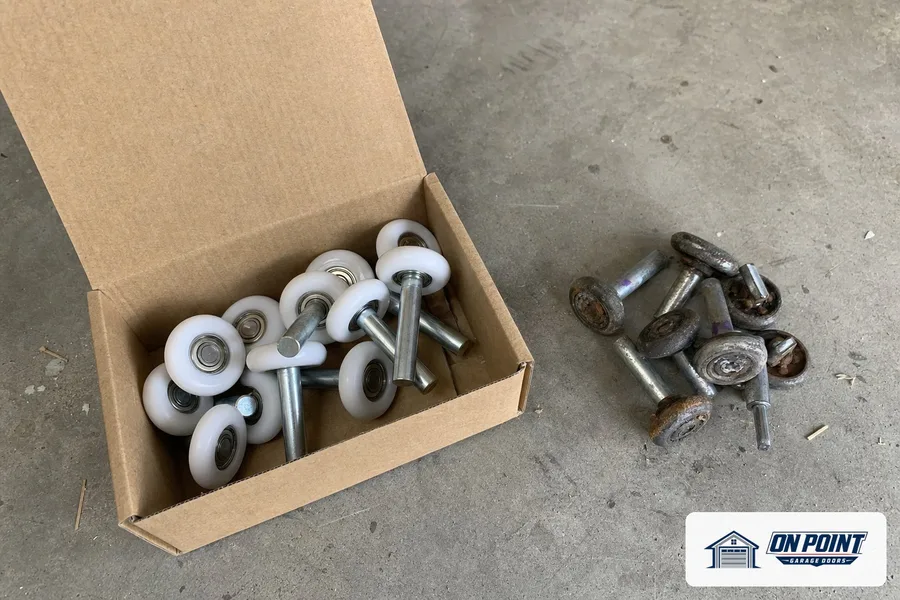
New and worn rollers, from one of our jobs
New and worn rollers

The parts of a sectional door

  1. PanelsThe horizontal sections, in steel, aluminum, composite or wood, often with insulation.
  2. Hinges and rollersHinges join the panels; rollers at each hinge carry the door in the tracks.
  3. TracksVertical tracks beside the opening and horizontal tracks under the ceiling.
  4. Springs, drums and cablesTorsion springs above the door, or extension springs along the tracks, carry the weight.
  5. SealsA bottom seal and side and top weather stripping close the gaps.

Why sectional doors replaced one-piece doors

Older one-piece doors tilt out and up as a single slab, which needs room in front of the garage and leaves gaps around the edges. Sectional doors open straight up and back, so a car can park close to the door, and the panels seal against the frame and floor. They are also safer and easier to automate.

Materials

Insulation and construction

Sectional panels range from a single sheet of steel to two steel faces with insulation sealed between them. The thicker, layered panels are stiffer, quieter, warmer and more dent resistant. For garages attached to the house or under living space, they make a real difference.

Styles

Sectional doors come in raised panel, carriage, flush, long-panel and full-view designs, with window rows, decorative hardware and many colors and wood-grain finishes. Almost any look can be built as a sectional door.

How the weight is carried

A sectional door can weigh as much as a small motorcycle. Springs carry that weight so the door lifts easily and the opener only guides it. The springs, drums and cables are sized to the door's real weight, which is why a new door always gets new springs.

Common repairs

Broken springs, frayed cables, worn rollers, cracked hinges, bent track, damaged panels and worn seals are the usual repairs on sectional doors. Most are routine and done on a single visit. A damaged panel can sometimes be replaced on its own if a matching section is still made.

Sectional doors and openers

Sectional doors work with every kind of opener: belt, chain, screw and wall-mounted. A balanced sectional door with sealed rollers is the quietest combination, which matters for rooms over the garage.

Track options for different garages

Standard track suits most garages. Low-headroom track suits garages with little room above the door. High-lift and vertical-lift track suit tall garages where the owner wants the door up near the ceiling. The track is chosen when the door is ordered, based on careful measurements.

Looking after a sectional door

A yearly tune-up checks the springs, cables, rollers, hinges, tracks and opener, balances the door and tests the safety reverse. Keeping the bottom seal in good shape and rinsing road salt off the bottom section after winter helps the door last.

Getting a free estimate

The technician measures the opening, the headroom and the side room, checks the frame, and shows you the sectional styles, materials and insulation levels that fit, with a free estimate for each.

Sectional doors in row houses and tight garages

In row houses and attached homes, the garage is often narrow and short, with a door that opens right onto the sidewalk or a tiny driveway. A sectional door is the best fit there, because it opens straight up and never swings out over the sidewalk or into a parked car. Low-headroom track and a wall-mounted opener solve the tight ceilings these garages often have.

Struts on wide doors

Wide sectional doors for two cars can bow in the middle, especially when they are thin or have an opener pulling on the top section. Steel struts across the sections keep a wide door stiff, quiet and properly sealed. They are standard on many new double doors and can be added to existing ones.

Replacing an old one-piece door

Many older garages still have a one-piece door that tilts out on big side springs. Those springs are dangerous when they break, the door leaves gaps around the edges, and openers struggle with it. Replacing it with a sectional door is one of the biggest upgrades a garage can get, in safety, comfort and looks.

Questions we get asked

What is a sectional garage door?

A door made of hinged horizontal panels that roll up on tracks and slide back under the ceiling.

Are sectional doors better than one-piece doors?

For most homes, yes. They seal better, need no room in front of the garage and are easier to automate safely.

Can one panel of a sectional door be replaced?

Sometimes, if a matching section is still made for that door.

Do sectional doors work with any opener?

Yes. Belt, chain, screw and wall-mounted openers all work with sectional doors.

Is the estimate free?

Yes. You see the options that fit before any work starts.

Booking takes a minute

Across Brooklyn, Queens and Long Island, tell us what the door is doing and we set a visit that fits your day.

Free estimate, call (929) 429-2429.

Not sure what is wrong? We will come and look

Tell us what the door is doing and we will give you an honest arrival time. The estimate is free.

Easier to explain by phone? Call (929) 429-2429.

Two minutes to a free estimate

Tell us what the door is doing. The estimate is free either way.

Or just call (929) 429-2429 and talk it through.

The other six things that go wrong