Takes 30 seconds. We call you back to set a time.
Walk down any block and you will see the two patterns over and over: rows of small squares pressed into the door, or fewer, longer rectangles stretched across each section. They are called short panel and long panel, and the difference is purely in the face, yet it changes how the whole front of a house reads from the street. This page explains what each pattern does to proportion, which houses tend to suit which, and why the choice matters again the day a section needs replacing. Free estimate at (929) 429-2429.
By Sean Cohen, owner, On Point Garage Doors · Updated
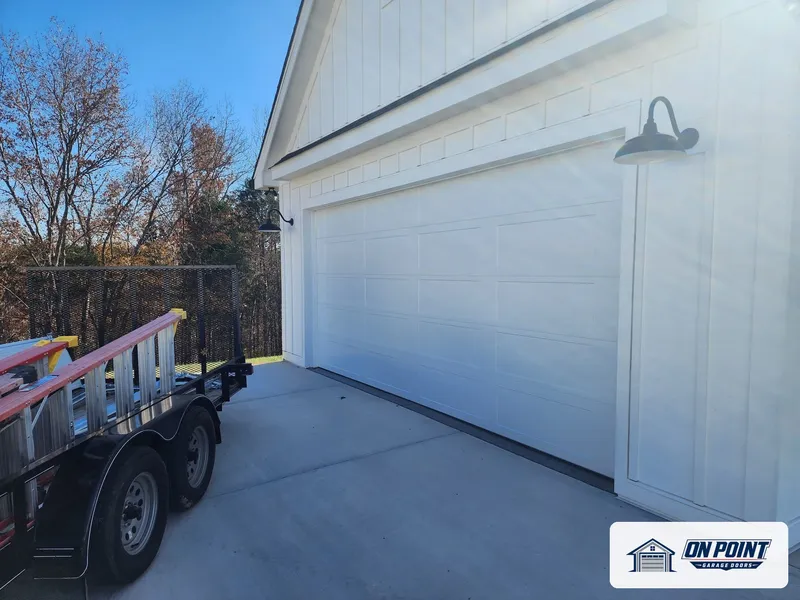
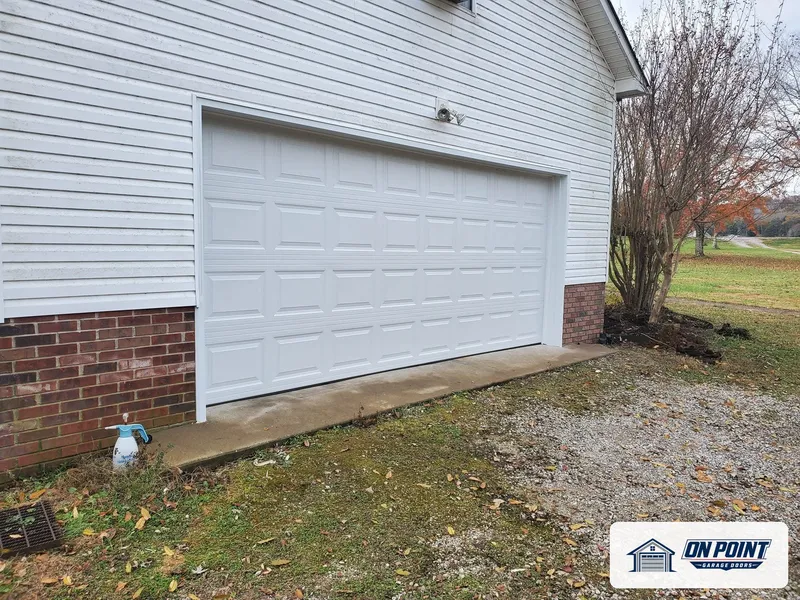
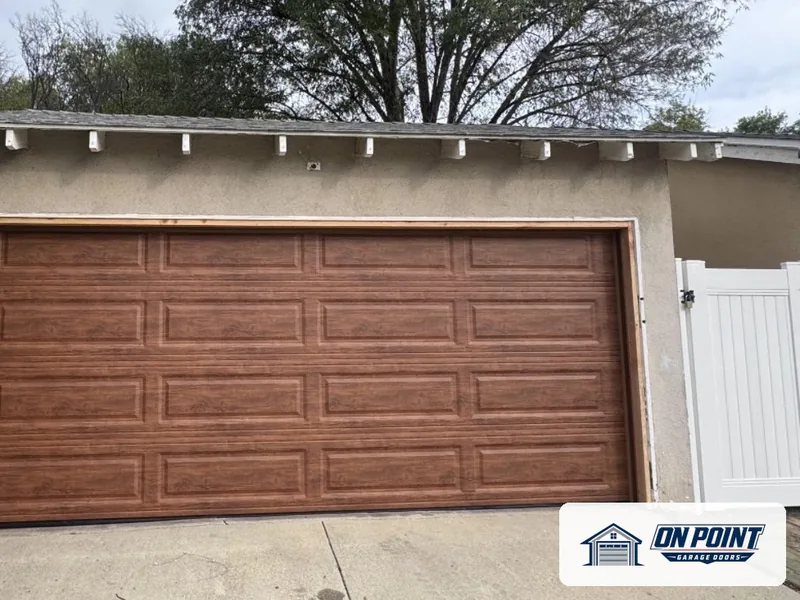
These photos are from our own jobs, with our logo on them.


Short panel doors carry squarish raised shapes, several across each section. Long panel doors stretch each shape into a wide rectangle, so the same section shows fewer of them. Both are usually stamped into steel and both come in raised or flatter recessed versions, smooth or with a woodgrain texture. The structure behind the face is the same, so the choice is mostly about the look.
On a two-car door, a short panel pattern shows roughly twice as many shapes across each section as a long panel pattern does. Stack the sections and a short panel door becomes a grid of many small squares, while a long panel door reads as a few calm horizontal bands. Neither is better. One gives texture, the other gives length.
Long panels underline width. They suit ranches, split levels and other low houses with long rooflines, and they help a wide garage look settled rather than busy. Short panels have a more vertical, traditional rhythm that sits well on colonials, capes and older brick fronts where windows are tall and divided. When unsure, look at the windows on the house and let the door follow their shape.
On a narrow single door, long panels can look stretched and sparse, with only a couple of shapes per section. Short panels give a single door a fuller, more balanced face. On a broad double door the logic often flips, and long panels keep the large surface from turning into a checkerboard. Two single doors side by side can go either way, depending on the space between them.
Window inserts are sized to the panel pattern. Short panel doors take small square or arched lites, one above each shape, while long panel doors take long rectangular lites. A window design you love may exist on only one pattern, so if windows matter, choose them first and let them decide the panel style.
Every raised edge throws a small shadow, so a short panel door shows more lines and more texture, especially in low morning or evening light. Dark colors soften that pattern, light colors sharpen it. A long panel door in a dark tone can look almost modern, while a white short panel door is the classic suburban look many people picture first.
When one of two doors is being replaced, the new door should match the old one's pattern, color and section heights, or the front will look patched. On attached row houses and semi-detached homes, a door that echoes the neighbor's pattern keeps the row tidy, even when the color is different. We note what sits beside the opening before suggesting a style.
Raised edges break up the surface, so a small ding inside a short panel is harder to spot than the same ding on the larger flat field of a long panel. Neither pattern stops a hard hit. A thicker skin or an insulated sandwich section does far more for dent resistance than the shape stamped into the face.
A replacement section has to match the maker, the line, the pattern and the height of the others. A short panel section will not pass in a long panel door, and lines are retired over time. Keeping a record of the maker and model, or a photo of the label inside the door, makes a single-section repair far more likely when the day comes.
If neither squares nor long rectangles feel right, one of these may suit the house better.
We bring samples of both patterns, hold them against the house and show photos of similar fronts. We also measure the opening, headroom and side room so the door you choose can actually be ordered for the space. Then the pattern, color, windows, springs and track go on a written estimate.
Both are very common. Short panels are the traditional look on many older homes, and long panels are widely chosen for wide doors and low houses.
The pattern itself makes little difference to strength. The steel thickness and insulation decide how sturdy the door is.
It is possible, but two different patterns side by side usually look unplanned. Most owners match them.
It depends on the window shape you like. Square and arched lites pair with short panels, long rectangular lites with long panels.
Yes. We bring samples of both patterns, measure the opening and write up the door you prefer in plain terms.
Across Brooklyn, Queens and Long Island, tell us what the door is doing and we set a visit that fits your day.
Free estimate, call (929) 429-2429.
Tell us what the door is doing and we will give you an honest arrival time. The estimate is free.
Easier to explain by phone? Call (929) 429-2429.
Tell us what the door is doing. The estimate is free either way.