Takes 30 seconds. We call you back to set a time.
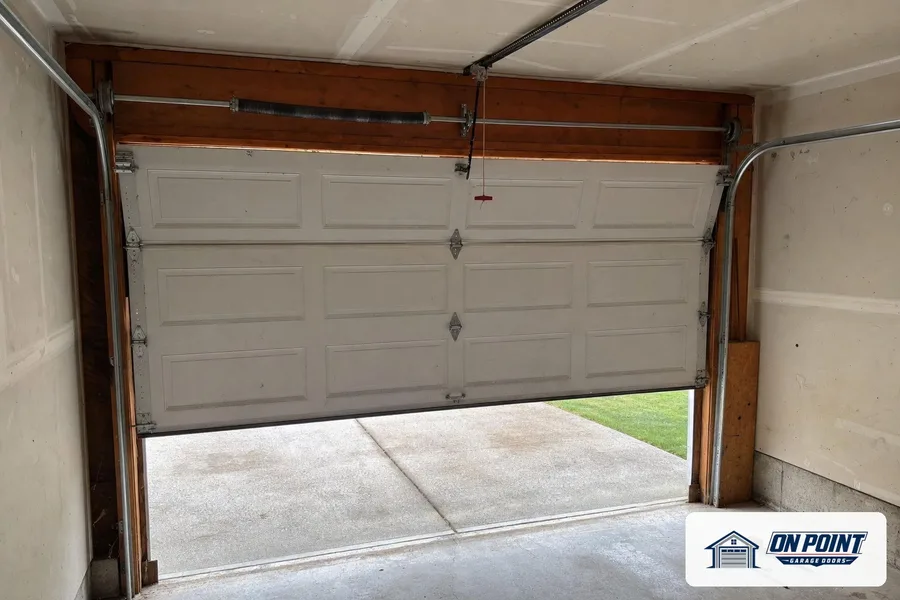
When a garage door closes with a gap under one corner, lifts one side before the other, or looks tilted when it is partly open, it is telling you that the two sides are no longer carrying the same load. That is more than a looks problem. An uneven door strains its rollers, hinges and opener, can jump out of its tracks and, in the worst case, can drop on one side. Free estimate at (929) 429-2429.
By Sean Cohen, owner, On Point Garage Doors · Updated
These photos are from our own jobs, with our logo on them.


A door stays level because both lift cables wind onto their drums at the same rate and the springs hold the same force on each side. The tracks on both sides are set parallel, and the floor under the door is reasonably flat. When any one of those changes, the door tilts.
If the door looks level when it is partly open but leaves a gap at one corner when closed, the floor may be the cause. Many older garages have slabs that settled or cracked over the years. A thicker or taller bottom seal can close that gap.
If the door tilts when it moves, or one side lifts first, the problem is in the cables, springs, drums or tracks, and it needs attention before it gets worse.
Running an uneven door twists it every trip. Rollers on the high side pull against the track, hinges crack, and the low side can catch and jam. Openers sense the strain and stop or reverse, which looks like an opener problem but is not. A door that keeps being forced can come out of its tracks completely.
If a cable looks loose or a spring looks broken, do not move the door by hand, and do not disconnect the opener. Keep clear and call.
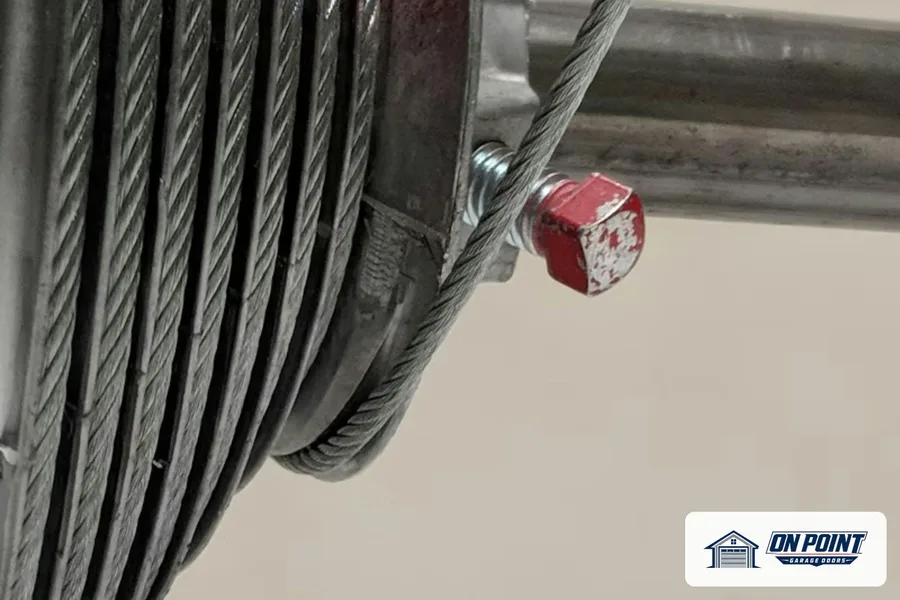
The most common reason a door goes uneven is a cable problem: one cable rusted and stretched, frayed at the bottom bracket, or slipped off its drum. Cables are replaced in pairs, and worn drums are replaced with them, so both sides wind evenly again.
On doors with two springs, one breaking leaves the door lifting on one side. Both springs are replaced together and sized to the door's weight, then the door is balanced. On doors with extension springs, a stretched spring or a broken pulley has the same effect.
Tracks bent by a car or a bin, or brackets that have worked loose from the wall, change how one side of the door moves. The tracks are set parallel and plumb again, bent sections are straightened or replaced, and brackets are fastened back into solid framing.
The technician looks at the door closed and partly open, checks both cables, drums, springs, bearings, rollers, hinges and tracks, and checks the floor. With the cause found, it is fixed, the door is balanced and run several times, and the opener's force and the safety reverse are tested.
You get a clear explanation and a free estimate before any work starts.
A bump from a bumper can shift a track or bend the bottom section enough to make the door sit crooked. After any impact, the door is checked before it runs again, because a bent section can also crack hinges higher up the door.
On older detached garages, the jambs and header may have shifted over time, so the opening itself is out of square. The door can be adjusted only so far. When the frame is the problem, it is straightened or rebuilt first so the door can close evenly and seal.
A yearly tune-up checks cable wear, drum condition, spring condition and track alignment. Catching a frayed cable or a tired spring early is a small repair; waiting until the door drops is a bigger one.
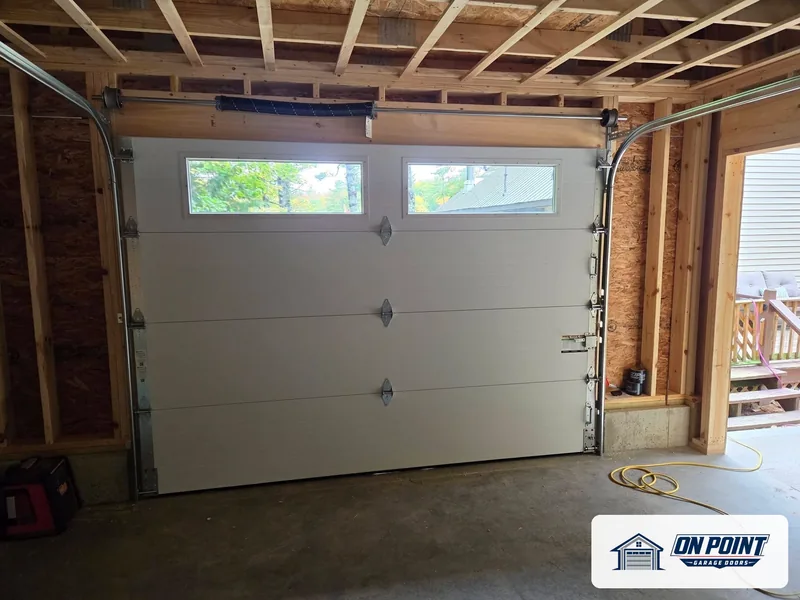
Wide doors for two cars are the most likely to go uneven, because the load is spread across a long span and any difference between the two sides shows. Struts across the sections keep a wide door stiff, and both cables and springs have to be matched closely so the door rises level.
Usually a cable problem, a broken spring on a two-spring door, a slipped drum or a bent track. A sloped floor can also leave a gap at one corner.
No. It strains the door and can make it jam or come off track. Stop using it and call.
Yes. If the door is level when open but leaves a corner gap when closed, a taller bottom seal often fixes it.
Yes. They wear together, and new pairs keep the door lifting evenly.
Yes. You see the cause and the fix before any work starts.
Across Brooklyn, Queens and Long Island, tell us what the door is doing and we set a visit that fits your day.
Free estimate, call (929) 429-2429.
Tell us what the door is doing and we will give you an honest arrival time. The estimate is free.
Easier to explain by phone? Call (929) 429-2429.
Tell us what the door is doing. The estimate is free either way.