Takes 30 seconds. We call you back to set a time.
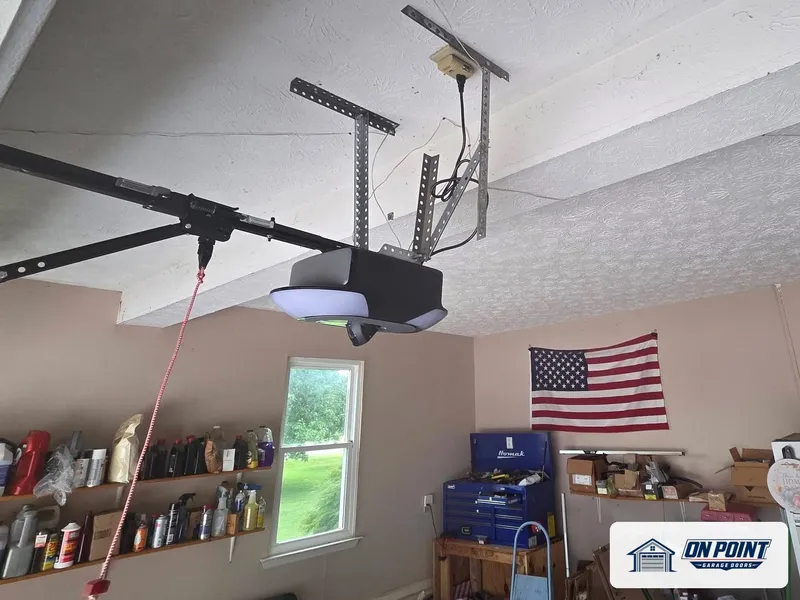
A standard opener hangs from the ceiling in the middle of the garage, with a rail running back from the door. In many garages here there is no room for that: the ceiling is low, there is a beam or a duct in the way, the door uses low-headroom track, or the owner wants the ceiling for storage racks or a car lift. There are good ways to automate those doors, and the right one depends on what is above your door. Free estimate at (929) 429-2429.
By Sean Cohen, owner, On Point Garage Doors · Updated
These photos are from our own jobs, with our logo on them.


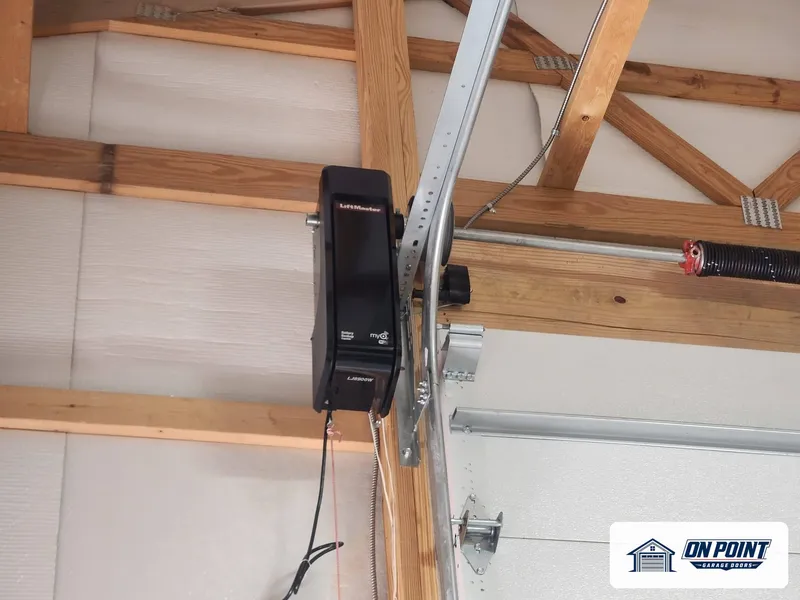
Wall-mounted openers sit beside the door and drive the torsion spring bar. Because there is no rail or motor on the ceiling, they free the whole space above the car for storage, a lift or simply headroom. They are also very quiet, which suits garages under bedrooms.
They need a torsion spring system to mount on, which most doors here have. Doors with extension springs can often be converted.
Many row houses and older homes have only a little space between the top of the door and the ceiling. Those doors often use special low-headroom track. A ceiling opener may not fit at all, and a wall-mounted opener is usually the answer.
Overhead storage racks and car lifts take the space a ceiling opener needs. A wall-mounted opener moves the motor out of the way and leaves the ceiling clear. It is the most common reason owners choose one.
In basements turned into garages and in garages under living space, beams, ducts and pipes often cross the ceiling right where a rail would go. The technician measures the whole path and recommends a setup that clears every obstacle.
Any opener depends on a balanced door. Before a wall-mounted or low-profile opener goes in, the springs, cables, bearings and rollers are checked and the door is balanced. Wall-mounted openers in particular work best on a spring bar in good condition.
Wall-mounted and low-profile openers come with the same safety sensors, rolling-code remotes and phone control as standard ones. Many also include battery backup and bright lights. Remotes, keypads and the app are set up during the install.
Some garages go the other way: a tall ceiling with a high-lift track that runs the door up the wall before turning. Wall-mounted openers work well there too, because they drive the spring bar regardless of how the track is shaped.
The technician measures the headroom and side room, checks the spring system and balances the door, removes the old opener if there is one, mounts the new opener solidly, wires the sensors and wall control, sets the travel and force, pairs remotes and the app, and tests the safety reverse.
The technician looks at your ceiling, the door, the track and what you want to use the space for, and explains which options fit, with a free estimate for each.
In many row houses here, the garage sits under the house with the living room or a bedroom right above. Ceilings are low, and every sound from the opener carries upstairs. A wall-mounted opener solves both: it needs no ceiling space and it is one of the quietest options.
Some homes have a garage at basement level under the house, reached by a ramp. Those garages often have beams, ducts and pipes crossing the ceiling. Measuring the clear space along the whole path of the door, not just above it, is what decides which opener fits.
Wall-mounted openers need a torsion spring bar to drive. If your door has extension springs along the tracks, it can often be converted to torsion springs, which also gives smoother, more balanced lifting. The conversion and the opener are done together in one visit.
Because a wall-mounted opener sits beside the door rather than in the middle of the ceiling, the garage light it carries is off to one side. Many owners add a separate ceiling light or a motion light so the whole garage is bright when the door opens.
Low-ceiling setups get the same remotes, outside keypad and phone control as any other opener. Car buttons are paired, and family members are added in the app before the technician leaves.
Usually a wall-mounted opener, which mounts beside the door and needs nothing on the ceiling.
Yes. A wall-mounted opener leaves the ceiling clear for racks or a car lift.
They need a torsion spring system, which most doors have. Extension spring doors can often be converted.
Yes. They are among the quietest openers, which suits garages under bedrooms.
Yes. You see the options that fit your garage before any work starts.
Across Brooklyn, Queens and Long Island, tell us what the door is doing and we set a visit that fits your day.
Free estimate, call (929) 429-2429.
Tell us what the door is doing and we will give you an honest arrival time. The estimate is free.
Easier to explain by phone? Call (929) 429-2429.
Tell us what the door is doing. The estimate is free either way.