Takes 30 seconds. We call you back to set a time.
A new garage door opener is one of the most noticeable upgrades a house can get. It is quieter, safer and easier to use, and many now connect to your phone. Knowing how the visit goes helps you plan the day, clear the right space and get the most out of the new unit. Here is the order we follow, from the first look at the door to the last test before the technician leaves. Free estimate at (929) 429-2429.
By Sean Cohen, owner, On Point Garage Doors · Updated
These photos are from our own jobs, with our logo on them.


When you book, tell us what kind of opener you have now, whether you want a chain, belt or wall-mounted unit, and whether you want phone control. Mention anything unusual: a low ceiling, a beam in the way, a garage with no outlet near the ceiling, or a garage far from the house where the Wi-Fi is weak.
That way the right unit, rail and mounting parts arrive with the technician.
The technician needs room to work in front of the door and under the spot where the opener hangs. Moving the car out, along with bikes, shelves and anything stored high near the ceiling, makes the visit go smoothly. If the garage is packed, a clear path to the door and the outlet is enough.
An opener can only be as good as the door it moves. Before anything goes up, the technician disconnects the old opener and checks the door by itself: the springs, the cables, the rollers, the hinges and the tracks, and whether the door stays put when stopped halfway.
A door that is heavy or out of balance will wear out a new opener quickly. If the springs are tired or a roller is broken, you hear about it before the new unit goes in, with a free estimate for the fix.
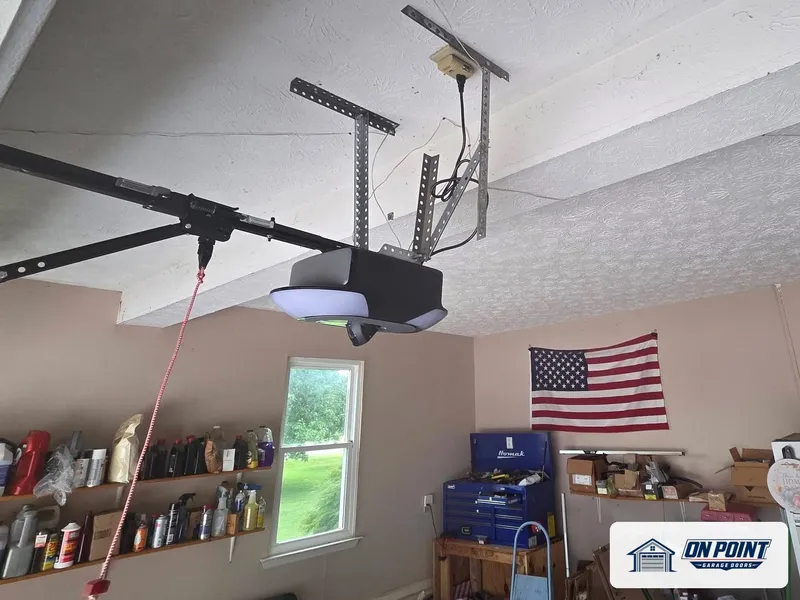
The old opener, its rail, its wall button and its sensors come down. The mounting points on the ceiling and the header above the door are checked, because a bracket bolted into weak or cracked wood is a common reason old openers sag and rattle. Old units and their parts leave with the technician.
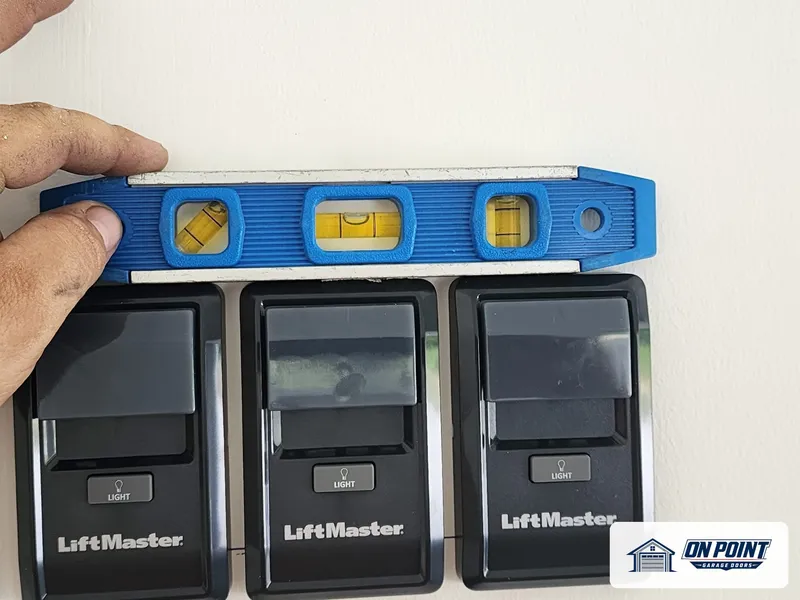
New photo eyes are mounted near the floor on each side of the door, lined up with each other, and their wires are run neatly along the wall and up to the opener where bins and feet will not snag them. The wall control is mounted out of reach of small children, and any old wiring that is damaged or loose is replaced.
The opener is taught where the door stops at the top and at the floor, and how much force it may use. Too little and the door stops for no reason; too much and it will not reverse gently when it meets something. The technician runs the door several times and fine-tunes these settings for your door.
Every remote you want to keep is paired, and old ones that are lost or no longer used are cleared from memory. An outside keypad is mounted and coded if you want one. Car buttons in the mirror or visor are paired too.
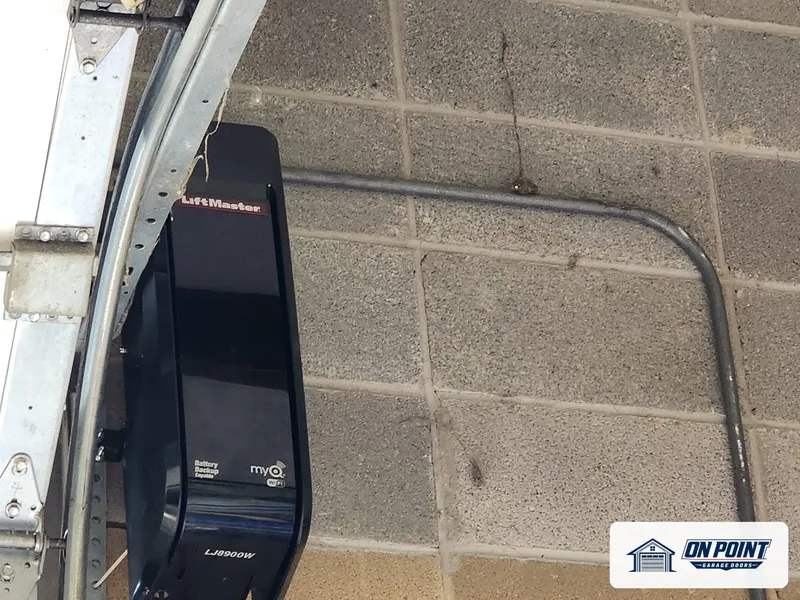
For smart openers, the unit is connected to your Wi-Fi and the app is set up on your phone, so you can see whether the door is open, get alerts and close it from anywhere. If you share access with family, we show you how to add them.
Many new openers include a backup battery that keeps the door working during a power outage. The technician shows you where it is and what its warning beep sounds like. The opener lights are set, and if you want motion sensing or a light that stays on longer, that is turned on as well.
Before leaving, the technician shows you the wall control features, lock mode, the light settings and the app, and answers any questions. You get the manual and know who to call if something seems off later. The work area is left clear, with the old opener gone.
The door is checked on its own. Springs, cables, rollers and balance must be right, or the new opener will wear out early.
Someone should be there at the start to show the garage and at the end to learn the remotes, app and safety features.
Yes. A low-headroom rail or a wall-mounted opener beside the door works where a ceiling unit will not fit.
Usually not. New remotes come with the opener, and the technician pairs them along with car buttons and keypads.
Yes. You see the opener options and the full plan before any work starts.
Across Brooklyn, Queens and Long Island, tell us what the door is doing and we set a visit that fits your day.
Free estimate, call (929) 429-2429.
Tell us what the door is doing and we will give you an honest arrival time. The estimate is free.
Easier to explain by phone? Call (929) 429-2429.
Tell us what the door is doing. The estimate is free either way.