Serving Brooklyn, Queens and Long Island(929) 429-2429Open six days a weekFree estimateGuaranteed work
On Point Garage Doors
Open 24 hours Sun-Thu, Fri until 5 pm Free estimate Springs, openers, cables We come to you
Emergency?Call nowBook free estimate
New York, NY - open six days a week

Garage door opener light blinking: what it is telling you

Free estimateSame-day serviceCommon parts on board
  • Free estimate
  • Same-day service
  • Common parts on board
Emergency garage door repair★★★★★ 5.0 on Google · 42 reviews

Book your free estimate

Takes 30 seconds. We call you back to set a time.

Or just call (929) 429-2429 and talk it through.

Home › Garage Door Opener Light Blinking

Many openers use their light, or a small indicator on the motor unit, to report problems. A blinking light that will not stop, often with a door that refuses to close, most commonly means the safety sensors cannot see each other. Some openers also blink in patterns to point at a wiring, travel-limit or motor fault, and the meaning depends on the brand and model. Free estimate at (929) 429-2429.

By Sean Cohen, owner, On Point Garage Doors · Updated

Real jobs. Real photos.

These photos are from our own jobs, with our logo on them.

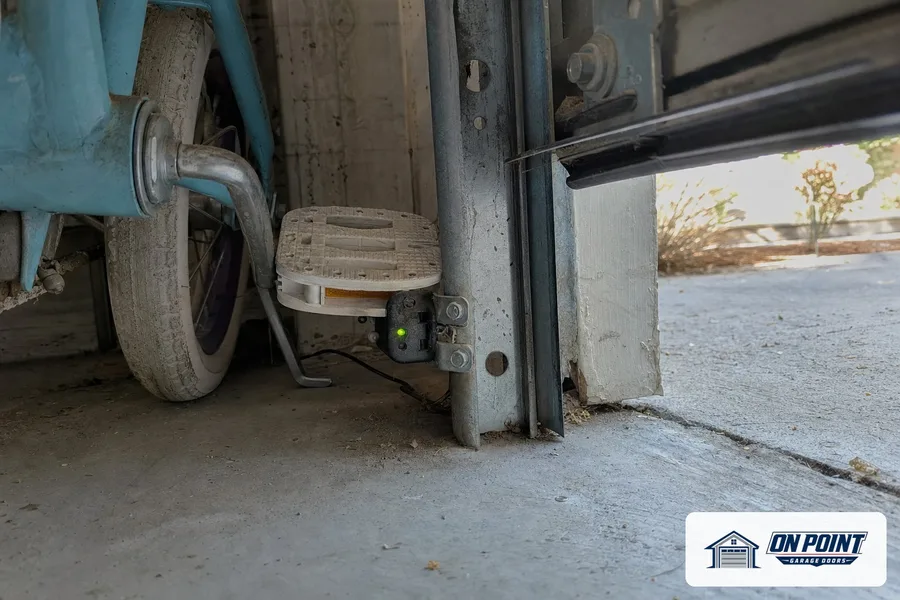
Safety sensor on the track, from one of our jobs
Safety sensor on the track
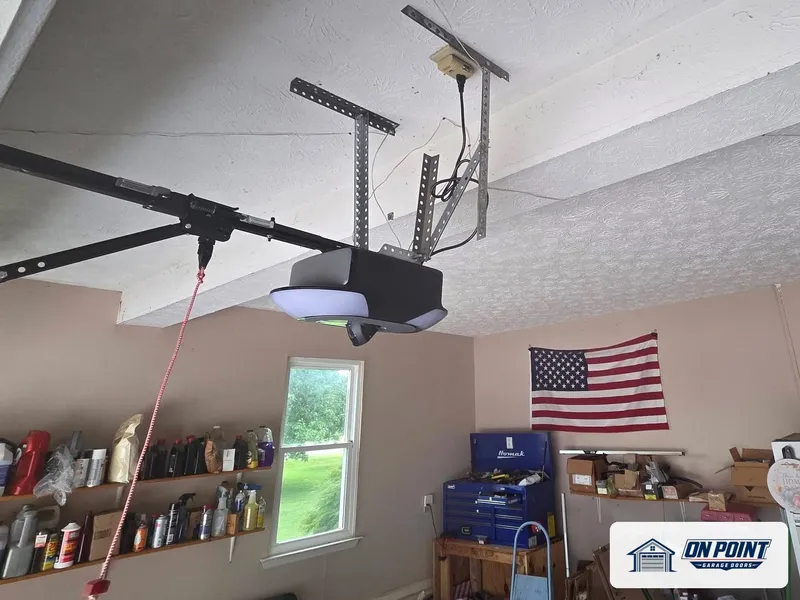
Ceiling opener, from one of our jobs
Ceiling opener
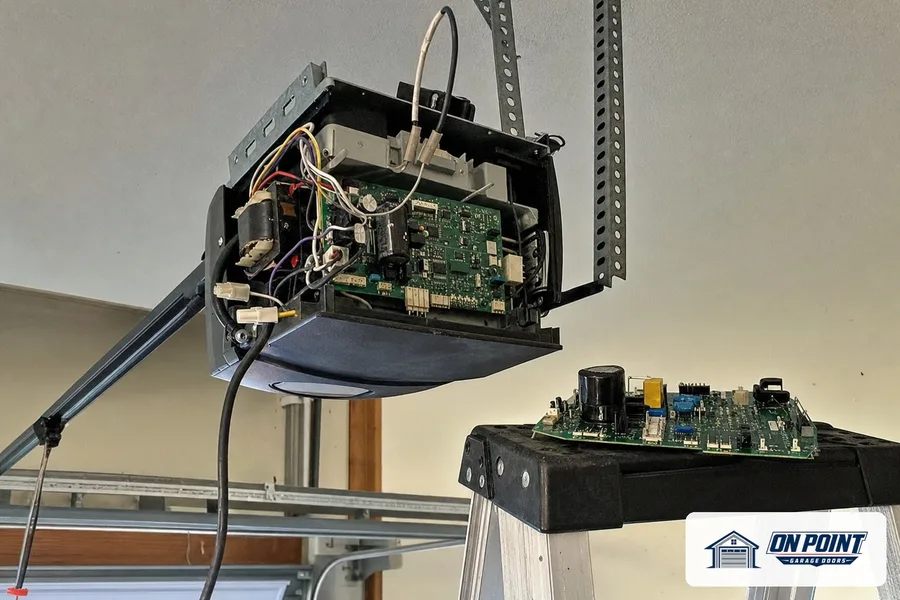
Opener logic board, from one of our jobs
Opener logic board

The most common reason

On many openers, a light that flashes when you try to close the door means the safety sensors near the floor are blocked, out of line, dirty or not connected. The opener refuses to close the door because it cannot confirm the opening is clear.

The door may still close if the wall button is held down, which is a sign the sensors are the issue.

Other things a blinking light can mean

  1. Sensor wiringA cut, pinched or shorted wire between the sensors and the opener.
  2. Travel limitsThe opener lost track of where the door should stop.
  3. Force or motion faultThe opener sensed the door was too hard to move, often a spring or track problem.
  4. Wall control or wiringA short in the button or its wire.
  5. Lock modeSome wall controls have a lock setting that stops remotes from working, sometimes shown by a flashing light.
  6. Internal faultThe board or motor is reporting a failure.

Brand patterns differ

Different opener makers use different flash patterns, and the patterns change between models and years. A count of flashes on one opener means something else on another.

The technician reads the pattern for your exact model rather than guessing, and confirms it by testing the part it points to.

What you can safely check

Beyond that, leave the wiring, settings, springs and cables to a technician.

What the technician does

He reads the opener's fault pattern, checks the sensors, their alignment and wiring, the wall control, the travel and force settings, and the door's balance. The cause is fixed, the limits are set, and the safety reverse is tested.

If the opener's board is failing and the unit is old, you hear whether a repair or a new opener is the better value.

Why not just hold the button down

Holding the wall button to force the door closed bypasses the safety sensors. It gets the door shut, but the door will not stop for a person, a pet or a car. It is a temporary step at most, and the sensors should be fixed promptly.

When the door also reverses

A blinking light together with a door that reverses on its own usually means the opener sensed resistance, not the sensors. A door that binds in a bent track, a dry roller or a weak spring feels heavy, and the opener backs off to protect itself.

In that case the door is fixed first. Turning up the force setting to get past it hides the problem and weakens the safety reverse.

When the light blinks after a power outage

Some openers flash after power comes back, and some need their travel limits set again after a surge. A surge can also damage the sensors or the board.

If the blinking started right after a storm, the board, the power supply and the sensor wiring are checked first.

Smart openers and app alerts

Phone-connected openers often report the same faults in the app, sometimes in plain words. If your opener has an app, the message there helps the technician narrow it down before the visit.

The app can also show whether a schedule or a shared user is moving the door, which looks like a fault but is not.

Lights that stay on or will not turn off

Some openers keep their light on for a while after the door moves, and some have a motion sensor that turns it on when you walk in. A light that never turns off, or flickers constantly, can point to a failing light socket, a wall control set to the wrong mode or a board fault, and those are checked too.

Keypads that blink

Outside keypads often blink when their battery is low or when the code is wrong. A keypad that blinks but does not open the door may need a new battery or to be set up again with the opener.

Questions we get asked

Why is my garage door opener light blinking?

Most often the safety sensors are blocked or out of line. Some openers also blink in patterns to report wiring, limit or motor faults.

What do the number of flashes mean?

It depends on the brand and model. The same count can mean different things on different openers, so the pattern is read for your exact unit.

Why will my door only close if I hold the button?

Holding the button bypasses the sensors on many openers. It means the sensors are not working properly.

Can a blinking light mean the opener is broken?

Sometimes. It can point to a board or motor fault, but sensors and wiring are far more common.

Is the estimate free?

Yes. You hear what the opener is reporting and how to fix it before any work starts.

Booking takes a minute

Across Brooklyn, Queens and Long Island, tell us what the door is doing and we set a visit that fits your day.

Free estimate, call (929) 429-2429.

Not sure what is wrong? We will come and look

Tell us what the door is doing and we will give you an honest arrival time. The estimate is free.

Easier to explain by phone? Call (929) 429-2429.

Two minutes to a free estimate

Tell us what the door is doing. The estimate is free either way.

Or just call (929) 429-2429 and talk it through.

The other six things that go wrong