Takes 30 seconds. We call you back to set a time.
These photos are from our own jobs, with our logo on them.


Craftsman opener repair in Centereach and across Brookhaven: heads that grind or stall, remotes that stopped answering, and doors that reverse before they close. A free estimate comes before any repair.
By Sean Cohen, owner, On Point Garage Doors · Updated
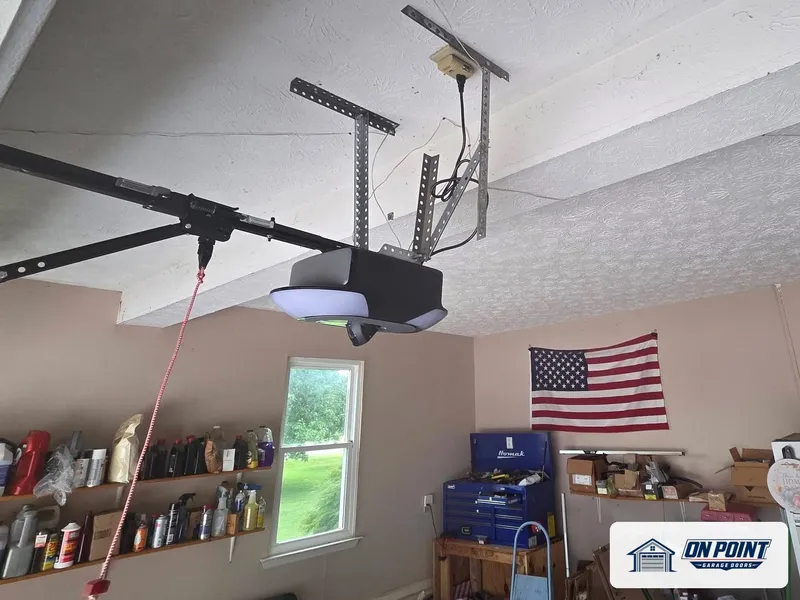
If the opener was already hanging when you bought the place, there is often no manual in the drawer, nobody knows how many remotes were ever paired to it, and the only hint of its age is the dust on the cover.
None of that slows the repair down. The label on the back of the head carries the model number, and the model number, not the name on the cover, decides which gear, board or sensor will fit.
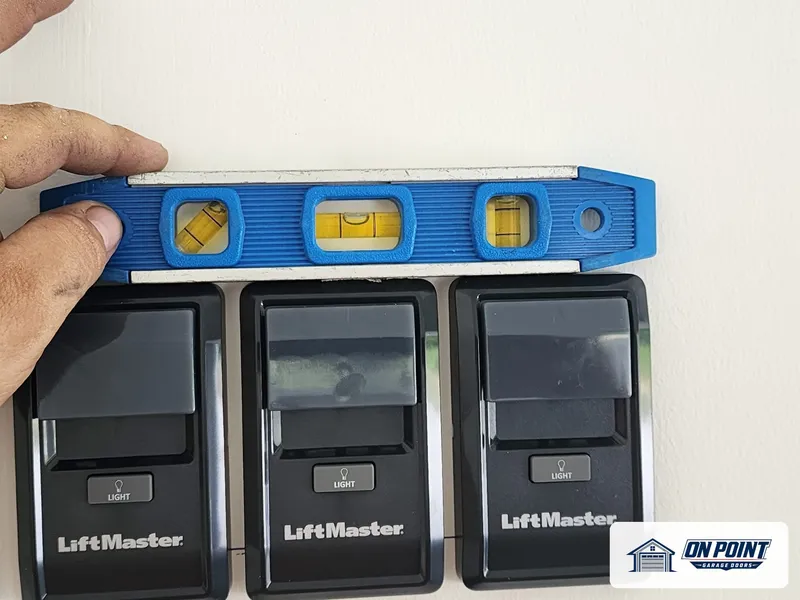
Older heads were often hung with whatever wall control came in the box, and the wiring may have been extended or patched since. The technician follows the wire from the button to the head before trusting it.

Openers are only one part of the work. The links below cover the rest, from springs and cables to gates.


From here to the city line, Long Island, Brooklyn and Queens are all on our list. The technician who finds the fault is the one who explains it, and the estimate is in your hands before any work begins.
Craftsman is the name on this page, but the work is the same for LiftMaster, Chamberlain, Genie, Linear and Marantec heads, and for the doors under them, from Wayne Dalton and Amarr to Clopay.
Brooklyn and Queens, then east across Nassau and Suffolk. To check a particular street, look it up on the service areas page.
Every home opener is built to back off when the closing door touches something, and to stop when the beam between the two sensors near the floor is broken. Those two behaviors are what keep a door from coming down on a child, a pet or a bumper.
Before the technician packs up, both are tested with you watching. A door that fails either test is not handed back as finished, whether the call was about the opener, a spring or a cable.
Most Craftsman heads give a few warnings before they stop altogether, and each warning points somewhere different.
Grinding as the door lifts, with the motor running and the door barely moving, is the classic sign of a worn drive gear. A door that drops after starting up can mean the trolley has come loose from the chain or belt.
A door that starts down and then heads straight back up usually means the sensors cannot see each other. The lights on the head can flash a fault pattern as well, and the technician reads that pattern before any part is pulled.
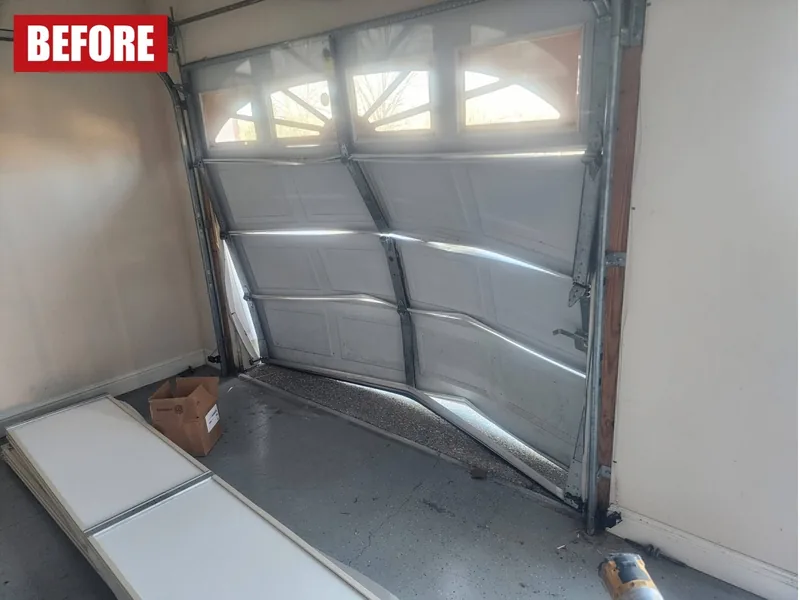
Springs, cables, rollers and hinges wear a little with every trip, and a door that has grown heavy makes any opener labor. That is why the door is part of every opener visit, and you hear about worn hardware even when the opener was the reason for the call.

Chain drives, belt drives and screw drives, older and newer. The model number on the label decides which parts fit; if it belongs to an older line, you hear whether those parts are still made before anything is ordered or changed. Some older Craftsman heads use remotes set with a row of tiny switches inside; they still work, but they are easy to copy, and the technician can explain the newer rolling-code options if security matters to you.
A worn gear, a pair of sensors that have drifted apart, a remote that has lost its pairing, a travel limit that has crept: these are repairs, and they are the usual answer. A cracked housing, a burned-out motor or a board that is no longer made can change that answer, and you are told so plainly.
Nothing is replaced until you have the estimate and have said yes. If a new opener does make more sense, it is sized to your door, with the rail, the sensors, the wall control and the remotes set up together.
First the door, moved by hand with the opener disconnected, to feel whether it is balanced. Then the head: the gear, the trolley, the chain or belt, the board, and the travel and force settings. An opener that has been fighting a heavy door often has its force set too high, and that is put back where it belongs. Then the safety sensors, the wall control and every remote you hand over.
You hear what was found and get the estimate before any part changes. Common Craftsman parts travel with the technician, and the reverse test is the last thing done before the door is handed back to you.
Over the phone, compare the wall button with the remotes for us. If one works and the other does not, that alone narrows the search.
Free estimate; what happens next is your decision.
Tell us what the head is doing and choose a time that suits you. The look and the estimate are both free.
Want to talk it over? Call (929) 429-2429.
Tell us what the door is doing. The estimate is free either way.