Takes 30 seconds. We call you back to set a time.
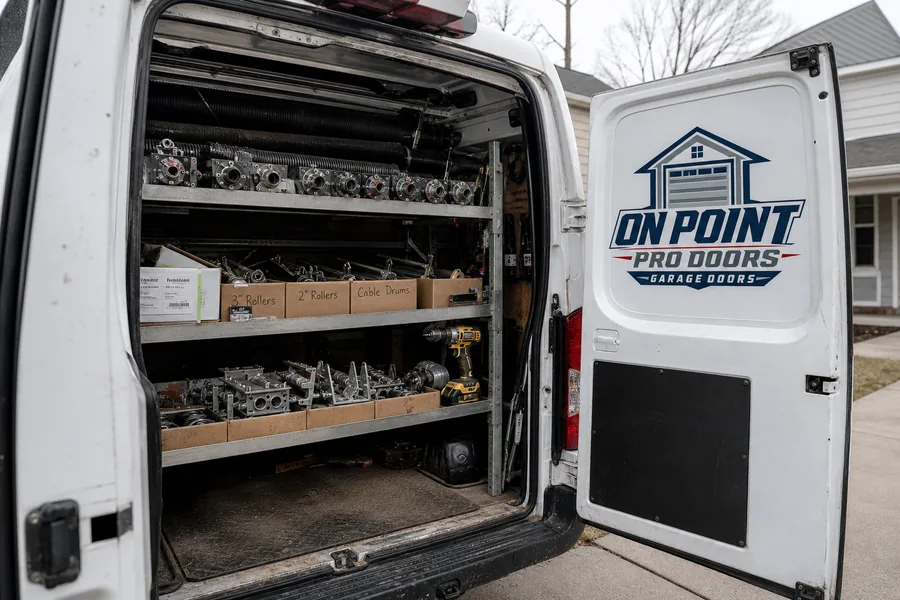
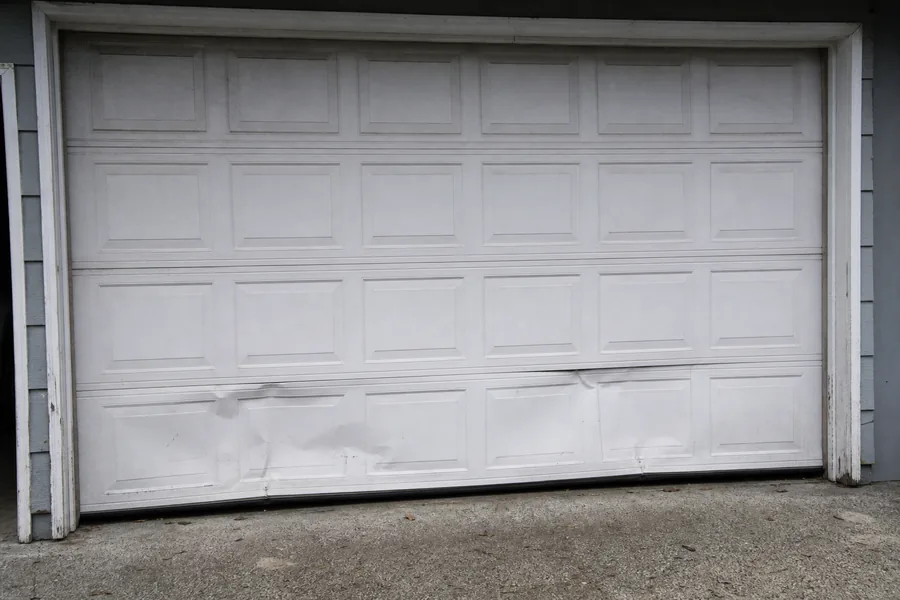
Every photo here is from our own work, with our logo on it.


LiftMaster opener repair in Farmingdale and the towns on both sides of the county line: stripped gears, storm-damaged boards, drifting safety eyes and remotes that stopped pairing. A free estimate comes before any work.
When the garage is attached, the opener is part of the house. A chain drive that clatters, a gear that grinds on the way up, or a door that bangs at the bottom can be heard in the kitchen or the bedroom above, and the noise usually starts well before anything breaks.
That noise is worth a visit. It often means a worn gear, a slack chain, rollers gone dry or a door that has drifted out of balance, and each of those is easier to deal with before it stops the door.

Besides openers, these are the repairs we handle, and the technician carries the common parts for each of them on every call.


On Point Garage Doors repairs doors and openers in Brooklyn, Queens and across Long Island. You deal with the technician who does the work, and you see the estimate before anything is touched.
LiftMaster is the opener this page is about. Genie, Chamberlain, Marantec, Linear and Craftsman heads get the same care, and so do the doors below them, whoever made them.
Nassau and Suffolk, Brooklyn and Queens. The service areas page has every town and neighborhood we cover.
A home opener has two jobs beyond lifting. It has to back off when the closing door touches something, and it has to stop when anything crosses the beam between the sensors at the bottom of the tracks. If either one stops working, a closing door can hurt someone.
Both are tested at the end of every visit, in front of you. If the door fails, the repair is not done yet, no matter what the original call was for.
Each fault has its own symptom, and the symptom usually tells the technician where to look first, long before any part comes out of a box.
A door that stops just short of the floor and goes back up is often an opener working against a door that has grown too heavy, with the force limit doing its job. A sharp knock followed by the door dropping can mean the trolley has come off the chain or belt.
Remotes that all quit together after a power outage may simply have lost their pairing. And lights flashing on the head are a fault code, which the technician reads before swapping anything.
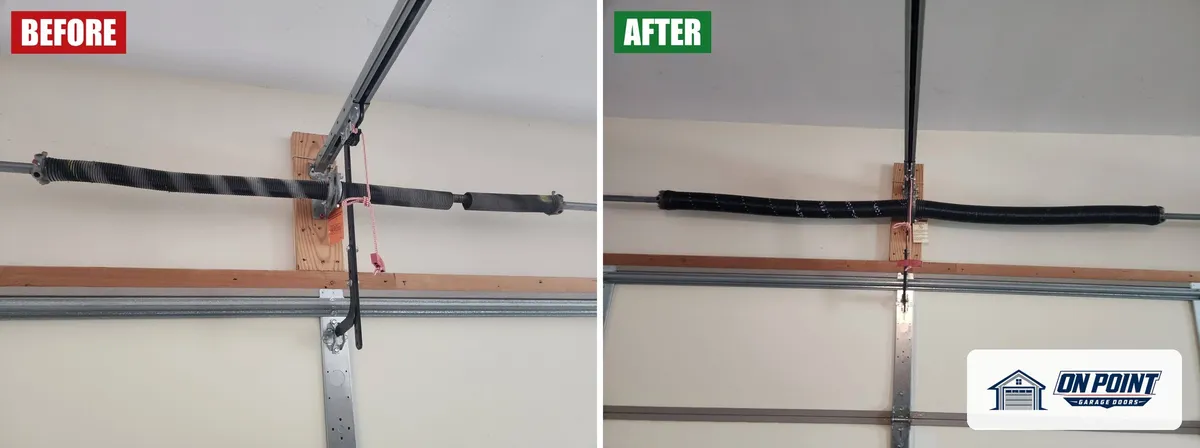
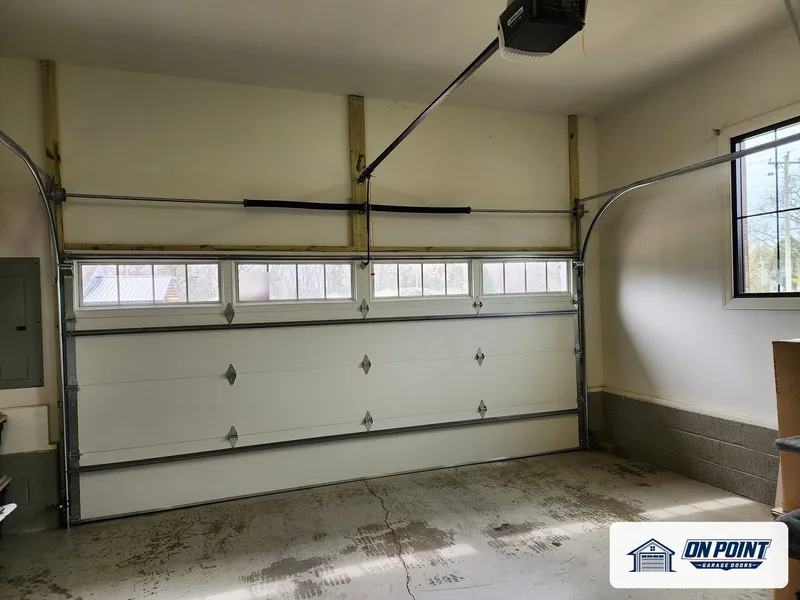
Under the opener, the door's springs, cables, rollers and hinges carry the real weight, and as they wear the opener takes up the slack until something gives. Those parts are looked at on every opener call, and you are shown anything that is wearing.

Chain drives, belt drives and the wall-mount units that hang next to the door rather than overhead, from older fixed-code heads to current models. The common parts travel with the technician; for an older head, you learn whether its parts are still available before anything is ordered.
Call with a short description: what the door does, what it sounds like, and whether the remotes, the wall control and the keypad all behave the same way. That is enough for the technician to bring the right parts.
Free estimate, and no work begins without your yes.
Tell us about the opener and we will find a time that works for you. The estimate is free whatever you decide, and the choice of what gets done is yours.
Easier on the phone? Call (929) 429-2429.
Tell us what the door is doing. The estimate is free either way.
Older LiftMaster chain drives tend to fail in a familiar order. The nylon drive gear wears out once the door has grown heavy, the logic board can take a surge during a summer storm, and the safety eyes drift after a bumper knocks a bracket. The parts for each of those travel with the technician, and each repair starts with a balance check on the door, because a LiftMaster that stripped its gear was usually lifting weight the spring should have been carrying.
An old unit that only takes fixed-code remotes, a motor that has already been replaced once, or a rail that has bent are the cases where a new opener makes more sense than another repair. If the garage sits under a bedroom, a belt drive runs quieter than a chain; in a garage with a low ceiling, a wall-mount unit beside the door clears the space overhead; and for a house that loses power in storms, a battery backup keeps the door working. You hear which of these applies on the visit, and the estimate is free whichever way you go.
Power comes first, with a meter at the outlet, then the logic board, then the drive gear: a LiftMaster that hums without moving usually points at the gear, and one that does nothing at all usually points at the board or the power feeding it. The safety eyes are next, because a door that opens and then refuses to close is most often an eyes problem. Then the opener is released and the door is moved by hand, since a new gear on a heavy door wears out the same way the old one did. Every remote, the keypad and the car's built-in buttons are paired and tested before the technician leaves.
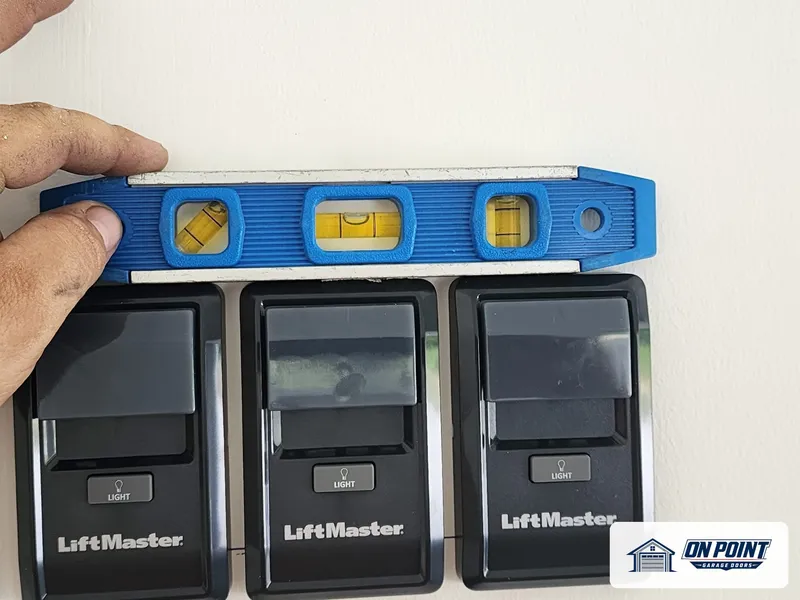
Plenty of opener calls end with a second small job: a remote that only works from the driveway, a keypad that stopped taking its code after a wet winter, or the car's built-in buttons that were never paired. Those are handled on the same visit. The technician identifies which generation of LiftMaster is on the ceiling, pairs every remote in the house, sets a keypad code you choose, teaches the car, and clears the remotes you no longer have, so a previous owner's remote stops working. It saves you a second visit for something small.