Takes 30 seconds. We call you back to set a time.
These photos are from our own jobs, with our logo on them.


Garage door repair in Bellmore for the old capes with a garage out back, the high ranches with the garage under the bedrooms, and the canal houses south of Merrick Road with salt air on every hinge. A free estimate comes before any work.
Older capes often keep a small detached garage behind the house, while the high ranches built later have a garage under the main floor.
The two need very different care: one is usually an old heavy door, the other a busy everyday entrance.
An old detached garage out back may have no power at the door at all, so wiring for an opener is talked through before one goes up.
Many capes have been expanded upward, and the old detached garage was left as it was.
Those doors are often decades old and running on worn springs.
Streets south of the main road sit close to the bay and get salty air and storm water.
Rusted bottom brackets and corroded cable ends are the most common finds there.
Bay-side homes often keep kayaks and fishing gear in the garage, so the door gets heavy use in summer.
Narrow driveways next to the house leave little room, and car contact with tracks is common.
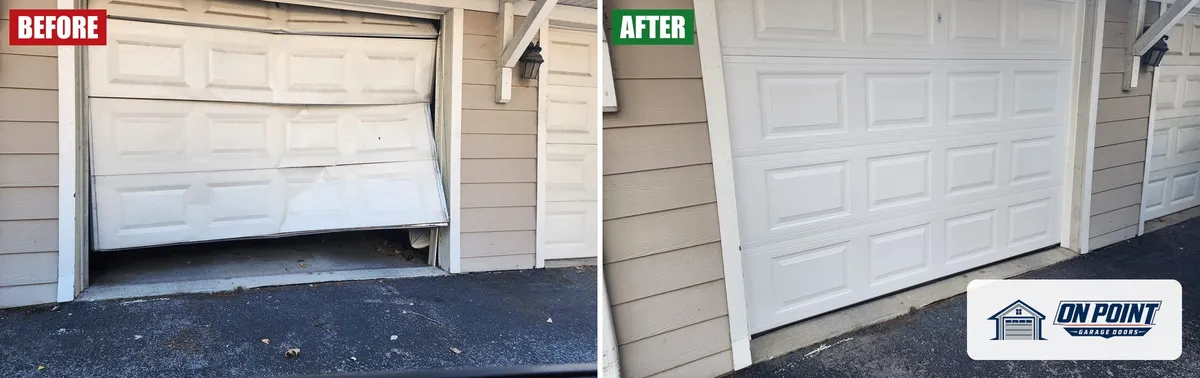
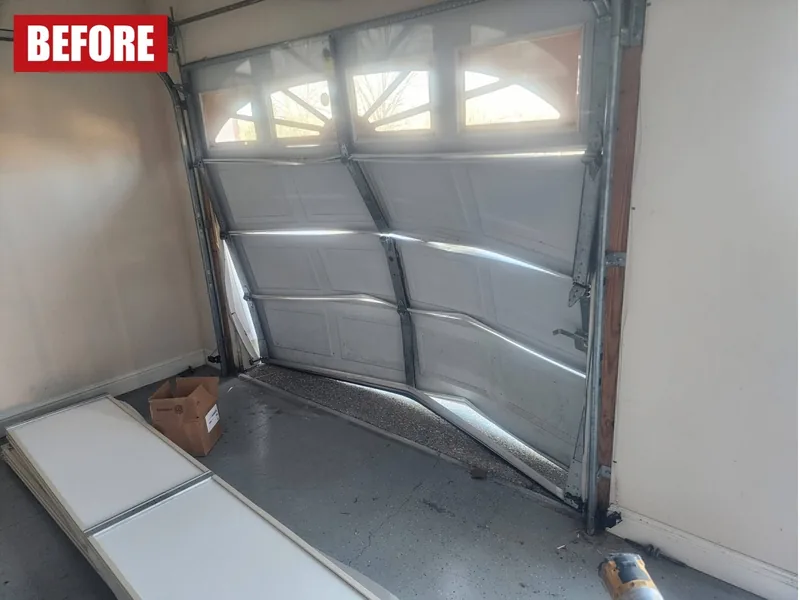
A bottom section creased by a bumper can usually be changed on its own, without a whole new door.
Side springs on old detached doors without safety cables get them added.

Old detached garage or attached high ranch, the door is inspected before it is estimated.


Broken springs. One sharp crack and a door that will not move means a spring has gone; leave it down and call.
On old detached doors, the springs are often long overdue.
An opener that grinds through every lift is usually carrying a door whose springs have gone soft, so the springs get measured before the motor is judged.
High-ranch garages. Opener noise travels up into the bedrooms; belt drives quiet it.
The garage is often the main entrance, so the repair is planned to keep it usable.
Old detached doors. Wood sections gone soft at the bottom and track rusted at the base are the usual finds.
If the frame is soft, you hear that before a new door is hung.
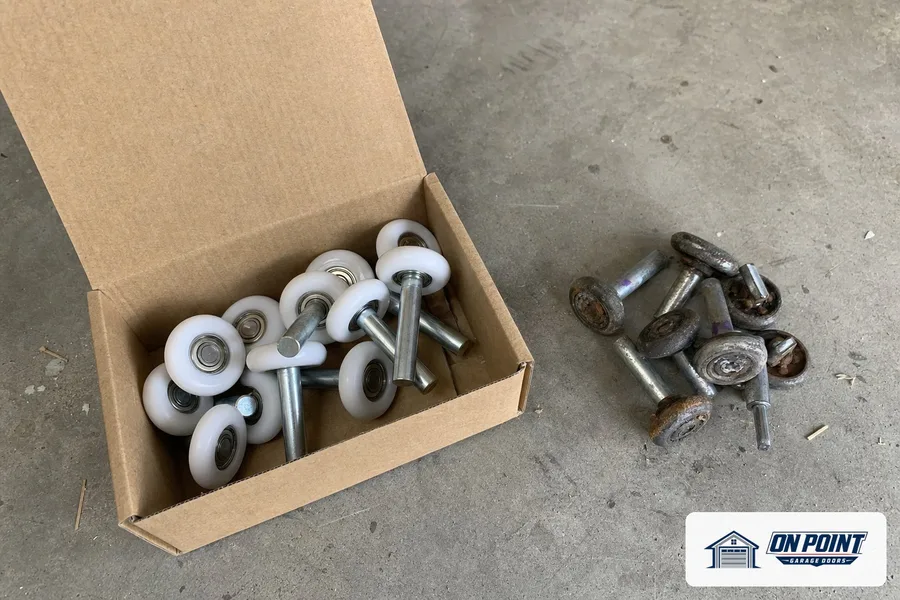
Sealed nylon rollers cut the rattle that carries up into the bedrooms of a high ranch.
Bay-side hardware. Brackets and cable ends eaten by salt air are swapped for coated parts that hold up longer.
Doors that sat in storm water are checked from the floor seal upward, bracket by bracket.
Foam-core steel under a high-ranch bedroom takes the January chill off the floor above.
If a fender or the corner of a boat trailer has caught the door, it stays shut where it is until our man sees it.
Tight driveways beside the house mean the bottom of the track is what a mirror or fender usually finds.

The canal streets below Merrick Road and the blocks up past Sunrise Highway are all on our regular Nassau route, along with Queens and Brooklyn.
Anything you mention, attached or out back, near the water or not, is passed on to the technician before he sets out.
A car sealed in the garage, or a door that will not drop with a nor'easter coming up the bay, jumps ahead of checkups.
Winter. Cold finishes off old springs, especially on detached garages that sit unused for weeks.
On icy mornings a door glued to the driveway by frozen rubber should be left alone until the sun frees it, never yanked by the motor.
Spring. After the storms, rust shows at the bottom of bay-side doors.
Summer. Boats, kayaks and beach chairs go in and out all season, and the door on a canal house can run more in July than all winter.
Fall. Before winter, have the springs, cables and seals checked on both kinds of garage.
He looks over the garage itself first, then goes through springs, cables, rollers, track and the opener in turn.
He shows you the rusted bracket or the frayed cable itself, and writes a free estimate with every part named.
Parts are matched to your door, with coated hardware on the streets nearest the bay.
Most common parts are already on the truck.
A board is laid across the threshold and the door has to bounce off it before the job is signed off.
Worn hardware leaves in his truck, and the driveway is clear for the car again.
You watch it open and close once more before he drives off.
Visits are set around your household's routine, with a call ahead.
In a high ranch the garage is the front hall for most families, so that door is made usable early in the visit.
You choose what gets repaired.
A few parts carry every garage door, and on old detached garages they are often original.
The spring carries the door's weight; when it breaks, the door should stay down.
Both springs are checked when one has failed.
Cables rust at the bottom brackets and fray up at the drum, and both sides are renewed together.
A drum scored by old cable is changed with it, so the new cable lasts.
Bins and stored gear near the door knock the sensors out of line.
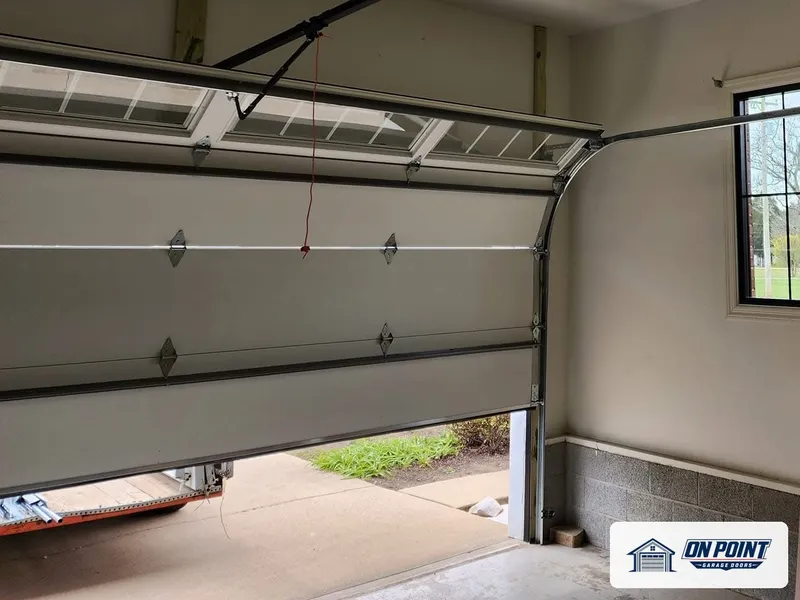
Bottom track rusted through by salt and standing water is cut out, and new track goes in so the rollers run smooth.
Track bent by a fender or a trailer is trued before the door is run again.
If the old chain unit is worn past saving, he lays out the belt-drive and smartphone models side by side so you can pick.
Storms off the bay knock the power out often enough that an opener with a backup battery earns its keep here.
Mention if the house sits on a canal, whether the garage is tucked under or out back, and how the door misbehaves.
The estimate is always free.
Pick a day around the commute or the boat schedule; the estimate on the door is free.
Call us at (929) 429-2429.
A line or two about the door is plenty for a free estimate to come your way.