Takes 30 seconds. We call you back to set a time.
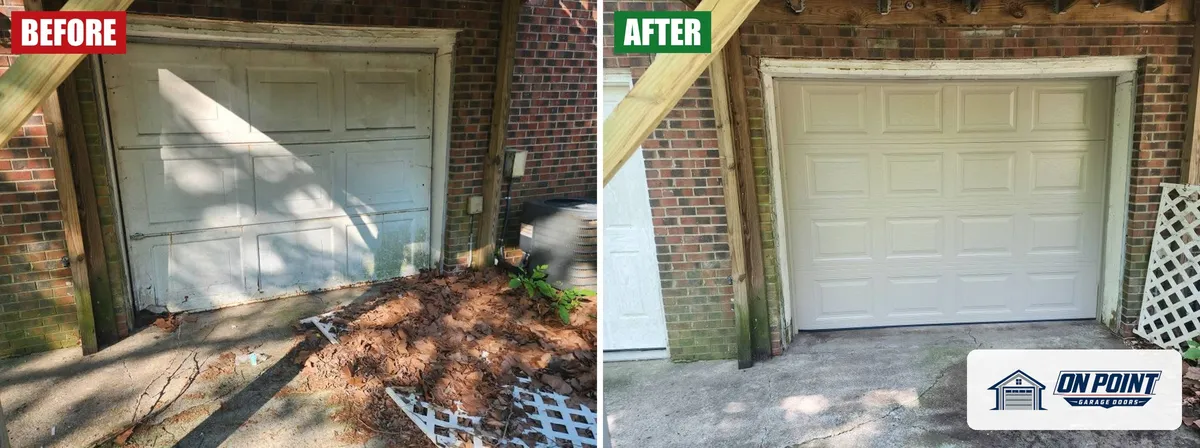
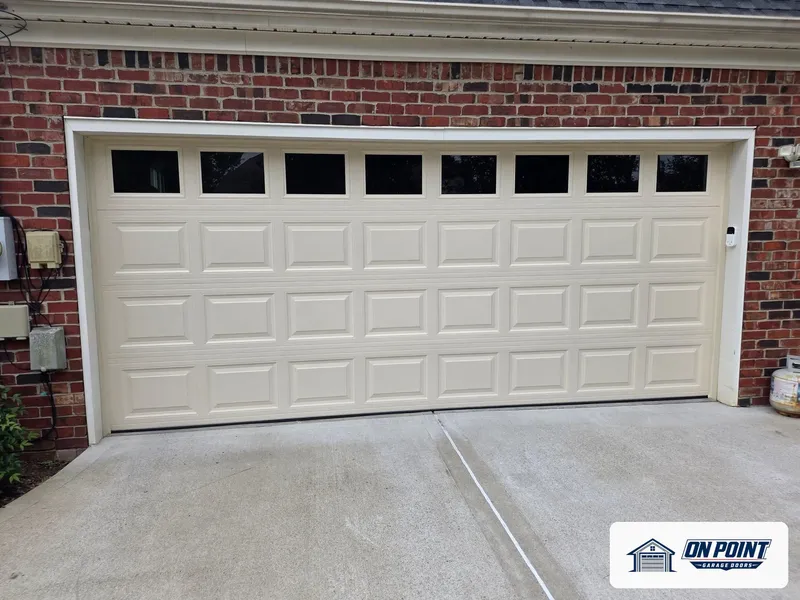
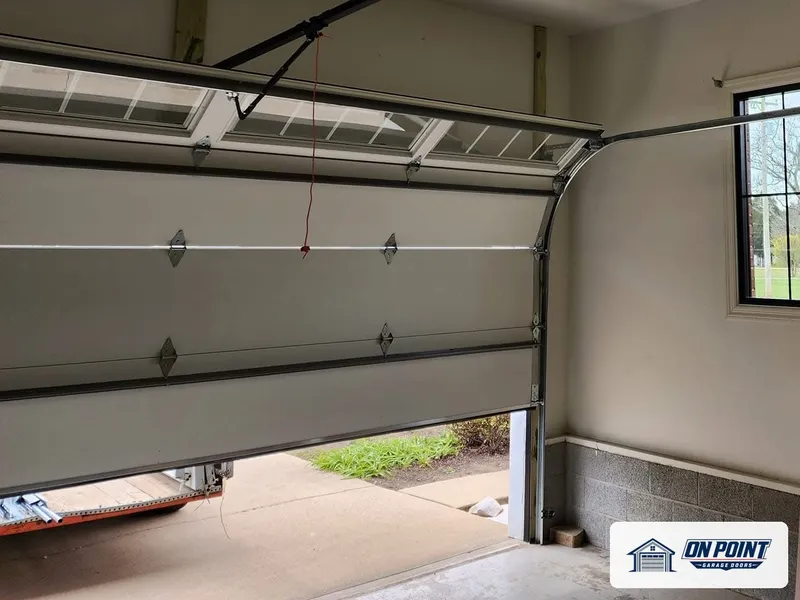
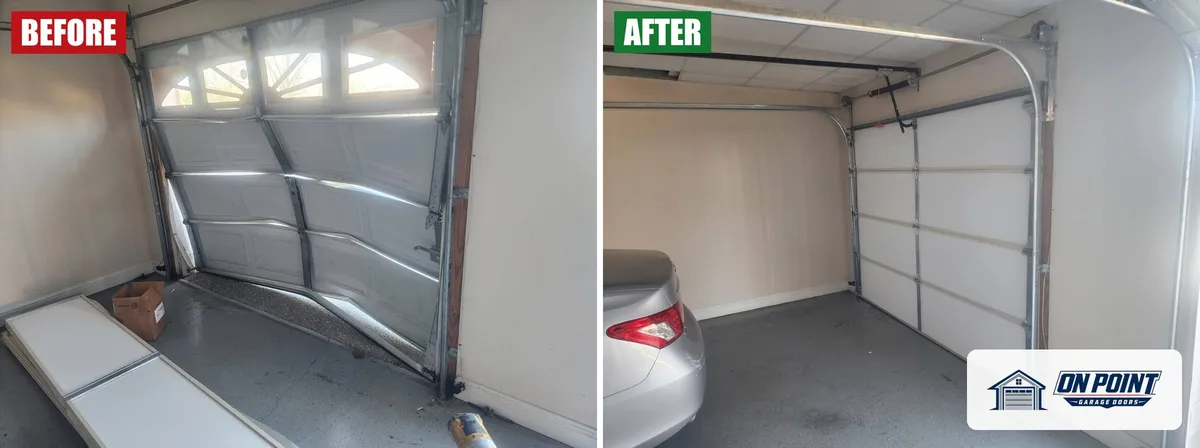
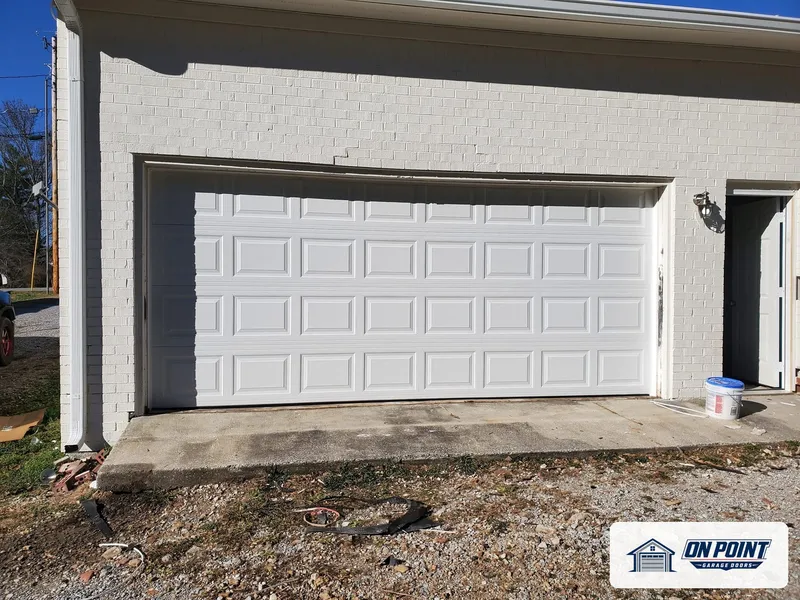
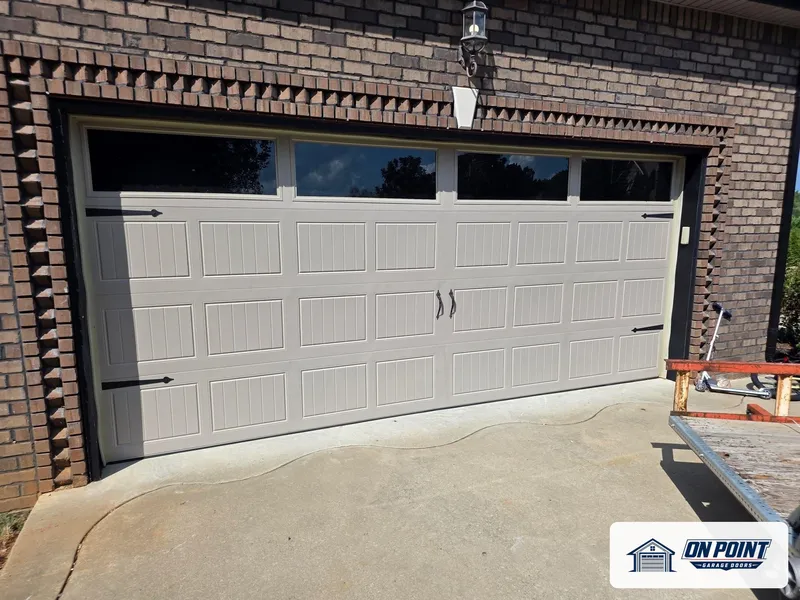
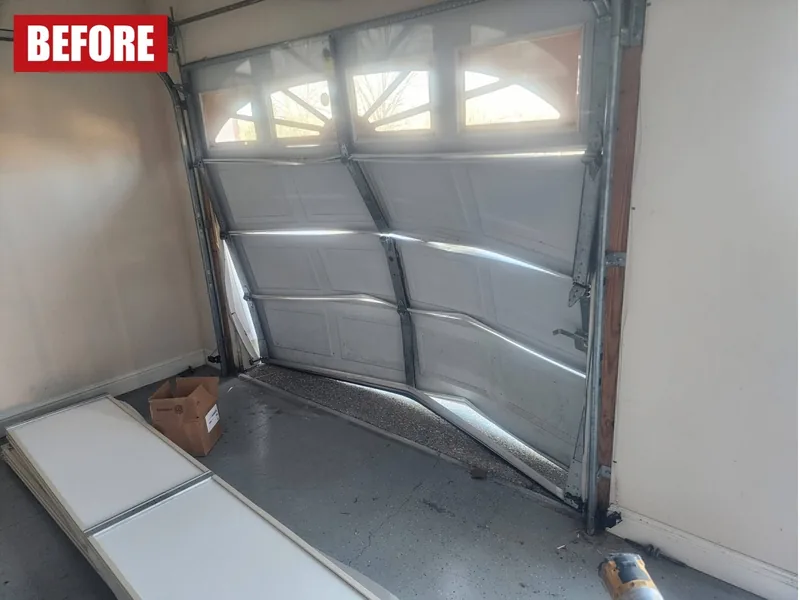
These photos are from our own jobs, with our logo on them.


Garage door repair in Bethpage for the postwar capes and ranches, many with garages added later, the homes near the state park, and the businesses and light industry on the old aircraft plant land. Free estimate first.
Many of the original houses were built without a garage, and owners added one over the decades, attached at the side or detached at the back.
Those additions vary a lot in size and framing, so each opening is measured and checked before any door is ordered.
Plain steel raised-panel doors with a strip of glass across the top are what most of the postwar Capes and ranches carry, and plenty of houses are now on their second or third door.
Expanded capes with a dormer or a second floor often turned the old garage into a family room and built a new one beside it.
Newer garages usually have standard openings; older ones can be undersized for the cars families drive now, and a wider door means a new header, which is talked through at the estimate before anything is ordered.
Businesses on the former plant land and along the main roads run sectional and roll-up doors for deliveries every day.
A dock door that will not close at the end of a shift leaves the building open, so that call moves ahead of routine work.
The big state park with its golf courses sits at the edge of the hamlet, so many streets nearby are lined with tall oaks and maples that drop leaves, acorns and seed pods into the tracks every fall.
Golfers and park visitors fill nearby roads on weekends, and driveways near the park see a lot of turning cars.
A door clipped by a bumper while backing out of a short driveway should be checked before it runs again.
Some detached garages at the back of the lot now serve as sheds or workshops and rarely open, but springs can still snap on a door that sits idle for months.

Original Cape, a house raised to two floors, or a shop on the main road: each door gets a look before a word of the estimate is written.
Because so many garages here were built by different owners at different times, no two openings are quite the same size, and each door is measured on its own.


Added garages. Doors in openings that are slightly out of square, and framing that has settled.
The jambs and header are trued up so the door seals.
An opener that groans is usually lifting a door with tired springs, so those are tested first.
Detached garages at the back. Old doors, old extension springs and openers without safety sensors.
Safety cables on extension springs and working photo eyes are added wherever they are missing.
Garages attached at the side. Springs that broke, rollers that rumble and openers loud enough to wake the bedroom above.
Swapping a rattling chain unit for a belt drive is the most requested change.
A garage at the back of the yard often has no outlet near the ceiling, so power for the opener is worked out before install day.
Business doors. Springs, cables, guides and operators on doors that cycle all day.
Damaged sections from trucks are repaired or replaced.
Insulated doors help attached garages beside the kitchen stay warmer.
If a car or a falling limb hit the door, do not run it until someone has looked at it.
Backing out between parked cars on a narrow street, it is easy to tap the door edge, and that alone can push a track out of line.

The streets between the parkways and the old plant land are a regular stop on our central Nassau route, and the same crews work Queens and Brooklyn.
Anything you mention when you book, which garage, how it was added and what the door did, goes into the technician's notes before he sets out.
A car shut inside a garage at the back of a deep lot, or a plant door that will not lock, moves ahead of routine work; say so when you call.
Winter. Cold snaps break springs that have worked for years, usually with a bang loud enough to hear inside.
On the coldest mornings the bottom rubber can stick to the slab; wait for it to let go instead of hitting the button again.
Spring. Pollen and rain wash into tracks on garages under the big trees.
Summer. Heat dries out and shrinks the bottom seal, letting leaves and insects in under the door.
Fall. Leaves blowing in from the park and the golf courses pile into tracks; a tune-up clears them before the cold.
He runs the door through a few full trips on the opener, then disconnects it to feel how the springs carry the weight, and only after that goes over the frame, cables, rollers and track.
You hear what broke, why it broke, and what each fix involves, all on a free estimate.
Springs are sized to what each door weighs today, and the old wooden doors still hanging on some detached garages weigh far more than a steel door of the same width.
The springs and cables these doors usually need are carried with him.
Before he leaves, he shows you the opener backing off when the doorway is blocked.
Everything removed rides away in the truck.
He stays until the door runs smoothly and you are satisfied with it.
Shops and plants on the old aircraft land can book around their truck schedule.
He phones as he turns onto your block, so someone can move the car out of the driveway first.
No work starts until you have given the go-ahead.
Added-on garages wear in their own way.
With a spring gone, the full weight of the door hangs on the cables, so leave it down and do not try to raise it.
Extension springs on old detached garages need a safety cable running through them, and one is added if it is missing.
Lift cables rust and fray where they meet the bottom brackets, so the pair is renewed together and the door goes up level.
If the drums are grooved or cracked, they go too.
Photo eyes on a back-of-the-lot garage are often loose on their brackets or were never put in at all; they are bolted firm, aimed, or added.
Tracks on settled framing drift out of line; they are reset into solid wood.
The last stretch of track near the floor is renewed where rust has eaten it.
Before any opener part is swapped, the motor is run with the door unhooked, so a sound unit is not condemned because of a heavy door.
When an opener cannot be saved, quieter belt drives and models with phone control are explained, along with a battery backup for the storms that knock out power across the island.
Tell us whether the garage came with the house or was added later, and whether it stands at the back of the lot; the answer shapes which parts ride along.
Every estimate is free, and nothing is touched until you agree.
Often it does. Garages put up later were framed by whoever the owner hired at the time, so the opening can be slightly out of square, the header may sag, and the jambs may not match the door. The technician checks the framing first, then sets the track and seals to the opening you really have rather than to a catalog size.
Usually yes. A door that sits shut for months still has springs under load, and rollers and hinges seize from damp and dust. Old extension springs back there often have no safety cable through them. The door is freed, the worn rollers and springs are matched and renewed, and a safety cable goes in where one is missing.
Yes. Newer additions usually have a standard opening, so a new insulated steel door is measured, ordered to fit and hung with fresh springs, track and seals. If the new garage shares a wall with the family room, an insulated door and a quiet belt opener keep the cold and the noise out of the room next door.
On the visit the technician clears the tracks, looks at the rollers that have been grinding on debris, and checks the bottom seal, since a split seal lets leaves blow under the door. Sealed-bearing nylon rollers ride over grit better than worn steel ones, and a fresh bottom seal keeps most of the litter outside.
Yes. Shops and light industry there run sectional and roll-up doors all day, so the visit is set before the first delivery or after the last one. Doors that open that often get longer-life springs and heavier rollers, and the operator's limits and safety devices are tested before the door goes back into use.
Describe how the door behaves and choose a time that suits the house; the estimate is free.
Call us at (929) 429-2429.
Tell us about the garage and the door, and a free estimate comes back whatever you decide.