Serving Brooklyn, Queens and Long Island(929) 429-2429Open six days a weekFree estimateGuaranteed work
On Point Garage Doors
Open 24 hours Sun-Thu, Fri until 5 pm Free estimate Springs, openers, cables We come to you
Emergency?Call nowBook free estimate
New York, NY - open six days a week

How to choose between LiftMaster opener models

Free estimateSame-day serviceCommon parts on board
  • Free estimate
  • Same-day service
  • Common parts on board
Emergency garage door repair★★★★★ 5.0 on Google · 42 reviews

Book your free estimate

Takes 30 seconds. We call you back to set a time.

Or just call (929) 429-2429 and talk it through.

Home › Choosing a LiftMaster Opener

LiftMaster sells a long list of residential openers, and the model names and numbers on the box do not tell most people much. Underneath the names there are only a few real choices: how the opener moves the door, where it mounts, how strong the motor is, and which extras come built in. This page sorts the lineup into those choices, explains who each one suits, and covers what we look at in the garage before recommending one. We install and service LiftMaster openers across Brooklyn, Queens and Long Island, and we would rather fit the opener to the door than sell the biggest box on the shelf. Free estimate at (929) 429-2429.

By Sean Cohen, owner, On Point Garage Doors · Updated

Real jobs. Real photos.

These photos are from our own jobs, with our logo on them.

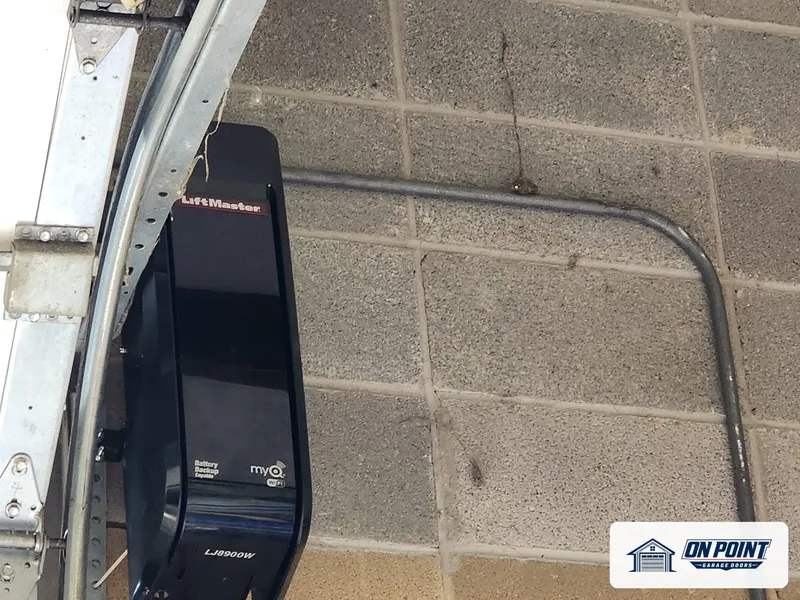
LiftMaster wall-mount opener on a job, from one of our jobs
LiftMaster wall-mount opener on a job
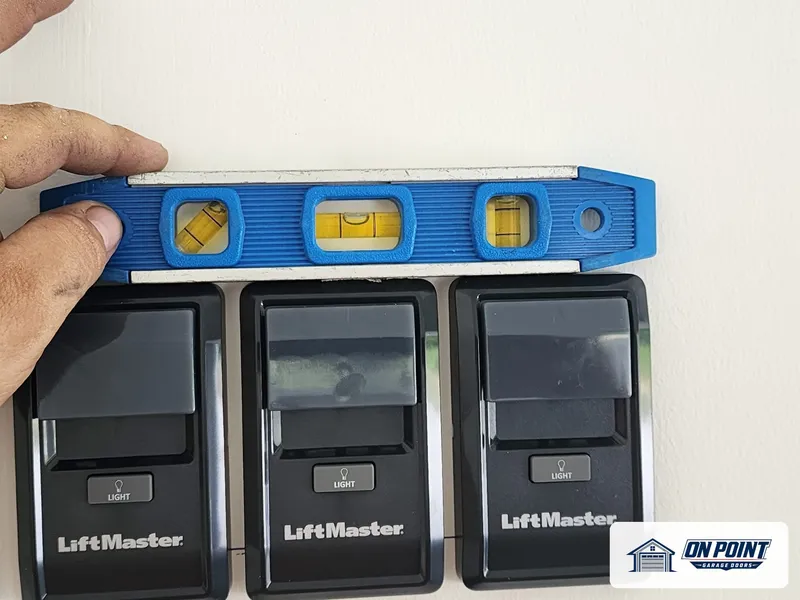
LiftMaster remotes set up for the owner, from one of our jobs
LiftMaster remotes set up for the owner
Ceiling opener after an install, from one of our jobs
Ceiling opener after an install

The lineup in four groups

Almost every LiftMaster home opener falls into one of four groups. Chain drive models pull the trolley with a steel chain. Belt drive models do the same job with a reinforced rubber belt. Wall-mount models sit beside the door and turn the spring shaft directly, with no rail across the ceiling. Then there are the upper models in the chain and belt families that add a camera, a built-in light panel or a battery backup. Once you know which group you need, choosing a model inside it is mostly about extras.

Chain drive: the workhorse

A LiftMaster chain drive is the simplest and toughest of the group. It suits detached garages, garages with no room above them, heavy wood doors and owners who care more about strength than sound. Newer chain models run on a DC motor with soft start and stop, so they are far smoother than the chain openers many people remember. They are still louder than a belt, mainly because the chain itself rattles on the rail.

Belt drive: for the bedroom above

In Brooklyn and Queens, plenty of garages sit under a bedroom, a kitchen or a neighbor's living room. That is where the belt drive earns its place. The belt runs almost silently, and the opener body is mounted on rubber where the model allows it. Most people who call us about a noisy opener end up choosing a belt model. It handles the same door weights as the matching chain model in most homes.

Wall-mount: for low ceilings and clear space

The LiftMaster wall-mount, often called a jackshaft opener, bolts to the wall at the side of the door and turns the torsion shaft. It needs a torsion spring system and a little side room, but no rail and no headroom over the door. It suits garages with low ceilings, high-lift tracks, storage racks, car lifts or a ceiling the owner simply wants clear. It is also among the quietest openers LiftMaster makes, and it often comes with an automatic deadbolt that locks the door at the end of each close.

Motor strength and what it really means

Older openers were sold by horsepower. Most current LiftMaster models list a DC motor rating instead, and the number on the box is less useful than it looks. The real question is whether the door is balanced. A well-balanced door of normal size is easy for any LiftMaster in the range. A heavy, oversized or insulated wood door may call for the stronger model in the family. A badly balanced door will wear out any opener, so we check the springs before choosing the motor.

Camera, light and battery models

The upper models add features in the body of the opener. Camera models let you see the garage from your phone and record when the door moves, which is popular with owners who get deliveries inside. Some models put a wide light panel in the opener housing. Battery backup models keep the door working through a power cut, and in some towns that backup is expected on new installs. Each extra is worth having only if you will use it; we are happy to talk through which ones matter in your home.

myQ and the phone app

Nearly every current LiftMaster model connects to the myQ app over home Wi-Fi. That lets you open, close and check the door from a phone, set alerts when the door is left open, and share access with family. The signal in a garage under a house can be weak, so we check the Wi-Fi where the opener will hang. Our page on the LiftMaster Wi-Fi opener covers the app and the common connection problems in more detail.

Remotes, keypads and car buttons

LiftMaster openers use their own security code system, and current remotes and keypads are matched to it. Older remotes from an opener you are replacing may not work with the new one. Most new cars can learn LiftMaster openers through the built-in buttons, and some need a small bridge part. Before the install we ask how many remotes, keypads and cars need to work, so everything is set up before we leave.

What we look at before choosing

When a different brand makes more sense

LiftMaster is a strong choice for most homes, but it is not the only one we install. Some owners want a Chamberlain from a local store, a Genie to match a second door, or a commercial operator on a garage that sees heavy use. If another opener suits the door better, we say so. Our guide to the best garage door opener compares the drive types across brands.

What a visit includes

The technician checks the door first: springs, cables, rollers and balance. Then they measure the headroom and side room, look at the outlet and the wall where the button goes, and talk through two or three models that fit. You get a written estimate before anything is ordered. On install day the opener is mounted, the travel and force are set, the sensors are lined up, and every remote and keypad is set up and tested.

Questions we get asked

Which LiftMaster opener is the quietest?

The wall-mount model and the belt drive models are the quietest. The wall-mount has no rail across the ceiling at all.

Is a LiftMaster chain drive too loud for an attached garage?

Newer chain models are much smoother than old ones, but if a bedroom sits above the garage, a belt drive is usually the better choice.

Can I put a LiftMaster wall-mount opener on any door?

It needs a door with torsion springs and some room at the side of the door. We check both before recommending it.

Will my old remotes work with a new LiftMaster?

Often they will not, because LiftMaster has changed its security code system over the years. We program new remotes at the install.

Is the estimate free?

Yes. We look at the door and the garage before recommending a model.

Booking takes a minute

Across Brooklyn, Queens and Long Island, tell us what the door is doing and we set a visit that fits your day.

Free estimate, call (929) 429-2429.

Not sure which LiftMaster fits? We will look at the door

Tell us what the door is doing and we will give you an honest arrival time. The estimate is free.

Easier to explain by phone? Call (929) 429-2429.

Two minutes to a free estimate

Tell us what the door is doing. The estimate is free either way.

Or just call (929) 429-2429 and talk it through.

The other six things that go wrong